
He used to be someone. Employed. Necessary. A man with a name. But names are slippery things, easy to misplace. Now, the secretary, floating past his old cubicle in a cloud of cheap perfume, flutters her lashes at the new go-getter sitting there. She almost remembers the quiet chap who used to fill that seat. John? Gary?
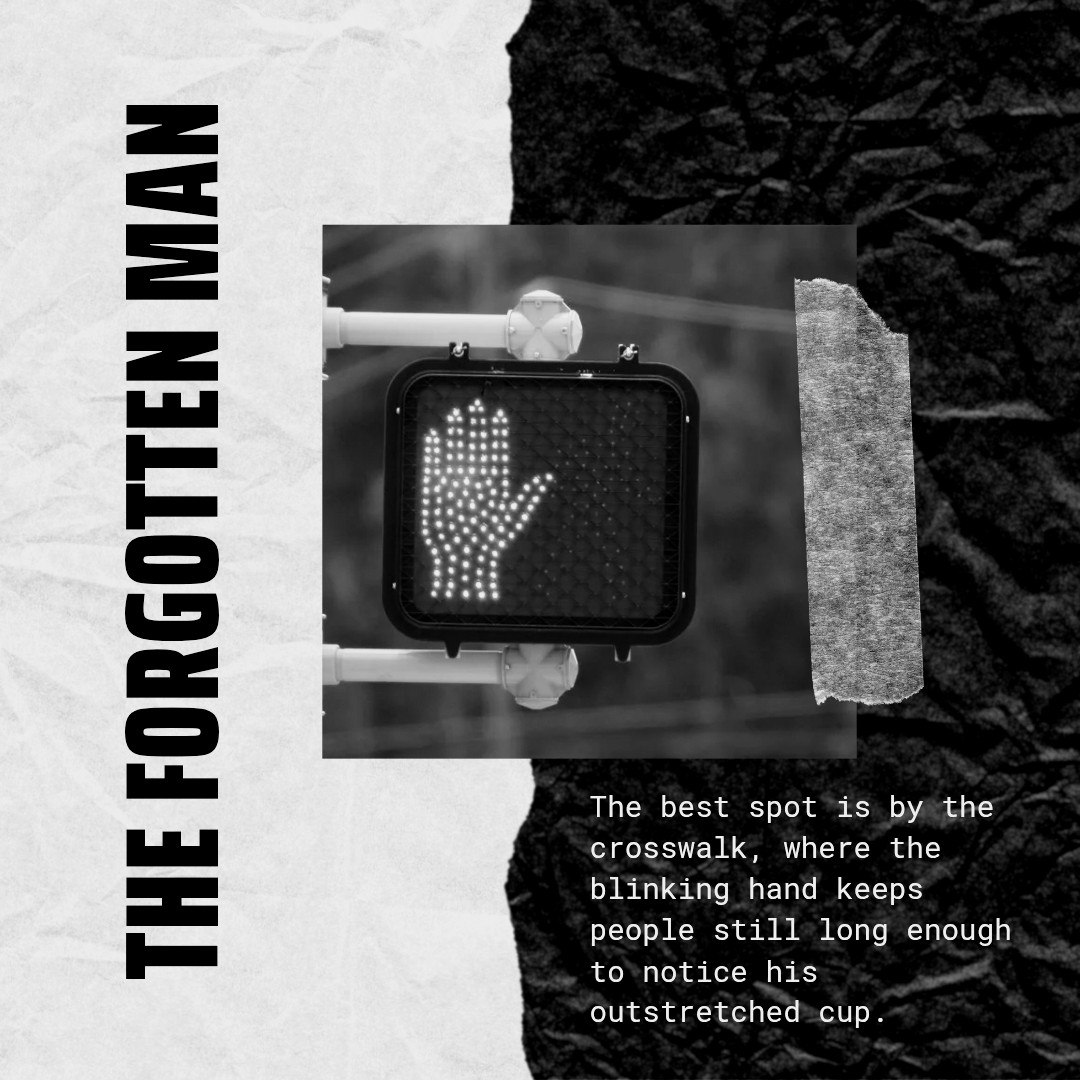
He arrives at his corner before sunrise, punctual to a fault. A layer of cardboard, a layer of newsprint, a tattered blanket—thin barriers between the pavement and his aching bones. The best spot is by the crosswalk, where the blinking hand keeps people still long enough to notice his outstretched cup. His hands won’t stop trembling. His breath puffs out in ragged clouds that swirl and fade away, dissolving like a memory.
He used to be a father. They used to say she had his eyes. Laughing eyes, warm eyes, the kind that melted into puddles at bedtime stories and silly inside jokes, that crinkled at the corners when she made him proud. He can’t be sure if he still has those eyes.
People hustle past, avoiding him like they have something to lose. If they spare a coin, they do it without looking, as if redundancy might be contagious. Only children stare, unguarded, until a parent tugs them away. “Who’s that man?” they ask. There’s never any answer.
He used to be a husband, half of something whole. Now he’s still half, but she’s gone and been made whole with someone else. Their life together sits in storage bins, stacked somewhere damp, trying hard to fade away.
The line at the soup kitchen moves slowly most days. He sits and sips, but not for long. Loneliness takes up the bench beside him. His knees groan and crack and strain to rise as he takes his solitude back to the street to make room at the table for another man who’s lost his name.
He used to have a home. The lawyers and the bank never saw it that way. It was just numbers on a page, easily subtracted from him, added onto someone else. Someone else’s family makes a life there now, erasing his from every room. Someone else’s photos line the stairway wall while someone else’s daughter kicks her legs up high on the swing in the backyard, not knowing who built it or for whom.
He saw her yesterday. His daughter, grown now, laughing, arms looped through friends’ as they window-shop. He almost didn’t recognize her, but when she dropped some change into his cup, he caught a glimpse—his eyes.
He held his breath for a flicker of something. A pause. A second look.
But she walked on.
And that’s the worst pain, to be forgotten but not gone.
 Aly Writes