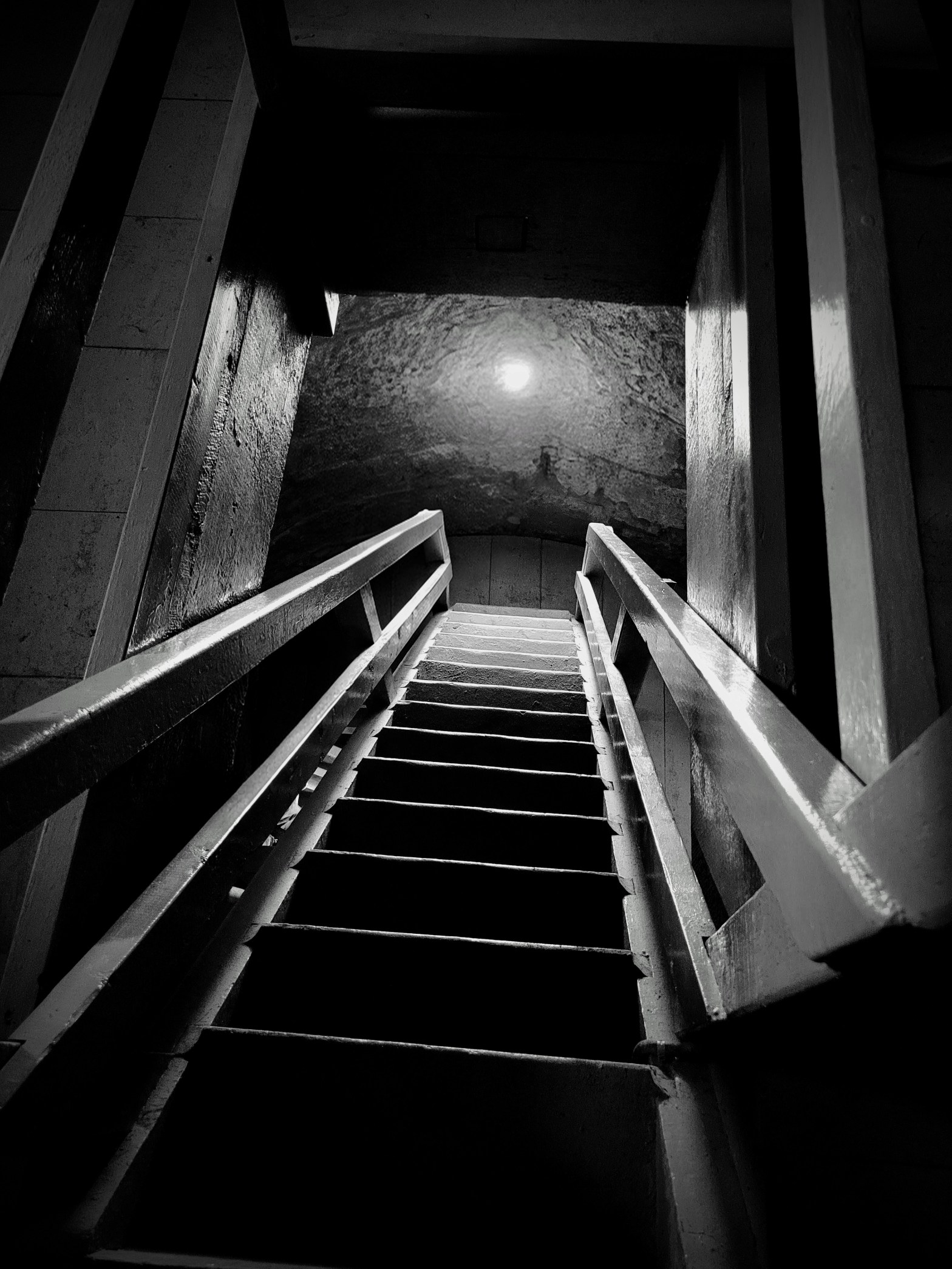
The Library of Borrowed Lives — Part 4

Read The Library of Borrowed Lives — Part 1 and Part 2 and Part 3


Concealed in a dark, musty corner, the hooded figure released me and raised a finger to her lips.

The only woman I’d ever been in close contact with was my mother, a quiet, matter-of-fact woman who raised me and my seven older brothers with as much warmth as she could muster in the cold circumstances we’d been dealt. I’d seen her go hungry so we could eat, and I’d heard her softly cry long after she thought we were all asleep.

This girl, face to face with me in the night, was nothing like my mother. Her skin, so pale it seemed almost translucent, fairly glowed in the light of the crescent moon. She clocked my wide-eyed stare and tugged the dark hood so it shrouded her in shadow. The movement sent an unfamiliar aroma wafting over me that triggered a whisper of a memory from somewhere deep in the forgotten recesses of my mind. She smelled … clean? Like sunshine and flowers? Wealthy? She certainly didn’t carry the musk of hard labour and deprivation.

Impatience darkened her eyes. She didn’t have time for me to process her presence, clearly.

“I need a book,” she breathed in my ear at a volume less than a whisper. Then she pressed something into my hand and ran, noiselessly, across the courtyard, disappearing through a gate I’d always assumed was locked and guarded. The gate clicked shut too loudly behind her, and I stood frozen for a moment too long. Afraid to go after her, afraid to take the time to look at what she’d passed me, I slipped down the stairs to the underground barracks and felt the way through the dank black to my bunk.

I shelved books more efficiently than ever the following day, feeling with every stern glance that the overseers must know. The item she’d handed me burned like a beacon in my coat. I was sure her perfume had permeated my skin and was bound to give me away. I trembled with anxiety every time I even thought of putting my hand in my pocket and pulling it, whatever it might be, out to have a look.

She needs a book, she’d said. Well, good for her. Was I supposed to risk everything to get it for her? I still had just under half of my job ticket to go and a family at home depending on me for food. And what was I supposed to do, steal a book? Even if that in itself was not impossible, how was I supposed to get it to her? My irritation increased as the day went on.

Finally, in late afternoon, when the overseers were switching shifts and the workers were at their busiest, I angled my cart with its leaning stack of books to hide me from view and let curiosity trump my fear. What I found in my pocket was nothing more than a scrap with a single symbol crudely drawn. I recognized it immediately.

It was the same symbol I’d seen on the blank book the day before – the only book I’d ever seen that symbol on.


Come back on the first Tuesday in October to read the next instalment of this new dystopian series: The Library of Borrowed Lives
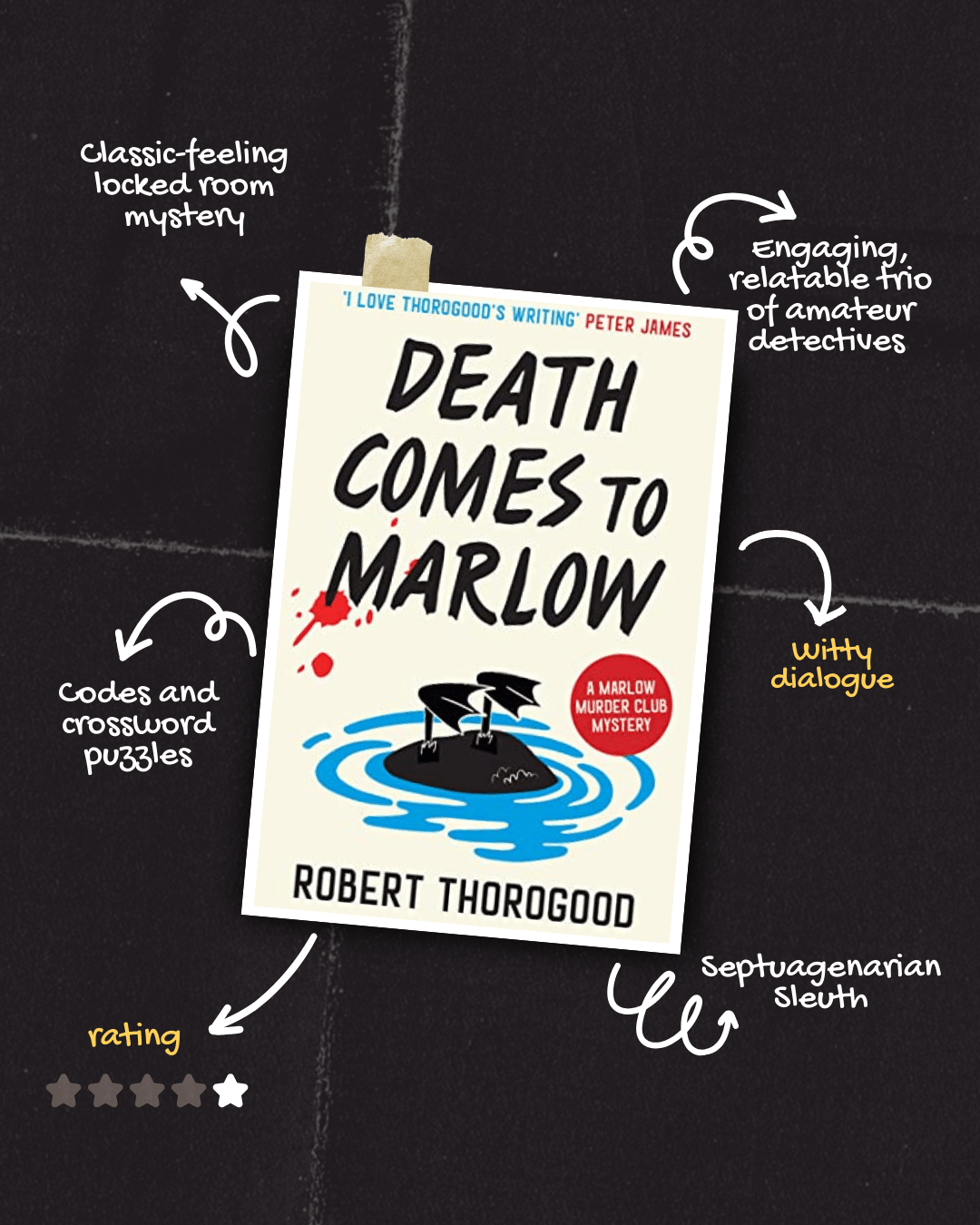
Death Comes to Marlow (Robert Thorogood)

The Marlow Murder Club is back for round two!

Judith Potts, skinny-dipping, crossword setting, whiskey-drinking septuagenarian, is joining forces again with buttoned-up Becks, the vicar’s wife, and Susie, the free-spirited dogwalker, this time for a locked-room mystery (one of my favourite tropes).

The blurb: It’s been an enjoyable and murder-free time for Judith, Suzie and Becks–AKA the Marlow Murder Club–since the events of last year. The most exciting thing on the horizon is the upcoming wedding of Marlow grandee, Sir Peter Bailey, to his nurse, Jenny Page. Sir Peter is having a party at his grand mansion on the River Thames the day before the wedding, and Judith and Co. are looking forward to a bit of free champagne.

But during the soiree, there’s a crash from inside the house, and when the Marlow Murder Club rush to investigate, they are shocked to find the groom-to-be crushed to death in his study.

The study was locked from the inside, so the police don’t consider the death suspicious. But Judith disagrees. As far as she’s concerned, Peter was murdered! And it’s up to the Marlow Murder Club to find the killer before he or she strikes again…

DS Tanika Malik, having been demoted, is no longer in charge of the police investigation. However, she still plays a part in the shenanigans and remains one of my favourite characters. Again, it’s a refreshing change to see amateur sleuths working alongside the police rather than constantly just clashing with them.

“Tell me—how do you think it happened?”

The women looked at each other, surprised by the question.

“Is this a trick question?” Suzie asked.

“No.”

“Okay, let me take this,” she said before turning back to Tanika. “Someone pushed a bloody great cabinet onto him.”

The characters are companionable, the dialogue is witty and at times humorous, and it’s good fun getting to know everyone better and seeing a bit of growth. I find the antisocial senior sleuth Judith and her unconventional interview techniques particularly enjoyable.

“Judith knew January belonged to her. It was almost her favourite month of the year. No one asked her to do anything in January. Or go anywhere. She could fully recharge her batteries and take stock.

And go wild swimming, of course.”

There really is nothing like a British murder mystery, and Robert Thorogood is a master of the genre. This one is classic-feeling, reminiscent of a Miss Marple story. The whodunit is fleshed out with a couple of side plots about a code hidden in some crossword puzzle clues and Becks sneaking around with a mysterious man.

“Interfere?” Judith said in mock outrage. “Interfering is for amateurs.”

Suzie laughed.

“We Investigate.”

As in Marlow Murder Club, the dynamics between the three women are what make this novel really shine. The trio both challenge and complement each other. This second installment wasn’t quite as memorable as the first, but it was still entertaining enough to make me look forward to continuing the series.

“She also guessed there’d be something unedifying about a completely naked seventy-eight-year-old woman wrestling with a swan.”

If you love Agatha Christie-style puzzles with a contemporary twist, or you’re a fan of classic British murder mysteries with a bit of heart and humour, Death Comes to Marlow is a charming addition to your TBR.

AWOL: Absent Writer, Out Lingering

Summer is a season best recognized by its scents and sounds. Sunscreen, chlorine, fresh-cut hay, french-fries, lake water, campfires. Cicadas, lawnmowers, seagulls, thunderstorms, waves crashing, bagpipes at sunset. Those hazy, sun-drenched days of endless light and freckles and floating and letting things slide.

If my absence has been noted, consider this my excuse: I’ve been savouring.

Summer is such a fleeting thing here in Canada that it simply must be seized and squeezed for everything it’s worth. Writing can be consigned to the long, cozy evenings of autumn, already about to knock at the door. It’s not procrastination. It’s time management.

Rest assured, stories have been on my mind as I’ve been soaking up the sun. There are exciting things to come here at AlyWrites.

  • Sneaking Suspicions: an Amber Jenkins Mystery is entering the querying stage. Imagine that! After all these years, I’m actually finally on the hunt for someone to publish my novel.
  • The Library of Borrowed Lives, the fiction series I’ve been publishing on the first Tuesday of every month, is due a few installments. Look for Part 4 on the first Tuesday in September.
  • I’ve got a few new recipes to share this fall, as well as some writing tips and book reviews in the pipeline.
  • November, as always, will be spent wildly drafting the next novel in the Amber Jenkins series. Write 50,000 words with me as part of #NOVELmber, or just follow along as I attempt the crazy feat for the sixth consecutive year.

And in case you missed it, my winning story, Lionel Wexelbaum Will Not Wake Up, was published in the June issue of Blank Spaces magazine. The judges had this to say:

This winning entry by Alyssa Bushell captivated our judges with its darkly whimsical tone and masterful atmospheric storytelling. The author creates an unforgettable character study that begins after the protagonist’s death, weaving a rich tapestry of details about Lionel’s life through observations of his apartment and neighbourhood. The story’s distinctive voice immediately pulls readers in with its blend of morbid humour and poignant observations about a life that will go unmourned.

I won’t apologize for the weeks of silence here at AlyWrites. Instead, I encourage you to go sit by a body of water with a fancy beverage and savour the last drops of summer yourself. Back to our regularly scheduled programming soon!

in my riverbed

the days pass over me
face up, hair flowing downstream
between rusted shopping cart and old lawn chair
after half a lifetime of breaking my own heart, I find
peace among the pieces cast away
with every spring flood I smooth a little more and
bury bruises beneath layers of silt, but
August parches dry my sanctuary,
baring to the light all these regrets until
cracks bleed tears to feed the flow
when crimson spreads like a disease
dead leaves come falling, blanket me
winter pushes cold and driving rain
and once again interred
I watch the world through watery veil and
wait for time to freeze

The Library of Borrowed Lives — Part 3

Read The Library of Borrowed Lives — Part 1 and Part 2.


It was blank.

Both facing pages were completely blank. Nerves burning a hole in the pit of my stomach, I knelt and tentatively flipped to another. Still blank. I quickly thumbed through the entire second half – not a single word, symbol, or picture printed in the book.

Hearing footsteps behind me, I rose and slid the book into its rightful place on the shelf. An overseer cleared their throat, and I turned to face them. Crossed arms and a fierce scowl sent me scuttling back to the front of the library with my empty cart to collect another load. My questions would have to wait. I was too closely watched. Even when the overseers were out of sight, there was always a chance that one of the permanents, those stone-faced workers who’d earned a longer stay, would see and report.

That evening, as I crawled into my bunk, I noted the empty bunk three rows down from mine. Another temporary whose assignment abruptly ended, and with it, my chances of seeing what was behind that door, because that night everything changed.

We were expected to relieve ourselves before we climbed into our bunks, but invariably, there would be one straggler who had dawdled at their supper or some fool who gulped down too much water when it was their turn at the ladle. We all dreaded having to go at night, to make our way by feel down the long corridor and out the door, shuffling across the gravel to get to the outhouse. The overseers left us no lights at night, but at least if there was a moon, it was easier once you got outside. I was never so careless, but this night the blank pages consumed my thoughts, and I forgot to make my visit before the lights went out.

I held it as long as possible, but it was no use. Out through the dark I had to go. The outhouse was in the middle of an octagonal courtyard, the only outdoor space we knew during our assignment. It was surrounded on seven sides by the various wings of the library, through which we cycled one per day of the week. It was essential, I surmised, to keep us lowly workers thoroughly separate from whoever was signing out the books we endlessly shelved but didn’t know how to read.

The eighth wing – one, two, three, four, five, six, seven – yes, eight. The eighth side of the courtyard too was walled in, but what that part of the structure contained, I’d never really questioned before.

I was relieved to find a smiling sliver of moon casting shadows. At least I could see my way back to the door. I’d done my business and was dragging my weary bones towards the stone stairwell that descended to the underground workers’ barracks when I felt something soft and warm cover my mouth. Someone hissed “Shhh” in my ear, dragging me backward into the shadows with surprising strength.

Concealed in a dark, musty corner, the hooded figure released me and raised a finger to her lips.


Come back on the first Tuesday in July to read the next instalment of this new dystopian series: The Library of Borrowed Lives

Writing in the In-Between

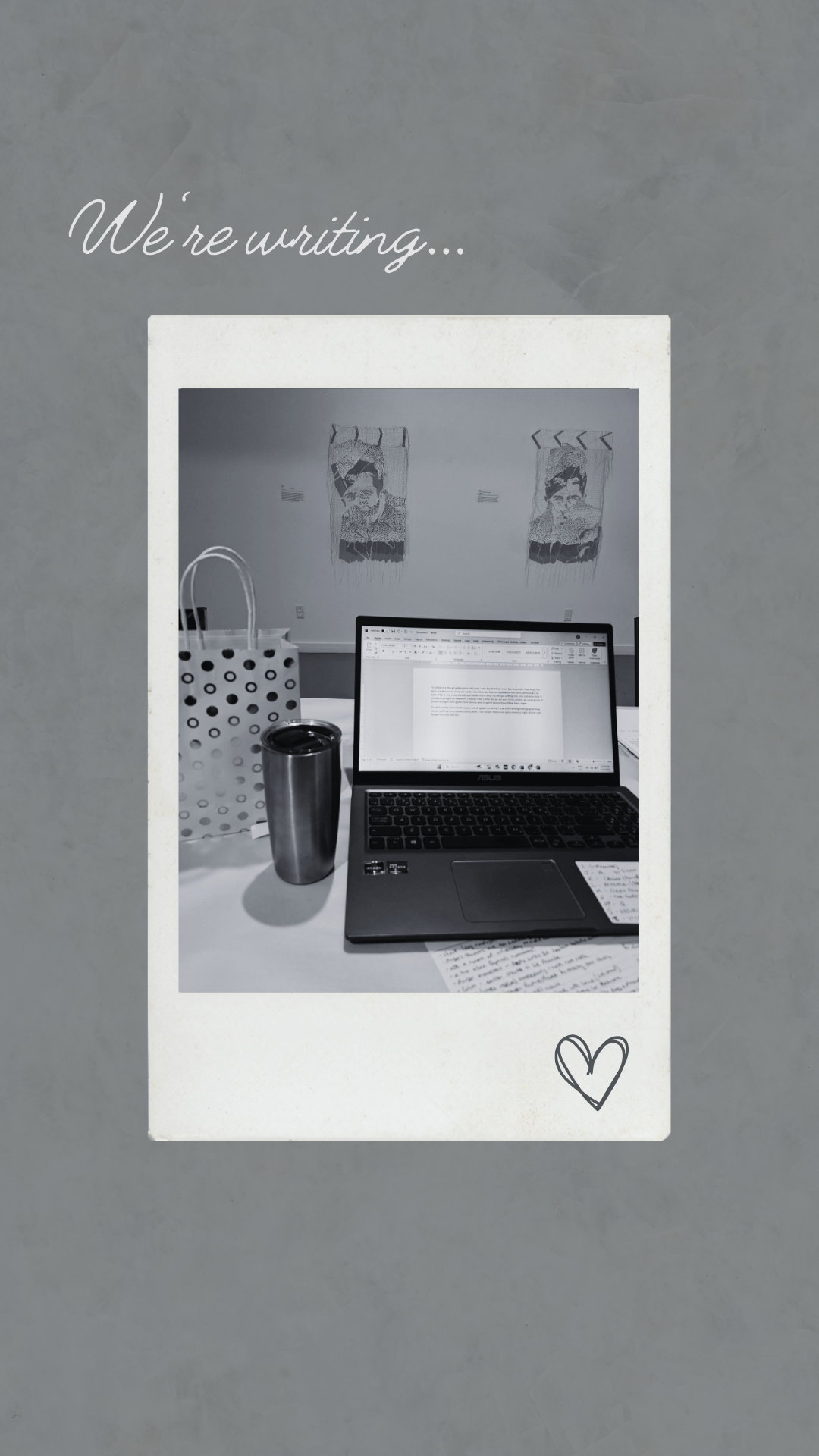
I’m sitting in a tiny art gallery on a cold, grey, rainy day that feels more like November than May. The lights are dimmed to showcase delicate tapestries that cast shadow portraits on the clean, white walls. Six pairs of hands tap away at keyboards while I try to keep my allergic sniffling (the only indication that it actually is spring) to a minimum. It always feels a little like we are part of the exhibit, we small group of almost-strangers who gather here twice a year to spend twelve hours filling blank pages.

It’s been a while since I’ve shared any sort of update on where I’m at in the writing/editing/publishing process with my cozy mystery series. Well, I can answer that in one quick sentence: I’m right where I was the last time you saw me.

I exaggerate, of course. Some progress has been made. Four other human beings have read my manuscript and provided feedback. Some edits have happened; I have a checklist of more that need to be done. Just this morning, as part of this writing intensive hosted by Chicken House Press, I had a one-on-one with publisher Alanna Rusnak … that added several major edits to my list.

Will this book ever be done, this story I started to tell almost five years ago? When does the editing stop? When does it finally feel finished?

I don’t have the answers. What I do have is some clarity on what more I need to do to this manuscript and how to go about finding the right publisher for it. It feels like a lot of work.

If I’m honest, that’s probably why this book isn’t finished yet, and why I have four more books in the series drafted (in varying stages of incompletion). I don’t want writing to feel like work. I do words for a living now, and I never could have predicted how much that would impact the creative writing part of my life. It is hard to spend all day typing and proofreading and then somehow find the motivation and creative spark to sit down at the keyboard again.

But this is why I have carved a full Saturday out of my busy schedule and driven to a small town to set up camp in their art gallery. Here, on this liminal day between winter and spring, between first draft and final manuscript, between writing as work and writing as art, there is space for telling stories. I didn’t come here to finish the book. I came here to remember why I still want to.

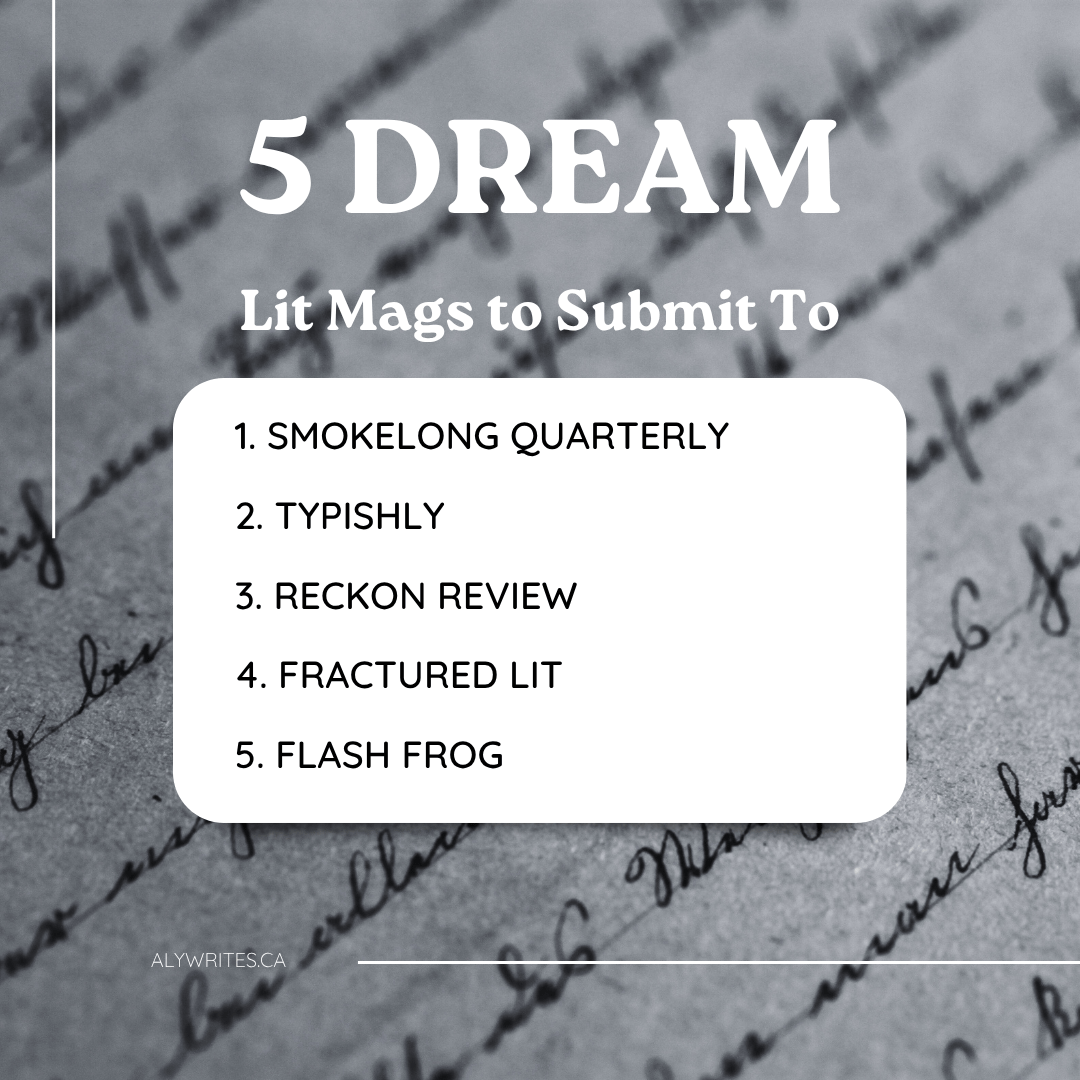
My Top 5 Dream Publications

Every writer has a few: those legendary lit mags we dream about when hitting “submit” on Submittable. The ones we read and reread when imposter syndrome sets in. The ones that feel just out of reach, but we can’t help but try anyway.

In the past, I’ve shared some Canadian submission opportunities for my readers who are also writers:

Today, though, I want to share my top five dream publications, the literary magazines I aspire to. These are top-tier. Almost mythical. The lit mags you’ll want to make time to read, the ones that push your own writing into bold, new places.

SmokeLong Quarterly

A classic, of course. I think every flash fiction writer dreams of seeing their words in SmokeLong. They publish stories that give you pause, that follow you around all day. If you want to set the bar for what flash can do, start here.

What to submit: Flash fiction under 1000 words.

Why submit: Because a tiered rejection from SmokeLong Quarterly will literally cure your imposter syndrome and infuse hope back into your writing. Oh, and they pay writers.

Typishly

Typishly is a journal that will make your work look good on the page. Their aesthetic leans polished and introspective, quality writing paired with beautiful visuals.

What to submit: Literary fiction and poetry.

Why submit: Because they respond within 24 hours with a personalized note, and even their rejections feel like positive reinforcement.

Reckon Review

My vibe in a lit mag. Reckon Review publishes writing that is rooted in a sense of place, stories that dig into the grit of lived experience. If your work has a strong sense of setting and a clear, authentic voice, you might have found your home.

What to submit: Prose (fiction and non-fiction) of any length.

Why submit: Because the stories they publish are grounded and real and honour ordinary people in overlooked places.

Pluggy plug: Reckon Review published my story, I Am the Deafening Silence.

Fractured Lit

“Fiction that lingers after the flash.” If you write flash that digs deep and hits hard, submit to Fractured Lit. They publish flash and micro fiction with emotional resonance that explores the mysteries of being human.

What to submit: Micro fiction (400 words or less) or flash fiction (401-1000 words).

Why submit: Because they’re always open, don’t charge submission fees, and pay writers. And because every story they publish lingers like a bruise.

Flash Frog

Bold, weird, heartfelt, and often unexpected, Flash Frog publishes one flash piece a week, each paired with original artwork created just for that story. They love stories that take risks, and they’ll treat yours like it matters.

What to submit: Flash fiction under 1000 words.

Why submit: Because each piece gets individual attention and vibrant visual accompaniment, and their weekly format gives each story its moment in the spotlight.

So, why am I sharing my dream publications? Because maybe they’re yours too. Or maybe you’ve never heard of one of these journals, and it turns out to be the perfect place for that little piece you’ve tucked away. Maybe you’re just looking for your next brave “submit” moment.

Happy submitting, and don’t forget: read the work they publish, follow their submission guidelines carefully, and don’t let rejection after rejection stop you from turning blank pages into stories.

Do you have a dream publication of your own? Leave it in the comments or send me a message. I’d love to hear where you’re submitting your words, and I’m here to cheer you on.

The Library of Borrowed Lives — Part 2

Read The Library of Borrowed Lives — Part 1


No one I had ever met had ever learned to read.

And yet here they were, books by their hundreds, being shelved day after day after day by dozens of unquestioning workers happy only to have a temporary job and a roof and a meal. The shelves never got full. Someone was checking them out, someone was bringing them back, but all we ever did was wheel those creaky carts up and down the shelf-lined aisles, sliding volumes into place. Each book had coloured symbols on the bottom of their spine that signified the section, row, and shelf. The system was easy enough to learn, and once I had it memorized, I could find a book’s home faster than nobody’s business. I worked so hard at increasing my speed, full of the hope that the overseers would notice and grant me permanent status, but the question wouldn’t stop spinning round my mind. Who was reading all these books?

The closest I ever got to the door without a handle at the back of the library was about halfway through my six-month job ticket. I spotted a thick book at the bottom of one of the stacks that had a symbol I’d never shelved before. I started shoving the cart away before anyone else could claim it. The symbols directed me to a row of shelves in the furthest corner of the library, the darkest, musty corner nearest the door. I practically held my breath the closer I got, shelving books along the way until the last book at the bottom of the stack was all that remained on my cart. It was thicker than most and surprised me with its heft when I stooped to pick it up.  

A crash sounded that echoed across the entire library and startled me out of my wits. In my alarm, I fumbled the book, and it dropped to the floor with a heavy thud. Peering around the end of the row of shelves, I saw that one of the newest temporaries had tumbled from a ladder and lay unmoving on the floor. I cringed at the circle of crimson spreading on the hardwood around their head. We’re conditioned not to react, conditioned to keep our heads down and our mouths shut, so that is what I did. Even before a trio of permanents surrounded my fallen co-worker and started to drag them away, I had turned back to my cart.

The last book lay where I had dropped it on the floor. It must have landed directly on its spine because the covers had fallen open, and there it was, pages wide, beckoning me to have a look. Now, this was an explicit rule in the library. We never opened the books. I mean, why would we? We never went to school, we never learned to read, what would be the point? But as I found myself gazing down at this open volume on the floor, I realized it didn’t matter anymore.

It was blank.


Come back on the first Tuesday of June to read the next instalment of this new dystopian series: The Library of Borrowed Lives
#30Words30Days – April 2025

For the past few years, in April, I’ve been writing 30 tiny stories with prompts from Danielle (WritingDani), now over on Bluesky. Find me on Bluesky here. It’s a fun daily exercise to see how much story can be packed into 30 words. As you will see, mine range from murder to poetry to vignette to suspense to sentimentality. Please enjoy.


There’s a red wine FLOW bleeding into crisp white linen, overturned glass rolling gently towards the table edge beyond which it will soon shatter, like his heart, on the floor.


A hungry figure waits panting in the shadows, coiled tense and ready to SPRING, whilst you, oblivious, set down your sandwich never to be seen again. You, or the sandwich?


She FLOATs through all of life’s tempests, like a man o’ war buoyant in the waves. But beware her serene beauty, for beneath the surface, she packs a deadly sting.


Last autumn’s leaves TWIRL a lazy pirouette in the corner where the porch meets the house, where fingers of sunshine coax crocuses to force bright new life into the cold.


FLUTTER strong, my dainty warrior
Flutter safely, far from home
Carry on to distant gardens
But ne’er forget where you were born
Flutter, child
Even when your wings are torn


The new neighbours didn’t crack a smile when he saw them moving in their sofa and shouted SWIVEL! Ron walked away with a vague feeling he’d got the joke wrong.


Mariah came back from camping 195 pounds lighter. She’d known Kevin’s ego would kick in when told he (nonswimmer) wasn’t up to those rapids. The canoe FLIPped and she smiled.


JANGLE the change in your pocket, my dear. Count digits in all your accounts. Come the first of the month, it’s groceries or rent, but for some, it’s neither one.


Of all the greasy spoons in all the one horse towns, he just happened to walk into this DIVE with his boyband hair and dimpled smile. Screaming, crying, throwing up.


But what if you just let yourself be you, darling? Now, wouldn’t that be a SWITCH? What if you simply decided to stop letting everyone else dictate who you are?


Geoffrey let his mind WANDER a little too far one foggy Tuesday afternoon, and after a brief dalliance with What If and Maybe One Day, it regrettably never came back.


I need to know his everything, to PLUNDER the stories he’s lived and comb through the footnotes of his dreams. What crime would it be to ransack that palimpsest smile?


It took three bottles of hydrogen peroxide to FIZZ the bloodstains out of the carpet and rinse the last traces of Penelope Parker’s cheating husband right out of her life.


Just POP to the corner store, grab some milk for Mom, such a simple thing. But this town ain’t safe, and no one saw nothin’, and nothin’ but questions remain.


Mama’d holler, “Get a WIGGLE on,” wrangling five under five out the door alone. That’s an awful lot of boots, mitts, and mouths, but she never ran out of love.


I COLLECT secrets told around bonfires, the colour of late August sunsets reflected in loved ones’ eyes, and the scents of crackling bread, spring rain, new crayons, and old books.


Is there anything quite so delicious as STRETCHing out in a hammock strung between whispering birch with a good book, a view of the lake, and an afternoon nap imminent?


No one warned Gwyneth that after 40 it was a long, steady SLIDE into irrelevant spinsterhood, not that she minded. Freedom comes in many forms, and power in being overlooked.


I see the feathered outline, angelic in the snow, and know that with a silent SWOOP, one life has ended while another’s carries on. Are not we all so fleeting?


In adoration most unrequited and unwise, she once again falls victim to her own incautious heart. This imaginary FEAST is set for two, but she, the fool, will dine alone.


Though the WINDs of change blow years so quickly by, here I am, the same person in the same place, looking at my shadow as if it should’ve walked away.


Like a jungle cat, he WEAVEs through the crowd, unnoticed, looking for his next victim. He’s sharpened his claws and bared his fangs and you won’t even see him pounce.


So many unspent kisses glint with promise in her eyes, so many whispers yet unbreathed resting ready on her lips. Stung by love before, she’ll be slow to POUNCE again.


The only thing that could tie Luella to the crime was dropped off a cruise ship somewhere between Fort Lauderdale and Nassau, just a plop, a RIPPLE, and overwhelming relief.


Chad puffed and strutted like a Tom turkey, but no one took any note of his CHALLENGE. It may have been a little intimidating if he was more than five-foot-five.


A conversation with her always felt a little like having someone RUMMAGE through your nightstand; a violation thinly veiled in empathy, and you just know she’d gossip what she found.


Let’s SKIP the awkward phase and jump straight to you and me, hand in hand, comfortable silences and shared dreams. Let’s start forever yesterday and hoard all of our tomorrows.


It was just a casual WAVE, but the stranger’s face transformed like clouds parting for sudden sun. No need to let him know that my friend was right behind him.


On a good day, it might look like I’ve got myself together, but with one inadvertent snag of a stray STRING, this jumble of a patchwork life will certainly unravel.


Meet me where the storm clouds GATHER
Bring along your broken heart
Lose all your tears between the raindrops
Raise loud your voice with rolling thunder
Shatter the whole sky

Unexpected Inspiration

Trying to write in the aftermath of grief is harder than I ever imagined it would be. Good stories demand emotional resonance. Writing something worth reading requires tapping into the same well of memories and feelings where the grief resides, raw and ready to spill over. It is far less painful to drift from day to day on the surface, hiding in the safety of the superficial.

It has been seven months since I lost my dad to ALS. So much of the past two years has been so laden with unspeakable sorrow that it simply becomes easier to lock the door on emotion. To open the door to anything deeper is to risk tumbling back into a very dark place.

As I take baby steps back into the world of creative expression, I find myself searching for those moments of unexpected inspiration I used to see. Like fireflies winking in the darkness of a late-summer night, the mundane is full of tiny glimmers of joy, of wonder, of humanity and love and tragedy and hope, if only one can bear to be open to seeing them.

I remember a man who had lost his wife telling me that after she died, he would sometimes go into her room and lie in her bed in the afternoon sun with their cats to feel close to her. It seemed such an intimate picture, I felt honoured that he would share that glimpse of their love with me. At the time, it felt so vulnerable, so personal, it seemed it would be a betrayal of trust to share it with anyone else. I hoarded it like a precious gem to be mine alone to take out and remember. Even now, it brings tears to my eyes.

It’s not always so sad. Along with the bittersweet comes the mystery of the partial overheard conversation.

“Like, holy, did he keep her in the woodshed the whole time they were together?”

“Well, they had no electricity, and they heated with wood.”

Who did he keep in the woodshed? Was it a pet she didn’t like? Or was it … her? Why no electricity? Why aren’t they together anymore? How long could that have lasted? The questions tumble over each other, begging for a story.

In the freezer aisle at the grocery store, perusing the frozen ready meals, a young man says to his female companion, “We could just get ice cream sandwiches.”

“Okay,” she replies.

Wide-eyed, he responds, “I was only kidding. That’s not a lunch.”

“I wasn’t,” said she.

What a light-hearted moment, a gift of a smile.

Or what about the way the spring peepers sound in the darkness of the first warm nights? Or the way the afterglow of sunset paints the sky a hundred shades of peach and pink? Or how the crack of thunder can make you hold your breath until lightning splinters the inky sky? Or the feeling of floating in calm, clear, bottomless turquoise water, weightless and worriless? They’re poetry in living colour, waiting to be transcribed.

These moments—strange, sweet, stunning, sometimes silly—are a reminder that inspiration doesn’t always shout. Sometimes it just nudges. Sometimes, it catches you in a grocery store aisle or flickers through the trees at dusk, asking nothing, just offering a little light. These unexpected nudges of inspiration invite you back into writing, even if you’re not fully ready to throw the door open.

Maybe it’s enough sometimes just to notice.