#30Words30Days

It’s April again, and that means that we’re writing tiny stories again all month with prompts from WritingDani over on Twitter. These bite-sized stories are such a good exercise to get the creative juices flowing again.

Here are mine from the first two weeks:

Get in touch with nature, he said. Find myself, he said. Cleansing and growth, he said. All he found was a bellyful of giardia. Suppose that’s kind of a cleanse.

Let some part of you remain a bit untamed. Roar into the forest what no other should hear. Bathe your scars beneath a warm spring rain. Run wild. Come home.

A blossom of crimson unfurls in icy water as the click of unrepentant heels fades into the night. Her final goodbye? The knife from her back straight to his heart.

Facing tempest of unrelenting woes, I’m left little choice but find sanctuary in worlds of my own creation, where events I set in motion might let me write their end.

Intrepid scaly bodies carve their path against the flow, reaching ancestral destinations tattered, beaten, worn. A fight by nature against nature, the only goal is to survive. And what for?

Never occurred to Ronan’s under-developed teenage brain that when he chucked a potato-sized rock through Mr. Garfield’s bathroom window, it might actually strike a living target. Substitute teacher on Monday.

I’ve tried to fake it ’til I make it for so long, only to discover: no matter how I shake it, I’m the same me that just can’t take it.

Myrtle was never this dynamic as a youngster, but forgot to pack her inhibitions when she moved to retirement home. She gives Walt’s thigh a squeeze under the table. Bingo!

“I am not a firework,” she cried. “There’s no need to ruin me just to see my light.” But when her final fuse was lit, oh, how dazzling her flight.

Your eyes as remote as the windswept shores of our youth, your presence outlived the planned obsolescence of your promises. It would hurt less if you cared enough to leave.

I can write without adjectives, in the spirit of simplicity. I don’t always have to convolute. I just like words so much, you see, that I layer them with alacrity.

Fire! Fire! Fire! Alarms shriek. Sirens blare. Tinderbox histories go up in smoke as sooty faces stand and watch them burn. Only one of them is relieved to start anew.

The ad said it was a great starter home, a bit of a project, a fixer-upper. They neglected to mention the incessant creeping damp, poisoning the air with toxic mould.

Ever stood at the brink?
Felt the void of space within your heart? Gasped for breath, drowning in a crowd? Hurled silent screams into the wind? Dared yourself to hope?


Why not head over to Twitter and give it a try yourself? Write a 30-word story using the prompt for inspiration. Post with the hashtag #30Words30Days, and enjoy reading and cheering everyone’s stories.
Where Have You Been?

The days are getting longer and brighter, and as I finished work in my tiny home office the other day, where my desk is positioned directly beside a large window, I realized that it was still light out. I had worked into the evening, and there was still daylight, and (not coincidentally, I’m sure) I still had some vague dregs of motivation to do something.

Where have you been? I whispered to my absentee inspiration. I thought you were dead.

Seasonal depression is no joke. Weather-wise, it may not have appeared to be much of a winter this year. We’ve all heard the comments about how easy a winter we’ve had, how good the roads have been. Concerns about our broken planet aside — this post is not about that — winter has very much been wintering when it comes to the darkness, the dreariness, the short days, the lack of desire to do anything but curl up under a duvet and sleep until things get a little brighter (both metaphorically and literally).

This winter has been especially tough, and I’ll merely scratch the surface here because it’s too painful, too raw. If you’ve been following me for any amount of time, you’re likely aware that my father has slow-progressing ALS. In December, he had surgery to insert a PEG feeding tube, and an ensuing infection very nearly took him from us. He is relatively stable now, but it was a massive dose of ugly reality, and it has made the inevitable seem far too real, too close. There are hard days ahead. There is no happy ending.

Writing hasn’t just taken a backseat. Writing fell out of the car five or six rest stops ago and is wandering along the highway with its thumb out, hoping for someone who is actually heading its way.

Where have you been?

It’s not entirely an issue of a lack of time. After all, I’ve had time to scroll all the way to the end of TikTok, my TV playing The Office in the background for the fourth time. I’ve had time to send ridiculous reels and memes to the same three people at [redacted] a.m. when I know I should be sleeping, not basking in the blue light of more pointless content.

No, the problem is not necessarily a lack of time; the problem is the lack of mental and emotional energy. The well is dry. The cup is empty. I haven’t even been able to muster the focus to read lately, let alone turn my mind to being actively creative myself. I mean, it’s still in there, that little spark of creativity. I spent many of those long waiting-in-the-hospital hours doodling in a sketchbook, copying geometric patterns and zentangles, losing myself in the mindless repetitiveness of line after line after line.

But the words. The words have left me. Or I left them?

Writing requires a certain willingness to tap into one’s emotions. Stories need to have emotional truth. They need to be relatable. They need to be human. But how can I open that box when I’m scared to face what’s in it? What if it can never be closed? What if every painful, raw, tragic feeling I’ve locked away out of sight comes flooding out, and I drown in the waves? What if looking one tiny emotion in the eye unleashes an overwhelming, insatiable tide of reality that I can’t defeat? No. NO. Better to keep that danger under lock and key.

I have often, through the years, used writing to process anything and everything I’m going through. Turns out, some things, in some seasons, are too heavy even to put into words.

Is there a point to my ramblings today? If there is, it’s that it’s okay to take a break. Life is hard. Things are complicated. We’re all tired.

I’m not any less a writer because I took some time away, whether it was intentional or involuntary. I still see new characters in the grocery store line. I still feel a poem when I walk along the shore. I still invent a plot from every tiny mystery. I still have a manuscript just waiting for me to be ready to pick up a red pen.

Where have you been?

It has been a long hiatus, and I’d like to be able to say that I’m fully back, but maybe this is what it is now. Maybe writing will come in dribs and drabs for now. Maybe at the moment, I can’t sustain consistency and will have to content myself with Doing What I CanTM. Maybe that’s enough.

It seems to me that writing isn’t just about putting words on the page; it’s about embracing the ebb and flow of creativity, knowing that inspiration will return when the time is right. It’s a journey of resilience, chock full of challenges and setbacks.

So, to all my fellow writers, it’s okay to take a break. Life is a marathon, not a sprint; sometimes, we need to pause and catch our breath. And who knows, maybe in those moments of rest, we’ll find the spark that ignites our next big story.

Where have you been? Maybe the answer is simply, Right here, waiting for the next page to turn.

Holding on to Happiness – Part Two

Things seemed to settle for a while, with a suspicious sort of calm. My brother got married. I ventured out on my own again, cautiously. Mom and Dad found a new empty nest at the shore of Lake Huron, and with it, they clawed back some of the independence that had been slipping through their fingers. The soul-healing waves rolled in beneath pastel sunsets, and life carried on and found a new rhythm in that way that it does when you’re not looking.

Read part one here

Disaster struck again too soon in the form of a lump. Mom endured surgery, months of gruelling chemotherapy, and its legacy of nerve damage, chronic pain, and depression. Through it all, Dad’s condition continued to worsen, with no explanation or treatment forthcoming. The emotion and strain were borne valiantly by my eldest sister, who had years of experience in healthcare and was no stranger to all of this. She coped by pouring herself out to help in any way she could, gathering strength from a close network of supportive friends, and applying her practical knowledge to handle the daily needs of both patients singlehandedly. I coped the way I was wont to do. I ran.

I buried myself in work that took me further and further from home, crisscrossing Ontario, practically begging for the projects that would take me furthest afield. At times, I worked 80 hours a week, subsisting off various drive-through paper sacks and collapsing into anonymous hotel beds for a few snatched hours of sleep, starting again before the sun came up. I was away from home for weeks that turned into months at a time. I obsessed over my work, using it as a protective wall to hold the emotions at bay. No time to think of anything else meant no time to worry, no time to feel, no time for reality to sink its vicious teeth into me. It never occurred to me that along with the painful emotions, I was shutting out love and happiness too.

Dad held on. Nearly every morning during my prolonged absences, my phone would ping with a short email. Even when he received no reply, the little notes kept coming. Even when he was having a rough day, when he was in the grips of pain and couldn’t get his left hand to cooperate, a few lines would arrive—short messages reminding me, connecting me to home, preventing me from slipping from the moorings and getting lost entirely.

I’d like to say that I had some sort of epiphany that changed my life, but it wasn’t that specific. It was a gradual shift, a dawning awareness. . .

I’d like to say that I had some sort of epiphany that changed my life, but it wasn’t that specific. It was a gradual shift, a dawning awareness that I approached every day mechanically, robotically. I had sought refuge in a complete lack of emotion, but something within me started to want to feel again. Without even noticing, the obsession with my work had slowly faded, replaced with disenchantment. I was tired—bone-tired to the point of catching my head nodding on early-morning drives to work. I took my frustrations out on my boss. He, in turn, offered generous amounts of time off, a reduction in responsibilities, a transfer. I resigned. Not knowing how to do half of a job that had once consumed me, I walked away from it all.

Six months later, the world was in the throes of a pandemic, and I was discovering new ways to be more present and more available, both emotionally and physically, for my family. It was under these conditions that finally, in May 2020, the doctors confirmed an official diagnosis—ten long years after that pivotal tumble on the beach in Nova Scotia. Dad has slow-progressing ALS. Why did it take so long to discover? What could the doctors have done if they had caught this sooner? How much time do we have left? These are cruel questions that do the heart no good to ponder.

As Dad’s health deteriorates, at times it feels like we’re back on that beach. New challenges wash over us relentlessly, sweeping our legs from under us just when we think we’re gaining our footing. Life is constantly shifting, and more than once I’ve felt like we might drown. But we’re in it together, and in the midst of it all, Dad’s always got some tiny piece of happiness clutched in his undefeated hand. When we most need a moment to catch our breath, he’ll share it with a crinkled grin. He’s made a conscious effort to find the little joys, what good that’s left in life, and seize them. He’s decided to hold on to happiness.


Holding on to Happiness was first published in the June 2022 issue of Blank Spaces Magazine

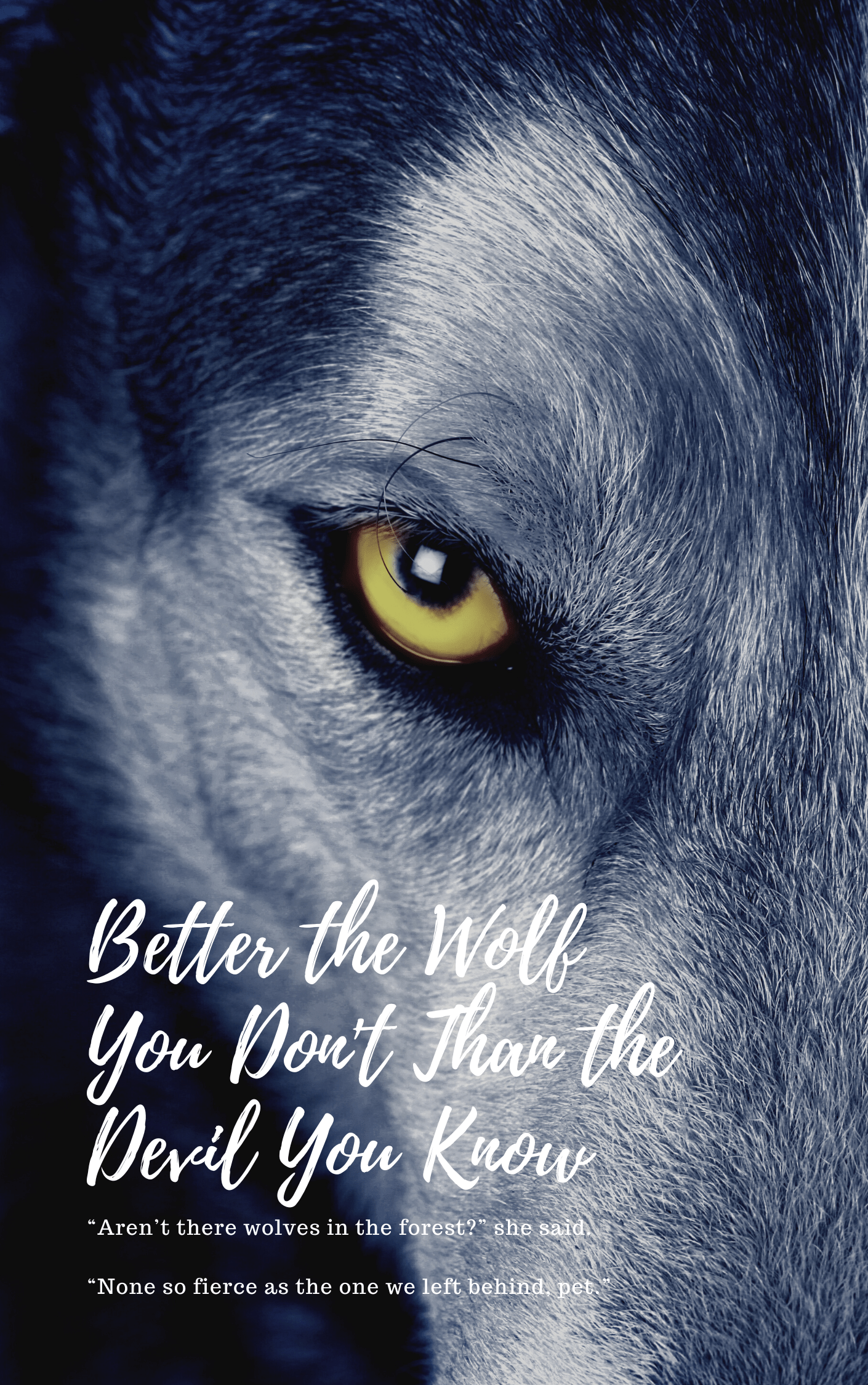
Better the Wolf You Don’t than the Devil You Know

“Are we in the forest, Mammy?” she said.

“Why yes, we are, love.”

“Aren’t there wolves in the forest?” she said.

“None so fierce as the one we left behind, pet.”

“Can I hold your hand, though, Mammy?” she said.

“Of course you can, sweetie.”

“Are we lost?” she said.

“Not lost enough, my dear.”

“Should I leave a trail so we can find our way home?” she said.

“Best not, darling, for we don’t want home to find us.”


This piece first appeared in The Centifictionist Vol. 3, Issue 2, Fall/Winter 2022

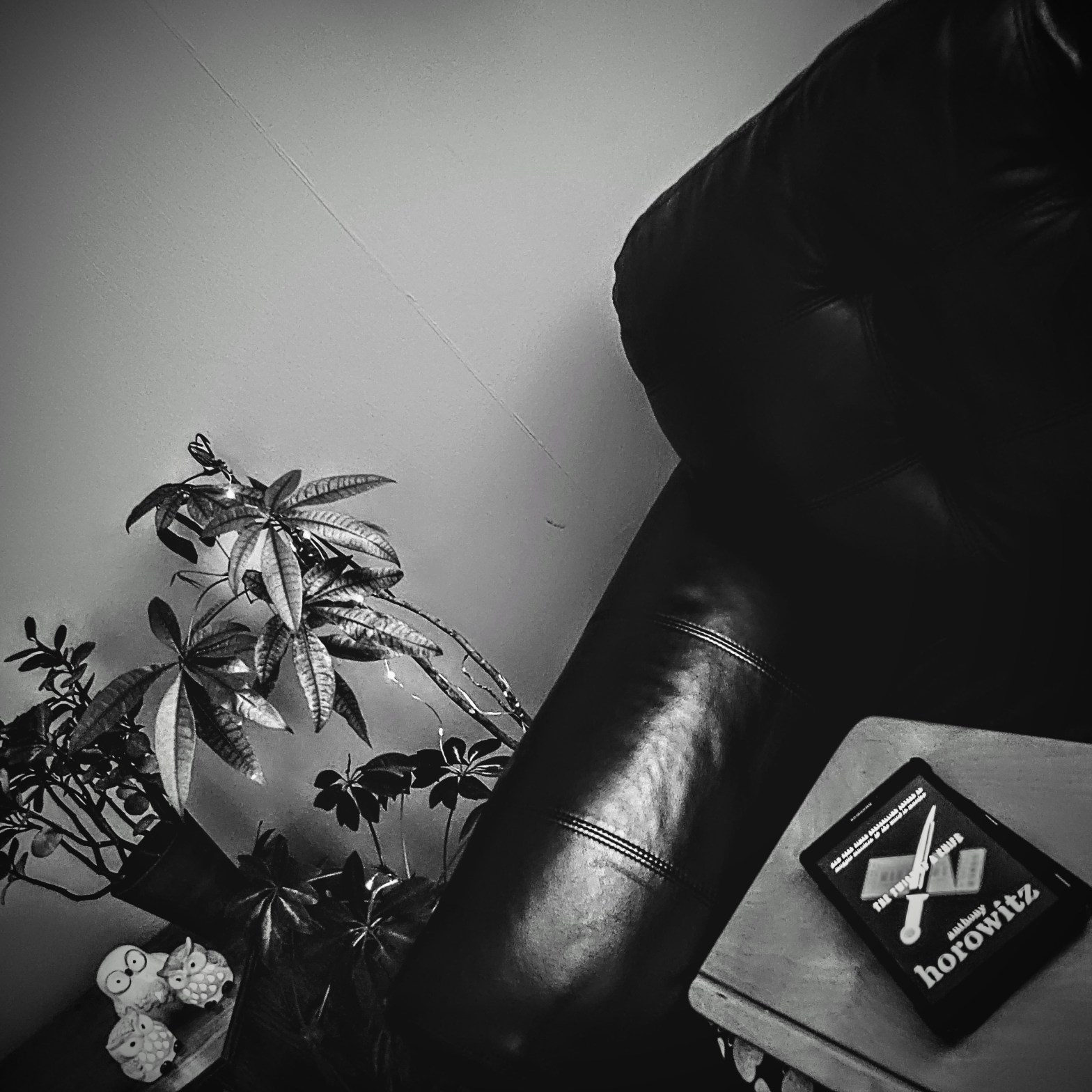
The Twist of a Knife (Anthony Horowitz)

The Twist of a Knife is the fourth book in a series where author Anthony Horowitz writes a version of himself into the book as he and fictional detective Daniel Hawthorne solve murders “together” and collaborate on true-crime books about them.

“It’s amazing, really, the invisible process that can turn complete strangers into friends.”

A theatre critic writes a scathing review of a play, “Mindgame,” that the real author actually wrote in real life. Predictably, she turns up dead. Predictably, the author is suspected of the murder. Not so predictably, until the bitter end, it actually looks like he’s going to go down for the crime. In fact, at one point, I wondered if it was going to be a Murder of Roger Ackroyd moment. (spoiler: it’s not)

“Why would I believe someone who spends his entire life making stuff up?”

There are plenty of suspects who loathed the victim, and it’s a race against the clock to figure out which of them framed Horowitz. Having cut ties with Hawthorne, the fictionalized Horowitz now has no choice but to turn to him for help. It’s wholly original, just like Horowitz’s other three meta-mysteries, and yet distinctly reminiscent of everything good about the whodunnit genre.

It’s as fast-paced and full of twists as the other three in the series, the best part of all of them being the delightful mix of fact and fiction. The story is stand-alone in that you don’t need to have read the other three to understand and enjoy The Twist of a Knife, although they are worth the read for their own sake.

There’s a fair amount of dry humour, which is one of the things I love about Horowitz’s writing. He can be self-indulgent while at the same time never really taking himself too seriously. The concept of Horowitz as his own main character is still engaging and entertaining. I had wondered if the concept might have gotten tired by the fourth novel, but such is not the case. The world of theatre is one that he lives in and brings alive adeptly for the reader, with plenty of name-dropping, of course, and the occasional breaking of the fourth wall.

“Theatre, at its best, is a candle that never goes out and all of these productions, along with many more, still burn in my memory.”

There are moments when the voice that comes across is very much just the author speaking directly to the reader, such as when he gets on his soap box and goes on a rampage about “cultural appropriation” and the “absurdity” of expecting writers to write exclusively about their own experience.

“And so I can’t even try? What does that leave me with? We’ve already agreed that I can’t write about Ahmet or Pranav. So presumably, I can’t write about Maureen or Sky either . . . because they’re both women! Or Lucky because he’s a dog! At the end of the day, if I listened to you, I’d only write about myself! A book full of middle-aged white writers describing middle-aged white writers being murdered by middle-aged white writers!”

As with the entire series, the way Horowitz describes people is perhaps my favourite thing about his writing. He can make you see a person, and not just their appearance, but their whole vibe, just with a few well-selected phrases.

“It was as if he had recognized how few pleasures he had in his life, making him all the more determined to cling on to the few that remained. Murder and cigarettes. That about summed him up.”

In The Twist of a Knife, Anthony Horowitz once again skillfully intertwines reality and fiction. The blend of dry humour, insightful commentary on writing and cultural issues, and the vivid portrayal of characters make this novel a standout in the genre. Despite being the fourth in the series, the concept remains fresh, and Horowitz’s ability to captivate readers with his storytelling prowess shines through, leaving readers eagerly anticipating his next literary endeavour.

“That’s why life is so different to fiction. Every day is a single page and you have no chance to thumb forward and see what lies ahead.”

Holding on to Happiness – Part One

The first time Dad fell was on a pebbly beach on the coast of Nova Scotia. I was still reeling, broken, trying to figure out how to be a whole person after a young and painful divorce. Mom and Dad had welcomed me home, a home that had gotten smaller since four kids had grown and moved on, but that still had room for me. Unbeknownst to them, a second failed fledgling was soon to find his way home—the boomerang generation strikes again.

It was amid this flurry of repeat adolescence that Dad’s legs started to fail. We had camped our way across New Brunswick and Prince Edward Island. Dad was already using a cane, one that he would hide behind him for the photos, disgruntled by its necessity in his still-young fifties. They had made the trip alone the previous three summers, enjoying the newfound freedom of a pair of empty-nesters. Then, I moved in. Suddenly, their spare room housed the shell of their youngest daughter, sleeping on a $20 yard-sale futon, manifesting a crisis of personality with an unfortunate hairstyle and an odd obsession with Irish indie rockabilly bands. They endured my efforts to learn to play the guitar with the patience only loving parents could have, comforted me through the entire spectrum of trauma and divorce-fueled breakdown, and supported me more than just financially throughout the resultant bankruptcy. And when it came time for their annual road trip, unwilling to leave me home alone in my unstable state, they packed me into the back seat and brought me along, emotional baggage and all.

I still have fond memories of that trip. Long, slow days of sunshine and sea air, miles and miles of breath-taking coastal scenery, the three of us each night huddled around a crackling fire with no expectations, no pressure, none of the anger and anxiety that had dominated my life for far too long. It went a long way toward starting to heal wounds I didn’t even know I had. For as much as it was the end, though, of what I thought was the hardest thing I’d ever been through, it distinctly marked the beginning of a new trial, the likes of which none of us had ever confronted.

For as much as it was the end, though, of what I thought was the hardest thing I’d ever been through, it distinctly marked the beginning of a new trial, the likes of which none of us had ever confronted.

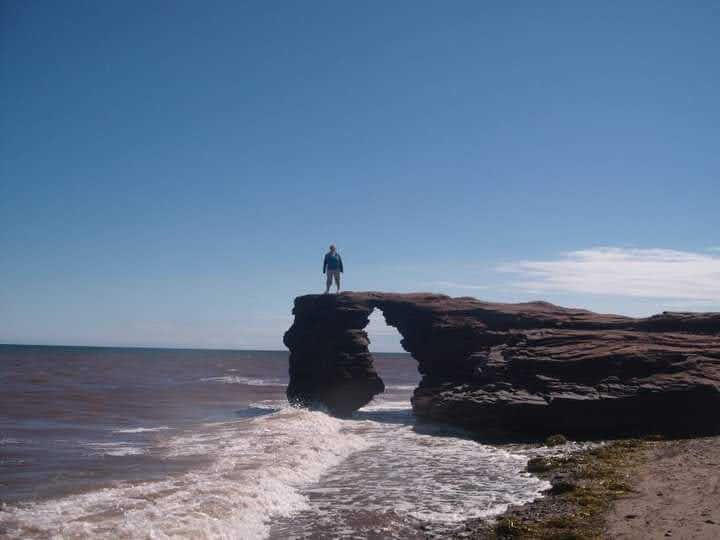
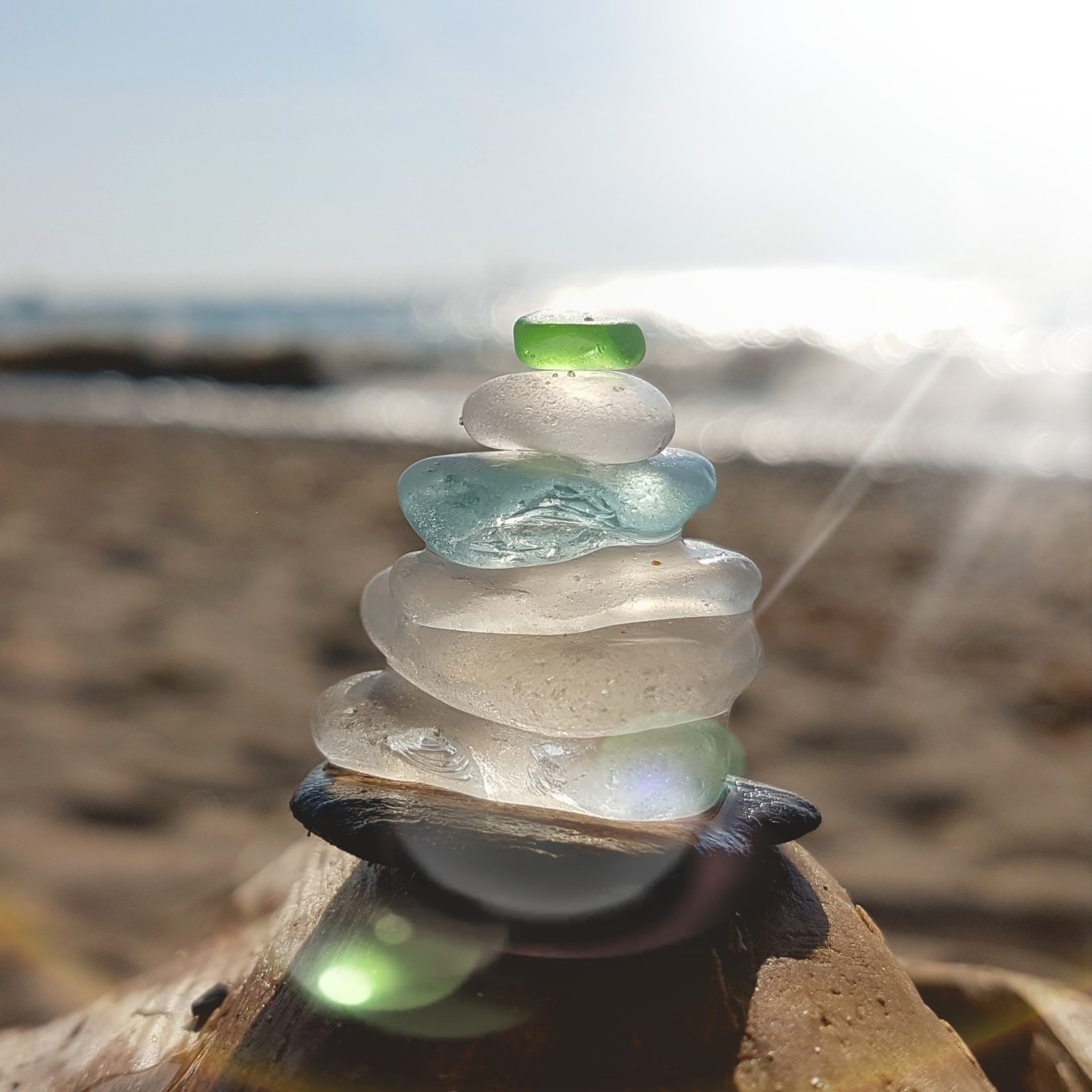
We stopped at the beach to stretch our legs. We were on our way home. It was just a small cove, one of hundreds of little places where you could pull off the highway and watch the Atlantic waves crash raucously ashore. We meandered along the water’s edge, looking for little shells and sea glass amongst the tiny pebbles. I was walking ahead of Mom and Dad when I heard a cry behind me. I turned back to see Dad, fallen, the waves pounding his back, pushing him over even as Mom struggled to pull him up. The next few minutes were a panicked blur of unrelenting surf that sent us staggering every time we thought we were gaining ground. The pebbles shifted underfoot with each new wave, sucking us backward, making it even harder to get Dad’s unsteady legs under him. When we finally dragged ourselves back to solid ground, Dad leaned against the car to catch his breath and held out his hand. When he uncurled his fingers, there, clutched in his palm, was the tiniest piece of sea glass. He had leaned over to pick it up and lost his balance. Dad nearly drowned, scared us all half to death, but he held on to what he’d locked his sights on through it all. That tenacity would come to characterize Dad’s personality through all the then-unknowns that lay ahead.

It’s a special kind of hell, watching a loved one slowly ravaged by an unidentified disease. Gradually, with ever-increasing pain, Dad found his left side weakening. A dragging foot begot a cane begot a walker begot a wheelchair. A constant battery of medical appointments and tests ruled out one thing after another. Not a stroke. Not multiple sclerosis. Every ruled-out condition brought a peculiar mix of relief, fear, and frustration. A couple of years passed before they settled on “lesions on the spinal cord.” From what? They couldn’t say. Will it get worse? They didn’t know. By this time, my brother had moved home, nursing bruises of his own from growing up and learning things the hard way. He learned the family business, eventually taking it over when Dad was forced into early retirement by his deteriorating condition.

Things seemed to settle for a while, with a suspicious sort of calm. My brother got married. I ventured out on my own again, cautiously. Mom and Dad found a new empty nest at the shore of Lake Huron, and with it, they clawed back some of the independence that had been slipping through their fingers. The soul-healing waves rolled in beneath pastel sunsets, and life carried on and found a new rhythm in that way that it does when you’re not looking.

Come back in three weeks’ time for Part Two. . .


Holding on to Happiness was first published in the June 2022 issue of Blank Spaces Magazine

How To: Survive NaNoWriMo

At the end of October, we looked at ten ways to win NaNoWriMo. Now, reality has set in. We’re halfway through the month. Maybe you started off strong, but the excitement is starting to wane. Maybe life has begun to interfere. Maybe, like me, the first third of the month held exciting writing-related events that you’d been looking forward to for months, and now that those much-anticipated events are over, it’s hard to feel motivated.

It’s time for thoughts to shift. How can you survive NaNoWriMo? How can you drag yourself to the finish line without being defeated by the exhaustion of daily life and the heaviness of the world? How can you celebrate the joy of this month of unbridled word-slinging when you’re tired and the days are short and dark?

Here are a few ideas to pep up your mojo:

1. Make a playlist.

Music is a great motivator and mood lifter. It can also be a boon to creativity. Create a playlist that matches the vibe of your WIP, or one that lifts your mood and energizes you, or one that makes your fingers fly across the keyboard faster. Better yet, bust out your favourite bops and just have a dance break.

2. Interview a character.

Sit down for a coffee with one of your characters and ask them a bunch of nosy personal questions. Write it as you go and count it all towards your word count. Make it silly or serious, trivial, or profound. This different approach to writing might kickstart your inspiration again.

3. Look at something inspiring.

Draw inspiration from other mediums. Think non-literary sources like art, music, television. These can provide fresh perspective and a welcome rest from words on a page.

4. Tell your inner editor where to go.

At this point in the month, you need all the words you can get. Tell that critical voice that thinks your words are trash to take a long walk off a short dock. Crappy words can be edited; a blank page cannot. Tell yourself the story as messily as you want and tell your inner editor they can return in the new year.

5. Take a day off.

Know when to let yourself take a break. If you burn yourself out trying to reach par every single day, you won’t make it to the end of the month. If you have compulsive completionist tendencies like me and can’t let a day go by with zero words, then write one sentence and take the rest of the day off, but do, please, take a day off.

6. Have fun with it.

What’s the point of NaNoWriMo if you don’t enjoy yourself? Throw something wild and wacky into the story and see where it takes you. So far in my WIP, I’ve got a stowaway kitten that ends up in the bakery and a weed-dealing teen who helps Amber break into someone’s house. I’ve been surprised by both developments. You don’t have to stick to your plan, and it doesn’t have to mirror reality. Have fun with it!

7. Mine real life.

Everything that happens can go in the story. This philosophy can help if you feel like you lack inspiration or the well of ideas is running dry. A friend’s kid told me a joke the other day that made me belly laugh. The joke is in my story now. Somebody ran a stop sign and nearly T-boned my car on my way to my parents’ place the other day. That’s in my story now. Everything that happens can be fodder for NaNoWriMo. If you feel like ideas are lacking, just look around you, think about what happened yesterday, and write it in. Use life as a prompt, and the well will never run dry.

All the best, and may the words flow as freely as the coffee out of my travel mug when it tipped over in my car last week. (I think I’ll put that in my story now.)


(I actually wanted to say, may the words flow as freely as a bowel movement after a bowl full of stewed prunes or something equally in poor taste, but I thought better of it. May the words flow as freely as Dad jokes at a pun convention, perhaps? As freely as the chilli out of Kevin’s pot? I’m sorry. I’ll stop now.)

Renata Cries Again

Renata loved to be sad. She positively basked in melancholy, as only someone who has never experienced real sadness could. She loved a tragedy, and we all know there’s no shortage of them to shed a tear over.

She loved to cry on rainy days. She’d sit in the window seat of that big bay window in her front room, her forehead pressed against the glass, tears tracing tracks down her face like the droplets that ran rivulets down the outside of the windowpane. Of what she thought that moved her so, I could never be quite sure.

“I just can’t respect someone who laughs at everything,” I heard her say once, with such gravity.

I loved Renata with more love than my heart could give. I loved her so it hurt. I loved her fiercely, possessively, with a burning that all but consumed me by the end.

There was something about her, some magnetic pull. It started like that urge you get when you’re driving by a car crash and you can’t help but crane your neck and gawk at the mangled wreckage. I’d see her on a Thursday at the library in the early afternoon. She’d float in, her eyes downcast, wearing misery like a perfume that wafted from her and scented the whole room. I’d look up from behind whatever medical journal I was pretending to study that week and watch her page through shelves of books, looking for the saddest, every time.

When she found one that she liked, she’d carry it gently over to a chair—always the same chair. I could watch her read for hours, my Renata. When she came to a passage that particularly moved her, she would close her eyes and place one hand, palm open wide, on the page, and the other over her heart. More than once I saw a tear caress that lovely cheek and then drip forlornly onto the page. I’d be lying if I said I hadn’t on occasion followed her with my eyes to note the location of the book replaced upon the shelf. I’ve taken more than one home and found the page adorned with her sorrow, to read again and again and try to feel what grieved her so.

I can’t say what went wrong between my dear Renata and me. Time does dreadful things, changes a person, you see. One time I spotted her through that big bay window and it gave me such a shock—she wore a smile. The sun was glaring down and Renata wore a smile and everything I knew and loved was not what it should be.

Not long after that, on a Thursday, when Renata came to the library, she was not alone. Her boisterous companion, immune it seemed to all my shushing, cheerfully selected an armload of books that were all wrong. And then I heard it. Her laughter, bubbly and bold, was as foreign a sound as had ever rung my ears. I knew then. I knew that something must be done.

How to Win NaNoWriMo 2023

It’s that time again! Tomorrow is the first day of National Novel Writing Month 2023, a crazy-hectic 30 days of churning out words and connecting with writers around the world. This will be my fourth NaNoWriMo, and it is a highlight of the year every year. The sense of community that has developed around the somewhat irrational goal of writing 50,000 words in a single month is something special.

I have “won” NaNoWriMo each of the past three years, reaching that illustrious target of 50,000 words, and I’m here to share some tips on how you can, too.

1. Silence Your Inner Editor

During NaNoWriMo, focus on getting words on the page without worrying about perfection. The goal is to write, not edit. Save revisions for after the challenge is over. That means that the backspace and delete keys are off-limits!

2. Have a Plan

Being a Planner, I start the month with a fairly detailed outline of the plot of my novel. However, if you identify as a Pantser, someone who prefers to discover the story as you go, you can still benefit from a scaled-back version of a plan. Each day, at the end of your last writing session, jot down a couple of sentences about what you will start writing the next day. Alternatively, at the start of each new scene or chapter, write a few sentences on what will happen in the chapter. Knowing where you’re going next will help keep the story moving and the words flowing.

3. Make Voice Notes of Story Sparks

When you’re away from your computer, use a voice recording app to capture story sparks, dialogue ideas, or character quirks. You can transcribe these ideas later and incorporate them into your novel.

4. Writing Sprints!

Sprints are absolutely key to winning NaNoWriMo for me. Whether done on Discord with a writing group or just on my own with a timer, letting my fingers fly for a set amount of time, just trying to get as many words down as possible before the time is up is how I manage to get my daily word count. These short, focused chunks will get you across the finish line.

5. Take Breaks

That said, breaks between sprints are also important. Stretch a little. Hydrate. Go for a walk. Talk to your plants. Have a little snacky snack. Scritch your cat’s belly. And then set the timer again and get those words out! Alternating sprints and breaks will boost productivity and prevent fatigue.

6. Get Into the Hype

Let the excitement surrounding NaNo motivate you. Get into the spirit of it. Join in with events like the Global Write-In Crawl, One Hundred Hours of Writing, any write-ins organized for your local area, etc. Another local favourite of mine is the 12-hour writing intensive hosted by Chicken House Press.

7. Find a Support System

I highly recommend connecting with your region through the NaNoWriMo site or joining a local writing group if you can find one. Join an online forum, Discord server, or social media community of fellow NaNoWriMo participants. Having a support system can keep you motivated, provide accountability, and offer encouragement during the tough moments.

8. Write and Inscribe Copiously Abundant Amounts of Words Descriptively

Now is not the time to mince words. Be generous with your descriptions. Play with flowery prose and run-on sentences. It can all be fixed in the edit. Letting your creativity flow freely with reckless abandon can lead to some delightful hidden gems. Have fun with it.

9. Write What You Want

Don’t let the dreaded writer’s block win. If you hit a rough patch, stick in an insert like [BRILLIANT LINE OF DIALOGUE] or [VITAL CLUE HERE] or [SOMETHING FUNNY HAPPENS] and move on. If you’re not really feeling a scene, jump ahead and write something you’re excited about. There’s no law that says you have to write in order.

10. Track and Reward Your Progress

Part of the fun of NaNoWriMo is the element of competing against yourself, sort of the gamification of novel writing. Use a word tracker to keep track of your progress. I use both the one on the NaNoWriMo website and a paper one. I also usually do a NaNo bingo card to motivate myself with little challenges throughout the month. You can download a free PDF word tracker calendar and bingo card at the bottom of this post.

As I reach each 10K words, I’ll reward myself with pre-planned “treat yo’self” style rewards. This year:

  • 10,000 words – Bubble tea
  • 20,000 words – Movie night – don’t forget the snacks
  • 30,000 words – Order a book off my Amazon Wishlist
  • 40,000 words – Spa night at home – face masks, candles, wine, eucalyptus in the diffuser, the whole shebang
  • 50,000 words – Celebratory Dinner Out

The Secret History (Donna Tartt)

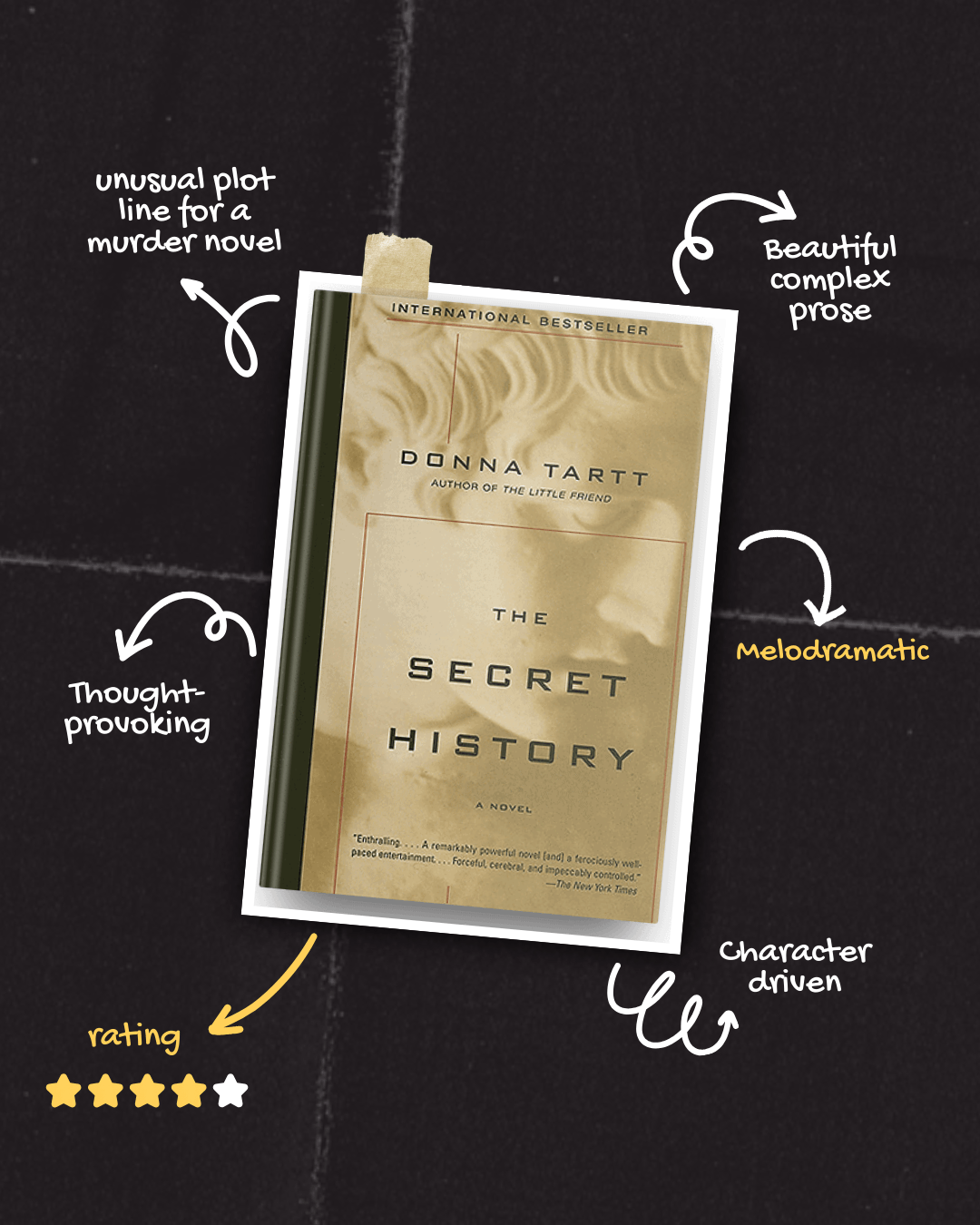
Although I’m sharing this review in the “Books I’ve Loved” section of my blog, I won’t claim that I loved The Secret History. There are things I loved about it and many things I did not, but I do feel it was thought-provoking and worth the read.

In The Secret History by Donna Tartt, the narrator, Richard Pappin, transfers to Hampden College in Vermont and falls in love with a cultlike group of students handpicked by their enigmatic professor, Julian, to study Greek classicism. We watch as Richard struggles to fit in and learn the dynamics of this group, and eventually becomes a party to their darkest secret.

“It’s funny, but thinking back on it now, I realize that this particular point in time, as I stood there blinking in the deserted hall, was the one point at which I might have chosen to do something very much different from what I actually did.”

This novel has a spectacular first line:

“The snow in the mountains was melting and Bunny had been dead for several weeks before we came to understand the gravity of our situation.”

Tartt tells us the secret on the very first page. We simply must read on to discover how events led to this murder. It is a murder mystery beneath it all, although we know both the victim and the perpetrators from the very first page. The story is driven by character rather than plot, with a fascinating examination of human morality, the descent into madness, and the underlying motive of each of the characters. That being said, the plot itself surprised me several times, so don’t underestimate the storyline of this novel.

“Some things are too terrible to grasp at once. Other things – naked, sputtering, indelible in their horror – are too terrible to really grasp ever at all. It is only later, in solitude, in memory that the realization dawns: when the ashes are cold; when the mourners have departed; when one looks around and finds oneself – quite to one’s surprise – in an entirely different world.”

The book explores the concept that terrible things can hold a kind of dark beauty and that beauty often instills fear. I found the idea intriguing that these so-called important and serious philosophical studies and ponderings can actually send a person further from reality, rationality, and even morality.

“Beauty is terror. Whatever we call beautiful, we quiver before it.”

“Beauty is rarely soft or consolatory. Quite the contrary. Genuine beauty is always quite alarming.”

It is sometimes a slog to read, and there’s no denying it’s a long book. I would even go so far as to say that it’s far longer than it needs to be. But there are moments of beauty that make it worth the read. All of the characters are thoroughly unlikeable in their own way but with glimpses of relatable qualities.

“Why does that obstinate little voice in our heads torment us so? Could it be because it reminds us that we are alive, of our mortality, of our individual souls – which, after all, we are too afraid to surrender but yet make us feel more miserable than any other thing? It is a terrible thing to learn as a child that one is a being separate from the world, that no one and no thing hurts along with one’s burned tongues and skinned knees, that one’s aches and pains are all one’s own. Even more terrible, as we grow older, to learn that no person, no matter how beloved, can ever truly understand us. Our own selves make us most unhappy, and that’s why we’re so anxious to lose them, don’t you think?”

The Secret History is self-indulgent and melodramatic, but isn’t that fitting for a novel about college-age classical philosophy students? It’s well worth the read if you have the time and energy and if, like me, you enjoy beautiful words and don’t mind sifting through too many of them to find the point.

“Does such a thing as ‘the fatal flaw,’ that showy dark crack running down the middle of a life, exist outside literature? I used to think it didn’t. Now I think it does. And I think that mine is this: a morbid longing for the picturesque at all costs.”