Identifying Your Ideal Reader and Why it Matters

An essential step in your writing journey is identifying the ideal reader for your book. I recently listened to a podcast episode of Fiction Writing Made Easy by Savannah Gilbo entitled “How to Identify Your Story’s Ideal Reader,” which made some interesting points on the subject.

“If you don’t know who your ideal reader is, how can you possibly write a story that meets (or exceeds) your ideal reader’s expectations?”

Savannah Gilbo

Gilbo had a refreshingly different take on this subject. Rather than framing her discussion around the ideal commercial market for your book, she discussed having in mind that one person who’s going to “love your book just as much as you do.” Like, an actual person in your mind that represents the type of person who would read your book and love it enough to recommend it to others. For this exercise, they can be based on a real person or entirely hypothetical, but picture a super fan who would automatically buy every book you write. Do you have an author who is an “auto-buy”? You are their ideal reader.

The flip side of the coin is the opinion that you should stay true to your story and just tell it, without being influenced or distracted by thoughts of the end user. This argument has merit as well, of course. But don’t we change how we tell a story based on who our audience is? Don’t we highlight different aspects of an anecdote depending on whom we’re talking to? With that thought in mind, I suggest that it could be a beneficial exercise to have in mind who is most likely to pick up and enjoy your book. As you’re writing and editing with this person in mind, you can feel like you’re telling the story to someone rather than just telling it. Gilbo recommends creating an ideal reader profile, an interesting exercise that had never occurred to me before.

“Art goes both ways. Writers tell stories and think they mean one thing. Readers take stories into their own lives and they mean something else.”

Neil Gaiman

Let’s be clear here; I’m not talking about jumping the gun. I mean, it’s great to think about your book being out in the big wide world, but I absolutely do not believe that throughout the entire writing process, you should engineer your story to fit in a perfect little commercialized box. There’s too much of that expectation in the publishing world already. Rather, the suggestion is to lend focus to your writing and editing by thinking of how a specific person will react and how the story will fulfill their expectations, thus targeting your story in a way that will resonate with said person.

“There IS a person out there who will love and appreciate your story. And when you know who you’re writing for—while you’re writing—the story you come up with will be that much more intentional and powerful.”

Savannah Gilbo

My ideal reader’s name is Ashley, a 35-year-old millennial living alone in a small town in the northeastern US. In her spare time, she binge-watches murder mysteries and sits in cafes people-watching, concocting zany stories about strangers’ lives. She hates her 9-5 grind, loves reading and staying home, and has the remnants of 15 started and abandoned hobbies cluttering her closets. In general, she’s a self-sufficient, curious, sarcastic, cynical over-thinker who sometimes loses sleep at night over the state of the world’s economy and the environment. She’s more passive than driven, and more than anything in this world, Ashley wants to retire early to her own little house in the country and spend her days writing a novel or mastering French cooking—basically just for everyone to leave her alone. My book will serve my ideal reader by providing escapism, a puzzle she can solve, and a world that mirrors her dream of life’s problems being as easily solvable as all the cozy mysteries she reads.

Your turn. Who is your ideal reader?

“No two readers can or will ever read the same book, because the reader builds the book in collaboration with the author.”

Neil Gaiman
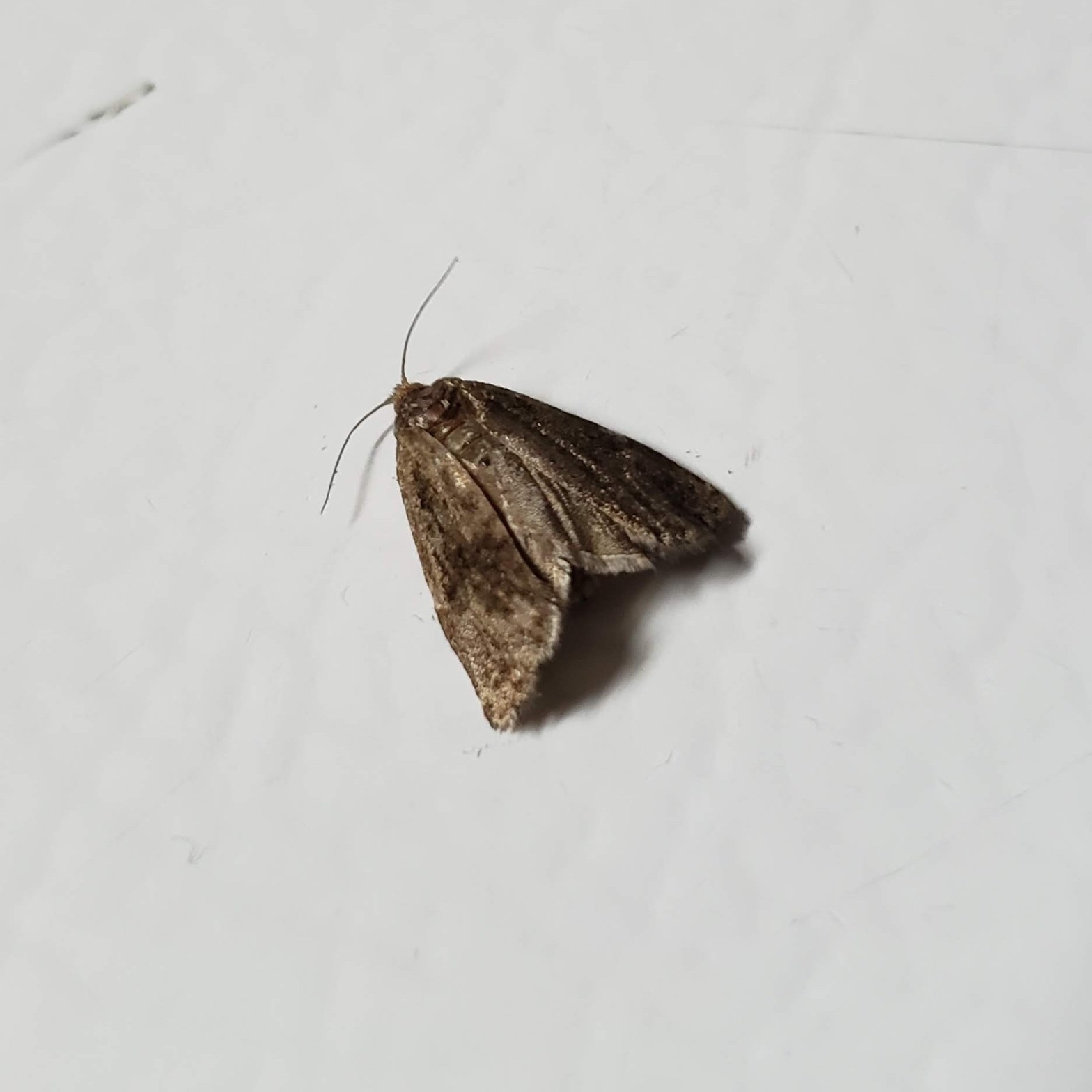
The botched pursuit of a mate by adult males of the order Lepidoptera

It’s 2:00 am, and I’m bent over the sink, sucking mango off the stone, juice running down my forearms and dripping onto yesterday’s dirty dishes. Seventy-two moth carcasses fill the garbage can in their crumpled Kleenex shrouds. I know. I counted as I slaughtered. I’ve still got the newspaper handy, rolled into a weapon, smudged with wing dust and squidgy moth entrails, just in case I spot another winged intruder.

You hate moths. You’d scream and squeal and hide your head under the covers, if you were here. I’ve got a toque pulled low over my ears just in case, not forgetting that story you always tell about the time your uncle got a moth in his ear and had to wait four hours in the ER for the on-call doctor to show up and fish it out. Imagine the torture of that incessant fluttering working its way to your brain, enough to drive you mad.

They swarmed in after midnight, drawn by the light, I guess. I guess mine was the only one still lit, mine the only eyes still wide, mine the only head still trying to wrap itself around that peculiar loneliness, that nagging sense of trespassing in a world to which I don’t belong.

I swatted over fifty before I figured out how they were getting in. They came marching in their droves, driven by some misguided urge of instinct, up the gap between the window panes above an air conditioner that wheezed and chugged and tried in vain to lessen the humidity. I sweated and I swatted, determined not to rest until I got them all. You’d never come back if the place were infested with moths, would you?

I catch a flutter from the corner of my eye as your departing words echo through my mind and pull a kitchen chair across to climb and smack it where it lands. You’d said you’d really had it this time—had enough of being with someone who’s emotionally unavailable, pathologically repressed, allergic to feelings. I use a tissue to wipe away the traces of another solitary male in search of eggs to fertilize, the irony of which is not lost on me. They should go climb a tree.

There are seventy-three moth carcasses in the garbage can, a mango pit, and half a box of Kleenex—two that dried my brow but not my eyes. It’s 2:17 am, and I’m curled on our too-small double bed, careful not to sweat on your half of the sheets, waiting for sleep to stop my racing mind.

I never learned how to say I love you, I whisper to the empty space I’m spooning, but I know how to kill a moth.

While Some Throw Rocks at the Object of Their Fear

The girls on the playground all shrieked, scattering like so many frightened birds. Emma knelt, the cool grass, still dewy, tickling her bare knees. A row of maples cast their thick shadow and leant a chill to the air. The little creature lay still.

She watched it for a moment, nearly holding her breath, the squawks and squeals of the flighty girls fading to the background. Emma reached out one tentative finger. At her touch the raspy scales constricted and coiled, tensed into an anxious lowercase e. She gently slid her fingers under until the coil lay in her palm. Her warm skin marvelled against the cool underbelly. A tiny forked tongue flicked in and out, assessing, sensing, wary but not aggressive.

As her heat transferred, the wee serpent twisted on itself and hugged closer to her skin.

“You’re just looking for some warmth, aren’t you little guy?”

She felt the motion before she saw it, the displacement of air as something whizzed past her head, knocking her hand. The little body writhing through the air. The musk of sweat. Grass-stained knees and scuffed shoes. Dirt under fingernails clutching sharp rock. A blow, then two, then three.

A triumphant cry. The limp and lifeless form, discarded in the dust like an old frayed shoelace.

With fists clenched and jaw clenched and eyes clenched harder not to let them spill, Emma stood.

“It wasn’t hurting anyone! Why do you hate them so?”

2023: A Plan

I was hit with an unexpected burst of mental energy the other day and my brain, despite the fog I’ve been living under since I was sick at the start of December, formulated an ambitious plan for 2023. Did I write it down? No. I’m a writer. Ideas flash at all the wrong times and either don’t get written down at all or get scrawled on scrap paper in some incoherent way that, come the light of day, doesn’t even resemble the glorious original thought.

Nevertheless, the feeling spurred me to sit down and think about what I actually wanted to accomplish with my writing in 2023. As I mentioned in my previous post, I was disappointed by my book’s progress, or lack thereof, this year. What can I do to change that?

The best way to start any plan is at the end. Where do you want to be? What do you want to have accomplished? Once you know what you’re aiming for, you can chart the path that will lead you there.

My target for 2023 is to finish my first novel. I want it to be edited, polished, and submission-ready. So what steps do I need to take to get it from the ugly, holey, disjointed second draft that it is to something shiny, polished, and ready to read?

  1. Do a read-through to identify large story arc issues. (Structural Story Editing) This will be challenging, but my aim in this read-through is just to identify and note the plot holes that need correcting and the research/decisions that need to be done—no editing allowed in this pass.
  2. Chapter by chapter, make a list of what needs to be done to address the issues identified in step 1 and a separate list of necessary research.
  3. Research. I know there is still some research in this manuscript that I have been procrastinating on. I’ve also procrastinated on a few minor decisions that I need to just make up my mind on.
  4. Tackle one chapter at a time, doing rewrites to address each identified issue. It sounds like a small step, but this one will take a lot of time.
  5. Get a printed copy of the manuscript, or better yet, a couple of copies (see Step 6). This sounds premature, but hear me out. For deeper edits, I need to see it on paper.
  6. Beta Readers! This is a big step. My inclination is to want everything to be perfect before I let anyone read it. Still, for obvious reasons, it would be better to have some readers give me feedback before I am too far along in the editing process. It will be harder to make major changes if I leave this step too late. Now that I’m compiling this list, I feel like this step should even come earlier. Ugh. I might have to feel this out once I get stuck into the structural edits. I want the story to be some semblance of readable before I ask for feedback.
  7. Line Editing. This pass will work on tone, style, and consistency. For this step, I plan to use a combination of reading the manuscript aloud and hopefully using a text-to-speech platform for hearing the book read to me.
  8. Copy Editing. Time to look at grammar, spelling, and punctuation. My brain will not allow me to ignore this throughout the process, but this will be a final polish of the grammar.

That’s a lot. Now that I see it in black and white, I both regret procrastinating and understand why I’ve been putting this off. It’s intimidating. But the point of this exercise is to break it all down into small, manageable steps. I’ll write each of these bullet points on their own page and break them down further, attaching dates to them to keep myself accountable.

Now, this is the point where my dear readers are going to scoff at my lofty goals for 2023. Editing my novel is not my only writing goal. It should be. It’s a big one. But my brain is fickle, and if I don’t let it have any creative outlet beyond working on the same novel manuscript for a whole calendar year, I will give up. I need to play with new ideas, and short fiction is a great format for that. I enjoyed my writing goals from last year, so I’m going to repeat them.

  1. Consistent weekly blog posts. Yep, that’s right. There will be new content here at AlyWrites every Tuesday. Look for new flash fiction and poetry, writing tips, and some of my own recipes.
  2. #Submit2023. This challenge is a popular one over at Writers’ HQ. I’ll still be dabbling in flash fiction, and I aim to submit at least one piece each month.
  3. Read more. Read for fun. Read to learn. I’d like to read the two writing craft books that were gifted to me this past summer. I’d also like to make more time for reading purely for enjoyment and relaxation—refill the creative cup.

Phew. That’s a lot. I think I need to go lay down.

Here’s a little reminder, as much for myself as for anyone reading this: Be reasonable. Goals are great. Pressure, on the other hand, can be harmful. If something isn’t working or is too draining, don’t be afraid to adjust. And at the end of the day, if you don’t make it all the way to your target, look behind you at all the progress you’ve made instead of feeling like you’ve failed. Progress is success.

What writing goals are you setting for 2023? Please share in the comments. I’ll be sharing my progress over on Instagram for accountability, so follow me over there if you aren’t already.

2022: A Retrospective

It’s time to reflect as these short, dark days creep irresistibly toward the close of another year. This time of year always feels like the days are literally shorter—not just fewer daylight hours, but somehow actually less time on the clock. I reminisce about the lists of things I accomplished in single days earlier in the year and marvel that I had the energy when now, I’m in pyjamas by 7:30 and struggling to keep my eyes open.

I started the year with a few simple goals with respect to my writing.

  1. Maintain a consistent routine of posting here, on my blog.
  2. Submit my work to a different literary publication each month.
  3. “Read broadly, read outside my genre, read to fuel my creativity and hone my craft.”
  4. Stop procrastinating and EDIT MY NOVEL.

It has been a weird year. I’m just putting that out there. Returning to an in-person existence has been… Interesting? Traumatic? Exciting? Anxiety-inducing? All of the above. I miss the slower simplicity of lockdown, while recognizing how essential it is to have meaningful in-person connections. Going back to some things felt like slipping on a familiar, cozy, well-worn pair of shoes. Others felt a little more like a stiff and starchy brand-new pair of jeans, a size too small and incredibly uncomfortable.

That said, as the close of this year approaches, I find I’m somewhat dissatisfied with what I accomplished this year. My aim was to focus more intently on completing my novel, which required putting flash fiction firmly on the back burner. As a result, I wrote less short fiction, submitted less short fiction, and consequently had fewer pieces accepted to be published. This would feel less disappointing if I had made meaningful progress on my novel, but it seems to be stagnating. Distraction abounded this year, and I feel the need to remind myself of some of the things I can be proud of, hiding amongst the weeds.

Goal # 1:

Achieved. I have posted consistently every Tuesday of 2022. Some of the pieces I am astonishingly proud of. My Canadian submissions opportunities posts (Part One and Part Two) were wildly popular and continue to draw traffic to my site. My essay, Learning Facts From Fiction, is a subject quite close to my heart. I developed and shared several new recipes. I released some poetry for the first time in years: Darkness Lingers, Candy Floss Concerns, and New Beginnings are a few of my favourites. And the best of all the flash fiction I published this year? The Girl Who Screamed in the Night or I Am The Deafening Silence. Don’t make me choose.

Goal # 2:

Achieved. I have submitted my work 26 times this year, each month trying a new publication that I had never submitted to before. I had 20 rejections and 3 acceptances, and 6 pieces are still waiting for results (Yes, the math does add up. I started 2022 with 3 rejections in the first week of January that were leftover subs from 2021). I’m proud of myself for branching out and sending my work further afield, especially for submitting a non-fiction piece for the first time ever and having it published in Blank Spaces Magazine. And of course, I was delighted to find out that my short story Not All Sparks Start Fires was selected to be published in the upcoming Small Town Summer Nights anthology.

Goal # 3:

The jury’s still out. I didn’t read as much as I intended. Life gets in the way. Netflix gets in the way. I did, however, step outside of my genre and read a couple of fantastic romcoms from Sarah Grunder Ruiz. My favourite read this year was the historical fiction masterpiece, All the Light We Cannot See. I had the pleasure of reviewing a couple of ARCs as well, which was a fun new adventure. I also found room in my budget to subscribe to a couple of printed lit mags, which I think is so important (if it’s financially feasible).

Goal # 4:

Undecided. I did a complete rewrite of my manuscript, changing it from third to first person. That’s a big deal. But then it stagnated. And then Shiny Thing Syndrome took over, and I wrote a draft of another sequel during NaNoWriMo. Will 2023 be the year I finally finish my first novel? I really, really hope so. More on this in next week’s post.

There is no doubt I have things to be proud of this year. I do have some lingering wistfulness, but I’m trying to focus on the positive—I enjoyed writing. Two 12-hour writing intensives hosted by Chicken House Press were an absolute highlight. NaNoWriMo 2022 was a joy. Friday mornings writing and sipping cappuccino at Chickadee Landing were such a treat. The 100 Days of Writing Challenge with Sarah and the gang at Writers’ HQ was a chaotic adventure. I think I grew as a writer, and I know I enjoyed the process.

I suppose that’s entirely the point.

“You’re not going to be a writer someday. You’re a writer today. Discipline yourself to write and take time to enjoy writing. Do it a lot. Have fun with it. Begin now.”

Jack Heffron

Bah Humbug

Merry Christmas? You’re new around these parts, aren’t ya?

Everywhere you go this time of year you’d think it’s all tidings of comfort and joy and deck the halls with buckets of bliss. Buckets of booze, more like, and his hands weren’t nowhere near comforting, nor merry neither.

I know what you’re going to say about respect fer my elders, so just shut it before you even start. I’m not some kid no more, I’ve been around.

The old bastard used to club me round the ears for nothing before I got too fast for him. One of those big heavy fists, all calluses and scars, a right good swing could lay me out in a second. He was used to slingin’ carcasses around—I was just another limp body.

He used to work in the butchers, you know. Come home all bloody and smelling of flesh. Gross.

Don’t look now, but that’s Mrs. Guthrie walking by, dragging that little hellion of hers by the ear. Man, that kid can scream louder than a stuck pig. I’d as soon as throw myself off a cliff if I had to mother one like that. He’s an odd-looking brat too, looks nothing like his parents, pulling faces and crossing those brown eyes at me over the church pew when his ma’s not looking. Not gonna have kids, myself. Not worth the hassle.

I bet you’ve got a half-dozen of your own at home? No? Funny, you look the type.

My old man didn’t want kids neither. Got stuck with me anyways, so the joke’s on him. After my own Ma died, when he weren’t right sloshed, he used to teach me cards at night. We’d sit up so late I’d get heck for dozing off in class the next day, but he’d just wink one of his big brown eyes at my teacher Mrs. Fletcher when she called him in, and that’d be the end of it. He quit when I got so good I’d win all his drinkin’ money off him.

You shouldn’t judge, man. Gambling’s the least of all the evils I learnt off him, so get over it.

Mr. Guthrie, that’s the boss man over there at the butchers, he’s the one who sacked him. Somethin’ to do with skiving off work for two hours at lunch most days and coming back smellin’ of cheap whiskey. Of course rumour has it there was somethin’ a little more personal behind it. Don’t bother asking me how I know that, I’ve got eyes and ears, don’t I?

Anyways, I’ve gotta hit the road. Some people might have all day to stand around and chew the fat, not me.  If I don’t get the supper on myself I’ll go to bed hungry. Not that I’ll sleep even with my belly full, neither. What I wouldn’t give for a silent holy night without that snoring in the next room rattlin’ the window panes.

A Smart Accessory to Murder

Alexa, wake me up at 7am.

Alexa, turn off bedroom lights.

Alexa, turn on bedroom lights.

Alexa, what time is it?

Alexa, call Downstairs Neighbour.

Alexa, find me a pair of noise-cancelling headphones on Amazon.

Alexa, snooze.

Alexa, snooze.


Alexa, turn on bedroom lights.

Alexa, what time is it?

Alexa, track my package.

Alexa, Google: How to get someone evicted.

Alexa, shut up.


Alexa, turn on bedroom lights.

Alexa, play polka music at full volume.

Alexa, turn up the volume.

Alexa, set the bass to maximum.

Alexa, louder.

Alexa, decline call.


Alexa, play messages.

Alexa, delete messages.

Alexa, Wikipedia: Warfarin.

Alexa, tell me more.

Alexa, how many ounces are in a pound?

Alexa, how many pounds are in a kilo?

Alexa, show me a slow-cooker recipe for Boeuf Bourguignon.

Alexa, add red wine, rat bait, hefty garbage bags, and pearl onions to my shopping list.

Alexa, play that song that goes, “those black-eyed peas, they tasted alright to me, Earl.”

Alexa, add Dinner with Downstairs Neighbour to my calendar for Thursday at 6pm.


Alexa, show me the front door camera.

Alexa, play Relaxing Dinner Music playlist, volume 2.

Alexa, call 911. Oh dear. Oh no. Oh what a mess. It wasn’t supposed to happen this fast. Oh crap.

Alexa, stop. Alexa, hang up!

Alexa, Google: how to get body fluids out of carpet.

Alexa, it’s no good, just shut up.

Alexa, what countries do not have extradition treaties with Canada?

Alexa, what’s the weather like in Vanuatu?

Alexa, what’s the weather like in Maldives?

Alexa, flip a coin.

Alexa, ask Uber to request a ride to the airport.

Alexa, clear search history.

New Beginnings

I like a long spring, he said, with green shoots poking promises through the leftover snow and early robins shivering on barren trees.

I like it to be over, she said.

I like sensing hidden growth, he said, almost ready to emerge and yet, for now, nothing but a feeling.

I like to see it with my own eyes, she said.

I like to savour the unfurling leaves, he said, and take long walks along the swollen river watching the current carry away winter’s last shards.

I like it when it’s already gone, she said.

I like the slow build-up of warmth, he said, the creeping anticipation of the lengthening days and strengthening sun and—

I like it when it’s here, she said.

I like to linger in the moment, he said.

I don’t like to wait, she said.

10 Tips for Surviving NaNoWriMo

I wasn’t going to do NaNoWriMo this year. I have a second draft of a first novel that I’m supposed to be revising. I have the first draft of a second novel that is so far on the back burner that it’s going to be like reading someone else’s writing by the time I revisit it. I’m still doggedly pursuing my goal of submitting my flash fiction to a different literary publication every month this year. I’ve entered my work in three different competitions in the past six weeks, which involves hours of polishing.  And on top of all that, I maintain this blog with once-weekly posts because, doggone it, if no one else is going to publish my work, I’ll do it myself thank you very much!

And yet . . .

Yesterday I reached 24,303 words on a brand-spanking new project. It’s book three, or a hot mess of spewed verbiage that will eventually become book three if I ever stop chasing after new ideas. Yes, my cake-baking, procrastinating, cardigan-wearing millennial who can’t understand the pressure to have a side hustle when she doesn’t even want to have a main hustle is back at her reluctant amateur sleuthing. Book three will be full of family drama, dark secrets, deathbed confessions, and bitter estrangement. I’m not going to lie—it has been a lot of fun to write so far.

This is my third NaNoWriMo. I’ve been hooked since my first, in 2020. I love the pressure, the deadline, the edge of competing against myself, the hype and the sense of community on the discord servers I frequent. I love word sprints and random prompts and letting my fingers take over when my mind doesn’t quite know where the story should go. Even so, around this time of the month, things can become a bit of a slog. Some of the initial enthusiasm is dying down. People are getting tired. I’m getting tired. Life takes a wrong turn and starts getting in the way. The laundry pile gets too big.

How can you get over the hump, out of the blahs, and onwards toward the finish line? Here are 10 tips to help you survive NaNoWriMo:

1) Reward yourself.

Gold stars for every milestone! Bribery works, people. When I reach 30,000 words, I’m having an at-home spa night. Rejuvenating face mask, bubble bath, eucalyptus in the diffuser, twinkly lights and candles, a glass of prosecco, fluffy robe—it’s happening! 20,000 was an early pyjama evening with a book from my TBR. Little treats work too. I wrote today even though I was tired? Cappucino for me! I hit my word target for the day? Let’s scroll TikTok for half an hour. You get the idea.

2) Step away.

Sometimes your brain says enough is enough. Listen to it. Go outside for a walk, switch on a comfort show on Netflix, tackle the laundry—whatever it is, do something that will let your brain recharge.

3) Let it suck.

You’re not writing the next Pulitzer Prize-winning novel. You’re spewing the raw elements of a story onto the page. Let it be bad. You can edit bad; you can’t edit a blank page. Just get the words flowing and enjoy the journey. See where the momentum takes you. Ignore the backspace button!

4) Don’t compare.

Some of the writers I sprint with can rack up the most intimidating word counts. If I allowed myself to be discouraged by how my words stack up beside theirs, I’d probably give up. Don’t compare yourself to other writers; just be encouraged by running this crazy marathon alongside them.

5) Take care of your body.

Eat good food. Move your body. Get some sleep. Drink more water. And repeat.

6) Check in with others.

Writing can be lonely, but it doesn’t have to be. Connect with your region through the NaNo website. Get on a discord server where you can run some sprints with people. Find a local in-person write-in. Even going to a café to write can feel a little less alone.

7) Schedule your time.

Time is a wily thing. It slips away so quickly, and it can be hard to guard what precious little writing time you may have. Block out times on your schedule that you will dedicate to writing. Set your phone to remind you and turn off any digital distractions that might eat away at that time slot.

8) Track your progress.

Have a visual depiction of your progress. It is so satisfying to colour in bubbles or squares on a progress chart and see them gradually getting closer and closer to the goal.

9) Put a pin in it.

You’ll come across roadblocks in your story. Have a notebook handy to scribble them down and come back to later. You can decide on names, hair colour, and a lot of the minutia later. Big plot hole? Put it in your notes. Decision you’re waffling on? Put it in your notes. Scene you’re totally stuck on? Put it in your notes, or [USE A PLACEHOLDER] and move on for now.

10) Enjoy the process.

It’s just for fun, after all. If you’re not enjoying it, what’s the point? Find joy in the act of creating stories.

Should You Talk About Your Writing?

Is it valuable to get over your nerves and talk to others about your writing?

Some authors are thrilled to talk about their writing. I’ve heard of writers whose friends and family wish they would stop endlessly oversharing about their work. I envy those people who feel so free and open with their writing.

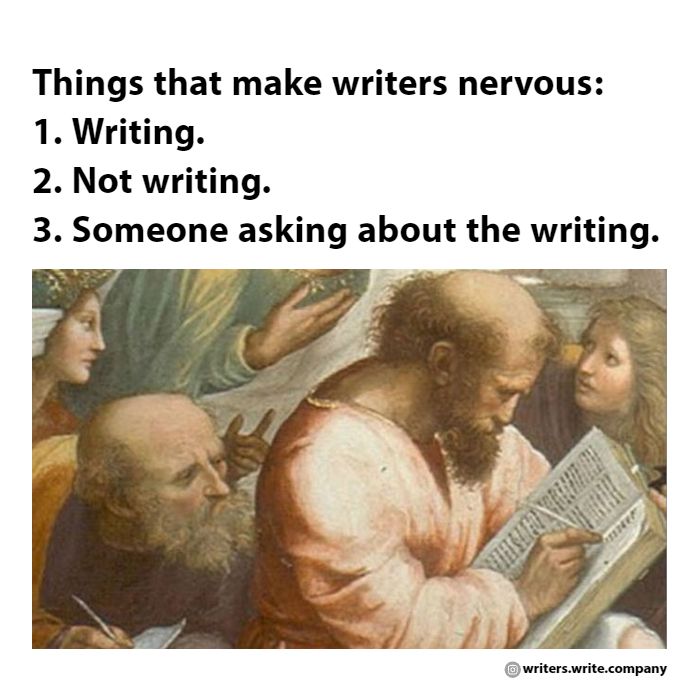
I am generally very closed off about what I write. The number of people in my daily life who know that I am a writer can be counted on one hand. Be it imposter syndrome, fear of being judged or laughed at, or just a desire to keep some things private, I don’t know. My writing feels very personal, and while it doesn’t bother me to have hundreds of strangers read my words, the thought of letting people I see face-to-face every day into that world terrifies me just a little.

“Writing is something you do alone. It’s a profession for introverts who wanna tell you a story but don’t wanna make eye contact while telling it.”

John Green

I think it’s partially rooted in a feeling of not being good enough, but equally a vulnerability in the knowledge that allowing those around me to read my work opens up a window into deeper parts of me that I don’t share freely. There’s that ever-present fear that they just won’t understand. Do I want my coworkers to read a poem I wrote about feeling folded into duties and responsibilities until I crumple under the weight? Will my mother understand that my protagonist’s cold, distant, impossible-to-please mother is absolutely 100% no reflection of my own relationship with her? Is my work even good enough? Would people ask me awkward questions, treat me differently, or scoff at my art as silly?


It took me a long time before I felt comfortable discussing my novel’s plot with anyone. I soon realized that having a sounding board when I’m trying to work out a sticky plot point is invaluable. Sometimes just the act of saying it out loud can help ideas to congeal into something tangible. Having someone ask questions about my work has also proved infinitely helpful. Questions asked by others reveal parts that need to be fleshed out. Sometimes the question that needs to be asked is just out of my reach, but opening up my work to discussion with someone else can reveal the issue.


I stopped by The Coop by Chicken House Press the other day to chat with editor and publisher Alanna Rusnak. Her insight into some of my doubts was so helpful. She made several suggestions that, once said, seemed so magically clear and straightforward that I wondered why I hadn’t vocalized these questions before. She also suggested setting myself a deadline and committing to it by having beta readers on standby for a specific date—a simple suggestion, but one that had never occurred to me. I work best toward a deadline, and since I’ve been struggling so much with procrastination on my novel, having the accountability of getting someone else involved is going to be critical.

“Writing means sharing. It’s part of the human condition to want to share things—thoughts, ideas, opinions.”

Paolo Coelho

The moral of the story is: Talk about your writing. Writing can be such a solitary activity, but it simply cannot be done in isolation. Feedback, meaningful discussion, collaboration—it’s crucial. Next time you’re knocking your head against your desk, why not reach out? Whether it’s a fellow author you’ve connected with on social media, a friend or family member, or your Uber driver, talk it out. Art doesn’t happen in a vacuum.