The Library of Borrowed Lives — Part 1

In the corner of the library, behind row on row of shelves, past the dusty and the musty and the entirely disused, there is a door without a handle.

When my number came up in the state job lotto, I held my breath until I thought I’d burst. We were a family of eight, me the youngest, but only my eldest brother with a job. One income to feed eight people meant a lot of hungry nights. Getting chosen for a job was the answer to our prayers, but the uncertainty of the unknown roiled in my gut and turned my blood to ice. Just when the ringing in my ears threatened to crescendo in a faint, the overseer read out the job ticket: Six months of library duty. My breath escaped in a blast of relief. For now, at least, my family would eat, and I would be safe. The library sounded like an easy ticket.

No one opens the door, I was told on my first day. Stay away from the door. Pretend the door does not exist.

There were barracks for the workers built beneath the library, ages ago. There were two meals each day and a series of bunks that we all climbed up into, exhausted after our shifts. It almost made me laugh to see it, us shelved down there each night just like the books we shelved during the day. Some had been there for years, some who worked fast and hard enough to catch the notice of the overseers and be granted permanent status. They didn’t have much to do with those of us there on a temporary ticket.

I never saw anyone go in the door. I never saw anyone come out.

The work was easy enough, I suppose. We weren’t allowed to talk. The whole cavernous library was under an eerie hush all the time, nothing but the sound of shuffling feet and leather covers sliding past each other as endless books were shelved. Only time I ever heard a voice was the day D1943 stumbled off the ladder and cried out as he crumpled to a heap on the floor below. He was hauled away by two permanents whilst a crowd of temporaries wordlessly gathered all the books he’d dropped. I never saw him again.

I tried to choose the stacks that would take me as close to the door as possible. I’d sneak furtive glances when the overseers weren’t looking.

The question crept into my thoughts one particularly gruelling day when the stacks were twice as high as normal, and the wheels of the carts creaked and groaned under their load as we pushed them up and down the aisles. It came unbidden, unexpected, but once there, it refused to leave. It took up residence in the corner of my mind, settled in with the obstinacy of a grease stain in a clean shirt.

Who was reading all these books?

No one I’d ever met had ever learned to read.


Come back on the first Tuesday in May to read the next instalment of this new dystopian series: The Library of Borrowed Lives

Small Town Summer Nights

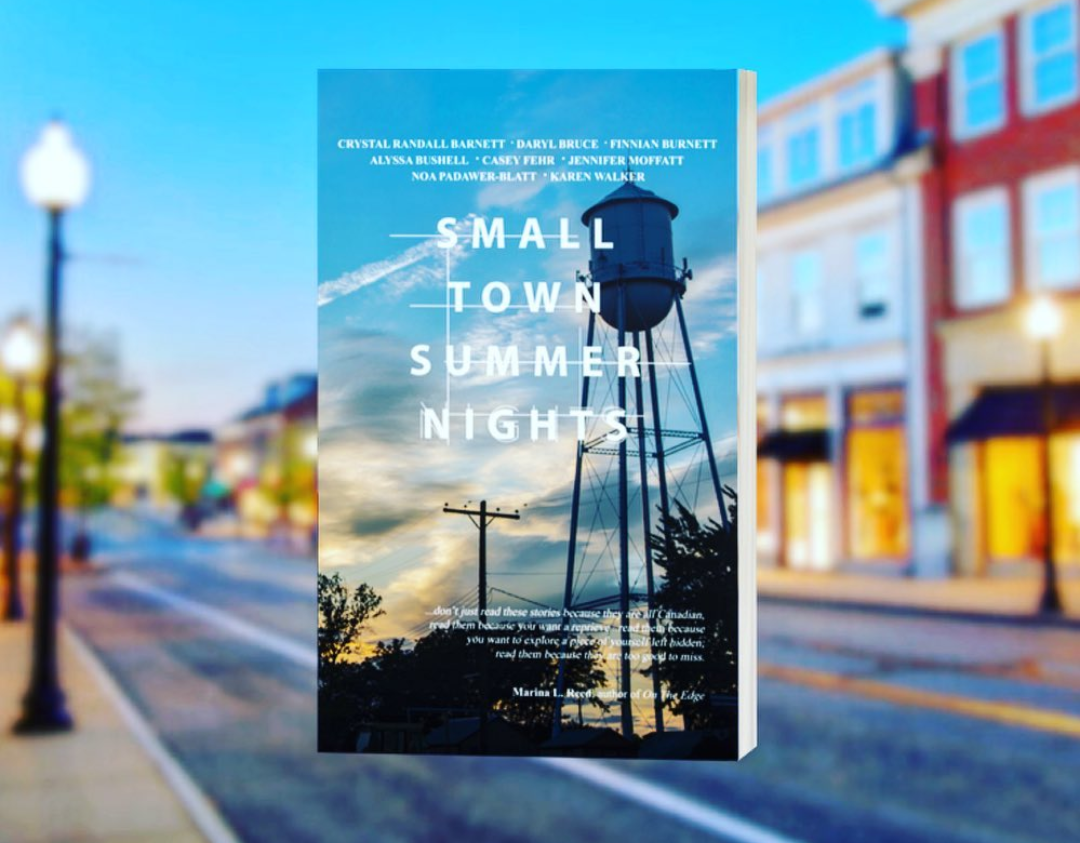
It’s been a while, but in case you missed it, my story Not All Sparks Start Fires was selected to be published in an anthology of short stories titled Small Town Summer Nights, released April 30, 2023, from Chicken House Press.

It’s a summer night like a fever, sticky with sweat and verging on delirious. Every front porch swing and backyard Adirondack down the street plays host to listless bodies searching for some scrap of cool in the darkness. The cool is not forthcoming.

Through eight short stories, you will remember who you used to be when you yearned for who you wanted to become, you’ll cower as a child at the hand of an overzealous mother, you’ll mourn growing pains, you’ll return home, you’ll grieve lost loved ones and wrong choices, you will explore, and you will be explored.

We used to meet on the old trestle bridge after midnight, all hushed giggles and whispered dreams. We’d lie close enough to feel each other’s heat—not touching—flat on our backs, staring up at the stars.

In her foreword, Marina L. Reed writes, “In the age of everything technology, we still crave the experience of holding in our hands a story that will transport us, that will answer our questions or open new ones we need to be asking. The short story can be vibrant and needed now more than ever. So don’t just read these stories because they are all Canadian. Read them because you want a reprieve from a screen. Read them because you want to explore a piece of yourself left hidden. Read them because they are too good to miss.”

There’s so much left unsaid, but nothing more to say. She had handed me the truth as if peeling off a segment of an orange; it was self-contained, but I know it’s not the whole.

Books are available to purchase through Chicken House Press, at Amazon.ca, or I have a limited number of copies available for sale in person.

Jellyfish

I made a wish to feel nothing
Have you had a wish come true?
I thought I could survive it
When I had my heart removed
I used to think I had a voice
And with it something to be said
The words are gone now, and forgotten
I’m alone here in my head
No one ever told me
Being numb is worse than pain
When all the tears are dry
And no blood flows in these veins
I made a wish to feel nothing
I begged for a reprieve
Now I’m a bag adrift in this never-ending sea
Trying to remember how it ever felt to breathe

How To: Create Writing Rituals That Actually Work

If you’ve ever struggled to get into the zone when writing, you’re not alone. Between life’s distractions and the pressure of getting words on paper, starting can be the hardest part. That’s where writing rituals come in—those small, repetitive actions we do even before we sit down to write. It might seem silly, but it’s a technique that I find surprisingly effective when it comes to helping me switch my brain into “writing mode.” It can be as simple as brewing a cup of tea or turning on your favourite music to help create the perfect environment for focus.

The Comfort of Consistency

A writing ritual is all about routine. By doing the same small sequence of actions before writing, you’re signalling to your brain that it’s time to focus. For me, it’s about comfort and familiarity. Before I write, I’ll make myself a beverage, make my writing space comfortable, and turn on some non-distracting background noise. These familiar actions signal to my brain: “Okay, we’re writing now.”

The more consistent you are with your ritual, the easier it becomes to get into the flow. It’s kind of like training your brain to know what’s coming next. It is amazing how cues from our senses can trigger certain moods and memories, which can work to your advantage. For example, the moment I hear the cowbell at the start of Low Rider by War, I can practically smell the hallways of my high school, where that song was our cue to head to homeroom in the morning.

Setting Boundaries

Writing rituals can also help you set clear boundaries. I work from home, and so the line between work and life gets a little blurred sometimes. Having a ritual helps me switch gears. Those small actions create a physical and mental shift so that there is a distinction between work time and writing time.

Creating the Right Environment

Your environment plays a huge role in your productivity. If my desk is cluttered or my space feels chaotic, it’s harder to get into a productive mindset. But when I take a few minutes to set up my writing area in a way that feels right, it becomes easier to concentrate. It doesn’t have to be anything elaborate—just a clean desk and comfy clothes can make all the difference.

Lighting a candle or playing quiet music can help set a calm, focused tone. With consistency in mind, try using one specific mug or cup for your beverage every time you sit down to write. Or keep one special pen and notebook just for the project you’re working on. The idea is that whatever ritual you use should be exclusive to writing so that it flips that switch in your brain.  

5 Writing Rituals to Try

  1. Make a comfort drink. My favourite is Earl Grey tea or sparkling water in a fancy cup.
  2. Set the scene with music or white noise. I often put a YouTube fireplace or aquarium video up on the TV because I don’t like working in complete silence (thanks a lot, tinnitus), but I can’t concentrate if I have music on. I also sometimes create the right atmosphere by working along with a channel like Merve Study Corner.
  3. Tidy your writing space. I clear my desk of anything work-related and set out my notebook-in-progress and a fancy pen.
  4. Write at the same time every day. (This is hard.) When I have a good routine, my best writing time is at the end of the day, around 9:00 p.m.
  5. Do a quick stretch. Especially if I’m going to write after work, I’ve already been sitting all day. I find I need to move first before I can refocus on writing.

Making the Most of Your Time

At the end of the day, writing rituals are about creating a routine that works for you. By incorporating simple, consistent actions into your writing practice, you’ll make it easier to dive into your writing, maximizing the time you actually spend putting words on the page and minimizing the time that slips away while you stare at a blank page trying desperately to convince your brain to do its thang. So, if you haven’t already, try setting up a simple ritual that works for you, and stick with it. You’ll be surprised how much more productive and focused your writing sessions become.

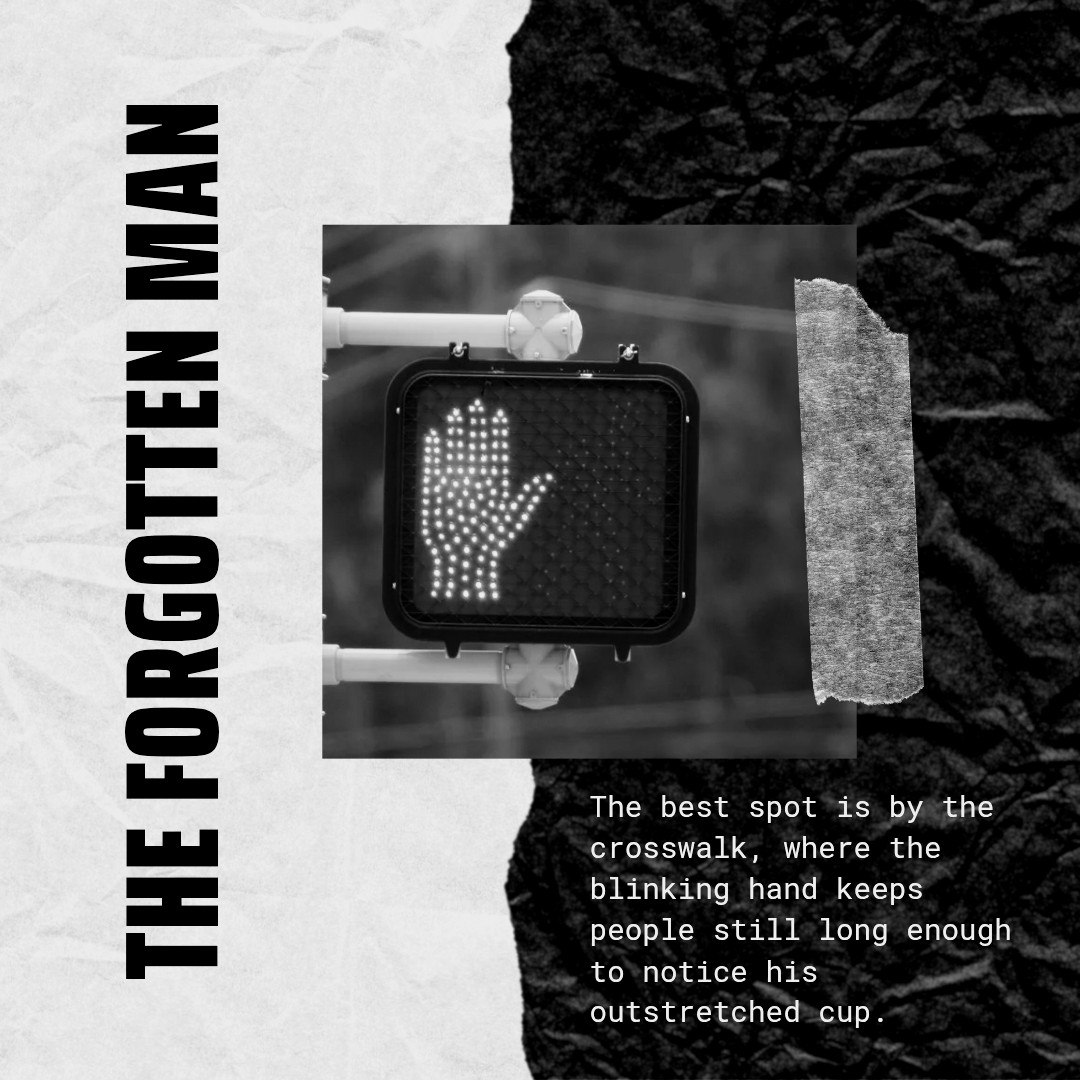
The Forgotten Man

He used to be someone. Employed. Necessary. A man with a name. But names are slippery things, easy to misplace. Now, the secretary, floating past his old cubicle in a cloud of cheap perfume, flutters her lashes at the new go-getter sitting there. She almost remembers the quiet chap who used to fill that seat. John? Gary? 

He arrives at his corner before sunrise, punctual to a fault. A layer of cardboard, a layer of newsprint, a tattered blanket—thin barriers between the pavement and his aching bones. The best spot is by the crosswalk, where the blinking hand keeps people still long enough to notice his outstretched cup. His hands won’t stop trembling. His breath puffs out in ragged clouds that swirl and fade away, dissolving like a memory. 

He used to be a father. They used to say she had his eyes. Laughing eyes, warm eyes, the kind that melted into puddles at bedtime stories and silly inside jokes, that crinkled at the corners when she made him proud. He can’t be sure if he still has those eyes.

People hustle past, avoiding him like they have something to lose. If they spare a coin, they do it without looking, as if redundancy might be contagious. Only children stare, unguarded, until a parent tugs them away. “Who’s that man?” they ask. There’s never any answer.

He used to be a husband, half of something whole. Now he’s still half, but she’s gone and been made whole with someone else. Their life together sits in storage bins, stacked somewhere damp, trying hard to fade away.

The line at the soup kitchen moves slowly most days. He sits and sips, but not for long. Loneliness takes up the bench beside him. His knees groan and crack and strain to rise as he takes his solitude back to the street to make room at the table for another man who’s lost his name. 

He used to have a home. The lawyers and the bank never saw it that way. It was just numbers on a page, easily subtracted from him, added onto someone else. Someone else’s family makes a life there now, erasing his from every room. Someone else’s photos line the stairway wall while someone else’s daughter kicks her legs up high on the swing in the backyard, not knowing who built it or for whom. 

He saw her yesterday. His daughter, grown now, laughing, arms looped through friends’ as they window-shop. He almost didn’t recognize her, but when she dropped some change into his cup, he caught a glimpse—his eyes.

He held his breath for a flicker of something. A pause. A second look. 

But she walked on. 

And that’s the worst pain, to be forgotten but not gone.

Chocolate Peanut Butter Marshmallow Squares

This no-bake recipe is such a classic. Peanut Butter Marshmallow Squares, aka Butterscotch Confetti Squares, are a nostalgic staple from the potlucks of my childhood.

Now, I’m a rebel, a rogue if you will, when it comes to these squares. I simply don’t like butterscotch chips. I used to mix up giant batches of these at the bakery, and that cloying smell of melted butterscotch chips is something I wish I could forget. Instead, I prefer to make these with semi-sweet chocolate for a (slightly) less sweet, chocolatey treat.

I’m going to give you an easy-to-remember ratio for this recipe (see this post about baking ratios) so that you can scale it up or down depending on the quantity you need. I personally like to whip up a tiny batch of these in a matter of minutes when I’m craving a sweet treat but don’t want to have a whole pan of them in the house.

It’s as easy as 1-2-3-4.

Using your 1/2 cup measure:

  • 1 measure of Margarine/Butter (1/2 cup)
  • 2 measures of Peanut Butter (1 cup)
  • 3 measures of Chocolate Chips (1 1/2 cups)
  • 4 x 2 measures of Mini Marshmallows (4 cups)

You can do the same thing with any size ice cream scoop:

  • 1 scoop of Margarine/Butter
  • 2 scoops of Peanut Butter
  • 3 scoops of Chocolate Chips
  • 4 x 2 scoops of Mini Marshmallows

For a tiny taste, use a tablespoon:

  • 1 spoonful of Margarine/Butter
  • 2 spoonfuls of Peanut Butter
  • 3 spoonfuls of Chocolate Chips
  • Don’t measure the marshmallows, just throw in a handful. Come on, be honest, you’re making this at midnight in your pajamas with only the over-sink light on, and the measurements don’t matter because you’re just going to end up getting impatient and eating it before it has a chance to fully set.

Method:

  1. Measure margarine/butter, peanut butter, and chocolate chips into a microwave safe bowl that will have plenty of room for you to add the marshmallows later.
  2. Microwave for 1-2 minutes in 30-second bursts, stirring until smooth. Try not to microwave any longer than you need to. You want it smooth and melted, but not too liquid or too hot.
  3. Add marshmallows and stir well.
  4. Dump the mixture into a pan (8×8 square for this quantity) and level it out. (Line the pan with parchment paper for easier removal. I like to be able to pull the whole block out and cut it into squares.)
  5. Set in the fridge for at least two hours before cutting and serving.

Use either the fruity coloured marshmallows or just plain mini marshmallows, whichever you prefer. Some people add coconut to these. I guess that’s okay if you’re into that. Others add walnuts, and I’m sorry, that’s just weird. Don’t be like that.

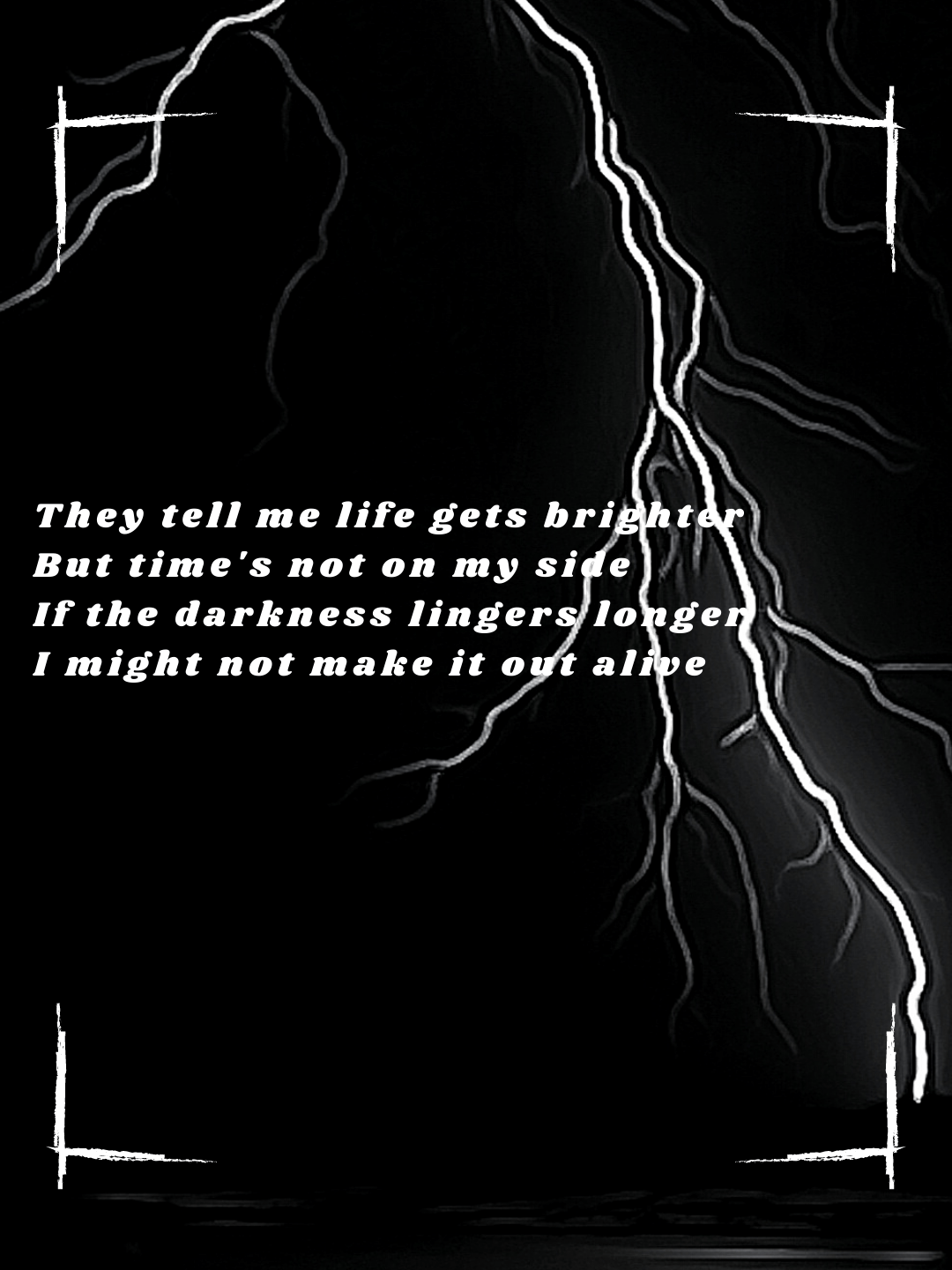
Darkness Lingers

All the love I've experienced
Has felt like pain
Like a bolt of lightning
Through a warm spring rain

Left me shattered, broken
A shell of myself
Left to pick up the pieces
In this lonely hell

The dawn is waiting
On the other side
If the darkness lingers longer
I might not make it out alive

Hope hurts so much harder
When you've felt such loss
And fear tastes bitter
I can love, but at what cost?

Everything that's precious
Can be stolen away
I can feel my cold heart breaking
Before love's had a chance to fade

They tell me life gets brighter
But time's not on my side
If the darkness lingers longer
I might not make it out alive

I can keep trying harder
To win this fight
But if the darkness lingers longer
I might not make it out alive

I’m bringing back some of my older poetry for any of my newer readers. I hope you enjoyed this rerun.

Angelina Suarez Has a Stalker

Angelina’s been getting creepy letters. She never knows when the next one will arrive. She always feels like she’s being watched, and she dreads opening the mailbox.

Angelina’s stalker watches the front of her house through a telephoto lens from a van parked up the street. He can’t believe she has a gentleman caller. He clicks off thirty shots of the man’s face and car, seething in a jealous rage.

Angelina’s not worried about the letters anymore. She’s floating in the swimming pool leaking crimson ribbons that swirl like steeping tea.

Angelina’s murderer is standing in the kitchen looking at the mess. He scratches the back of his head with a leather-gloved hand as he debates what to do. Two tiny hairs glance off his collar, floating gently to the floor. But that’s not what gets him caught.

Angelina’s diamond tennis bracelet has a tiny fussy clasp. One leather glove comes off to get it undone. Bracing himself on the counter to get up, he leaves a perfect set of whorls on the granite slab. But that’s not what gets him caught.

Angelina’s Chihuahua with a rhinestone collar and a vicious case of Small Dog Syndrome darts from under the table in a sneak attack. The intruder leaves half a right shoe print in the middle of a scarlet streak in his haste to get away. But that’s not what gets him caught.

Angelina’s favourite restaurant has an open dumpster in the alley out back. It will get emptied on Tuesday, but for now it contains a tight little bundle of blood-spattered khakis. A busboy sneaks out the back door for a smoke and watches a man walk away, maybe a little too fast. But that’s not what gets him caught.

Angelina’s case is closed. The police can’t believe their luck when an anonymous source mails in a manilla envelope with thirty 8x10s of a man in khakis leaving her house.


I’m bringing back some of my older flash fiction for any of my newer readers. I hope you enjoyed this rerun.

How To: Use Writing Sprints to “Hack” Your Writing

The internet is all about the life hacks these days. I’ll admit it, I love a hack that promises to make my life easier, save me time, and get me the result I want. But can you hack your writing? Is there a shortcut to getting the words down on the page? The short answer is not really. And yet…

As a writer, I am often juggling multiple projects. I’ve got five Amber Jenkins mysteries in various states of un-done-ness. And I try to keep up with this blog. And I still like to dabble in flash fiction. There’s a lot I want to accomplish when it comes to writing. But there are times when I sit down in front of my computer, and that blank page just stares back at me, that little cursor blinking judgmentally. The “hack” I want to share with you today has transformed my writing process: writing sprints.

Now, I’ve talked about writing sprints before. I first got onto them as part of NaNoWrimo, and to be honest, I feel like sprinting is the only way to write 50,000 words in one month. But it’s also helpful in the normal everyday writing process. Let’s talk about the technique a little more in-depth.

What Are Writing Sprints?

Writing sprints are focused, timed writing sessions where the goal is to write as much as possible without interruption. Set a timer for a short burst of time and write. Don’t stop to edit, second-guess yourself, research, or try to find that perfect synonym. Just write. This method will help you bypass your inner critic and tap into a more spontaneous, creative state.

It’s messy. It’s fast. And it works.

Why Do Writing Sprints Work for Me?

  1. Increased Productivity: Setting a timer for a short period, such as 10 or 20 minutes, creates a sense of urgency that propels me. There’s no time for distractions or endless tinkering with a single sentence. This concentrated effort often results in significant forward progress on my projects.
  2. Overcoming “Writer’s Block”: The pressure of a blank page can be paralyzing. But what if you remove the feeling that you need to create something flawless? Writing sprints are about quantity, not quality. The focus is on momentum, and that helps me break through any creative block or lack of motivation I might be feeling.
  3. Enhanced Creativity: By suspending judgment during sprints, I feel free to take risks and explore new angles. This openness often leads to unexpected plot developments and richer characterizations in my stories. It’s like a flow state where I can get completely immersed in the scene.
  4. Improved Focus: Knowing that I have limited time to write encourages me to eliminate distractions and concentrate. If I’ve only got 10 minutes to write, I’m going to make the most of it.

How Can You Incorporate Writing Sprints Into Your Routine?

If you’re interested in trying writing sprints, here are some tips to get started:

  • Set Clear Goals: Before beginning a sprint, know what your objective is, whether it’s a certain word count or a specific scene.
  • Pick a Time Limit: Choose an interval that suits your schedule and attention span. I like to start off with a quick 5-minute sprint as a warm-up, and then I tend to do 10 or 15-minute sprints. That’s just personal preference. Maybe for you, 20 minutes or half an hour feels more productive.
  • Eliminate Distractions: Turn off your notifications, close all your “research” tabs, and tell your family that you’re not available for the time being.
  • Embrace the Mess: Remember, the purpose of a writing sprint is to generate something not to produce polished prose. Allow yourself to write freely without self-editing, and trust that you can edit your work later.

It may sound too simple, but that’s the point of a hack. Writing sprints strip away all the excuses and overthinking and let you just write. The next time you’re feeling stuck or unmotivated set a timer, take a breath, and dive in. You might surprise yourself with how much you can accomplish.

January’s Quiet Lies

The New Year laughs at me, naming all the ways I want to change
As if a calendar's turn could make me someone new
As if by tearing off these scabs, I could force the wounds to heal
Except when a scab is picked, the wound beneath revealed, not healed
Begins to bleed
And only time can turn a wound into a scar
And only scars remain of old mistakes
But still, I am what I have done
And so, what right have I to think that I could change?

Still, dawn will come, indifferent to how long I stay awake
And it will whisper promises that only time will break
And when it looks as if there's hope, after all, that life renews
Then one by one I'll cross the days, while fragile hope concealed
Gives birth to faith
And only time will tell if I can grow
And only I believe that this time's not the same
But still, I carry who I was
A snake can shed her skin, but still, a snake remains