How to Write a Third-Person Author Biography

In the world of submitting to literary magazines, a short third-person biography is required. What if like me, you’re starting out with few, if any, qualifications to your authorly name? What if, like me, you’re unsure of how to promote yourself? Let me help.

Alyssa Bushell is a flash fiction addict and mystery novelist from Southern Ontario. She has spent hours trawling the internet for tips on and examples of author bios. Her own short bio appears in such literary publications as Ellipsis Zine, Leon Literary Review, and Reckon Review. When she’s not writing, you’ll find her near water with her nose in a book, a coffee in hand, and some sort of pastry nearby. Connect with her @WritesAly

The above is an example of a 75-word biography that, while admittedly tongue-in-cheek, accomplishes the two fundamental goals:

  1. It tells you who I am.
  2. It tells you why you’ll be interested in what I have to say.

That is precisely the point of your author bio. Give your readers a sense of who you are, lend credibility to your writing, and arouse interest in your work.

I’ve curated a few suggestions that I found most helpful.

Start with a punchy byline.

Open with one interesting sentence that quickly summarizes your profile. It could include your profession, the title of your book, or something else that will catch the reader’s attention.

Introduce your background.

Mention your location, culture, work history, or anything noteworthy and applicable. What makes you uniquely capable of telling this story?

Don’t be humble.

This is your moment to call attention to your achievements. If you’ve won an award or been published somewhere relevant, include it. If you don’t have confidence in yourself, why would your reader?

Don’t list every accomplishment.

A few pertinent achievements are enough. Your bio should not read like a list of lit mags.

Include something personal.

Your bio is your calling card. Make it relatable and friendly. Breed familiarity by including some personal tidbits like a hobby or interest, especially if these details complement the theme of your writing or mesh with your target reader.

Link to your socials.

Finish off with a link to your website or Twitter account to give readers a prompt to connect with you further.

Be succinct.

Most publications require a bio that is 100 words or less—some prefer as few as 50 words. In editing the bio above, I removed a frivolous adverb and the modifier “cozy” from “mystery novelist” to pare it down to 75 words. Keep the frills to a minimum, and trim unnecessary verbiage and long, unwieldy sentences.

Get feedback.

Ask several author friends to critique your bio, but don’t stop there. Get feedback from some of your ideal readers as well.

Let it rest.

As with any piece of writing, give it time to breathe after you’ve drafted it. This piece might be small, but it is mighty, and it can benefit from some distance before you revise it.

Read examples.

Get in the habit of reading other authors’ bios any time you read a literary magazine or novel. This can help you to hone your own bio.

 And now, for my real, official author bio as it stands right now:

Alyssa Bushell lives and writes at the shore of Lake Huron in southern Ontario. Alyssa’s work is upcoming in Blank Spaces Magazine and is featured in Ellipsis Zine, Reckon Review, and Leon Literary Review, among others. She writes flash fiction and poetry and is currently working on her debut cozy mystery novel, though she can often be found baking up new ways to procrastinate. Find her at: @WritesAly or AlyWrites.ca.

Comment below with your own author bio.

There’s a Fist-Sized Hole in the Kitchen Window

It’s that kind of day where you pray for a whisper of a breeze to kiss the beads of sweat that sting your eyes. You don’t move a muscle, lying on the dock, fingers trailing in tepid water. The lump of a secret too huge to swallow grows in your throat until you think you’ll choke. You squint at the bruise-coloured sky, blinking back tears caused by sun and sweat and nothing more ’cause it won’t do to cry.

Days like this go on forever, time slowing down until nothing matters anyway—if the day never ends then you won’t have to find out what tomorrow will be.

But the day does end. The humidity breaks and crashes with a rumble that shakes your bedroom window and wakes you from a restless sticky sleep that’s not sleep at all. Everything is blackness. You hear the lake getting angry, getting whipped into a frenzy by hot winds that want to tear off tree limbs and lick at loose siding until it rips away like a band-aid.

In the kitchen, relentless rain comes driving in to puddle on the linoleum. You sit up in bed, listening to the power and the anger, and remember camping with the cousins when it poured and you could hear the pop and hiss of beer bottles and hushed conversation while all the little kids slept and the parents huddled under a tarp around the fire laughing too much. That gentle, steady rain didn’t turn into a tempest until everyone was crammed into the station wagon in the morning with damp clothes and sopping gear and you looked into dad’s eyes reflected in the rear-view mirror and tried to forget the voice you shouldn’t have heard leaking through the sodden nylon.

“No, stop, please . . .”


This piece was first published online by Free Flash Fiction as part of the shortlist in Competition Two 2021.

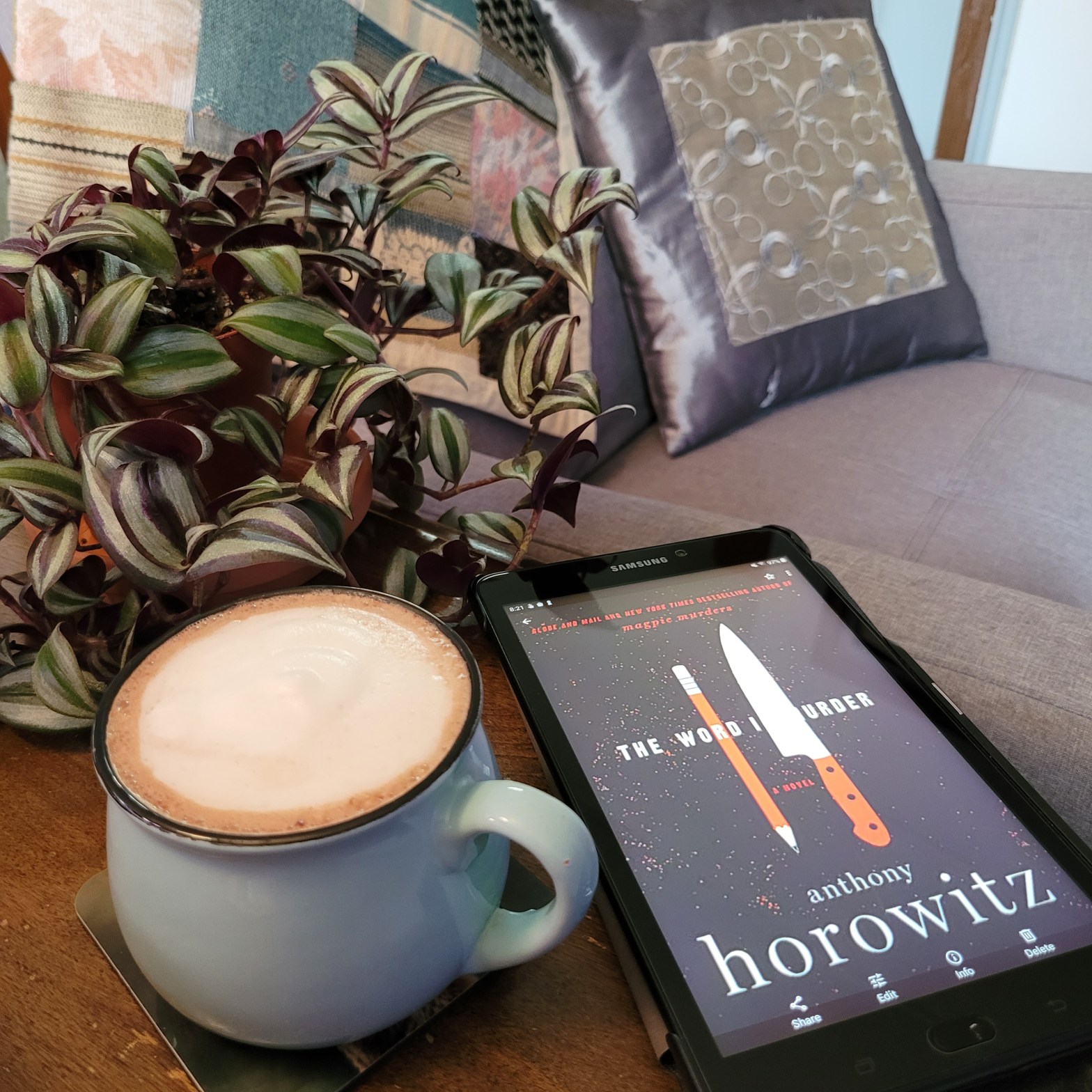
The Word is Murder (Anthony Horowitz)

Mere hours after the widow Diana Cowper makes her own funeral arrangements, she’s found strangled in her own home. Ex-detective inspector Daniel Hawthorne is called in to investigate. In turn, he calls on the narrator, the author Anthony Horowitz himself, to collaborate on a true-crime account of the case. The Word is Murder is a deliciously complex, delightfully meta twist on a classic whodunit.

“All he saw was the paperwork, the uniforms, the anglepoise lamps. He couldn’t find his way to the story.”

“But in just a couple of weeks, everything had changed. I had allowed myself to become a silent partner, a minor character in my own book! Worse than that, I had somehow persuaded myself that I couldn’t work out a single clue without asking him what was going on.”

The author as the narrating character is a novel way of telling the story, and I quite enjoyed his dry tone and intermingling of fiction and reality. Insider anecdotes about show business and publishing add a little niche pizzazz to the narrative, with plenty of name-dropping and enough truth to leave the reader slightly disoriented. Just where, exactly, is the line between reality and fantasy?

“I could see the books piling up in front of me. Sometimes, when I’m sitting at my desk I feel as if there’s a dump truck behind me. I hear the whirr of its engine and it suddenly off-loads its contents . . . millions and millions of words. They keep cascading down and I wonder how many more words there can possibly be. But I’m powerless to stop them. Words, I suppose, are my life.”

The Word is Murder is a complicated mystery with a satisfyingly unraveled solution, with enough twists that you’re unlikely to figure it out early on. Gruff and bigoted Hawthorne makes a rather unlikeable detective who repels the narrator, but the mystery itself proves too remarkable to resist.

“Hawthorne certainly had a magnetic personality. Although, of course, magnets can repel as well as attract.”

As a mystery writer myself, I thoroughly enjoyed the glimpse this book provides into Horowitz’s process. He effectively makes the reader believe that he was experiencing the mystery both as the author and as an active observer, which made it so much more immersive than your usual whodunnit. Instead of the narrator holding all the facts and revealing them to the reader, it felt as though Horowitz was as in the dark as I was and discovering the truth right along with me.

“In fact, I would have said that at least seventy-five per cent of the most important clues were written down in my notebook. It was just that I hadn’t quite realised their significance.”

As always, reading a book as well-written as this one is, for me, as much an education as it is entertainment. It informs my own writing in an invaluable way. I look forward to more books in this series. Soon to come, my review of the second Horowitz-Hawthorne collaboration, The Sentence is Death.

“There are some people who argue that we are too sensitive these days, that because we’re afraid of causing offence, we no longer engage in any serious sort of argument at all. But that’s how it is. It’s why political chat-shows on television have become so very boring. There are narrow lines between which all public conversations have to take place and even a single poorly chosen word can bring all sorts of trouble down.”

When the Singing’s Done

Of an evening in my childhood 
Headed home in the dark
Buckled in between my parents
The three others in the back
We were tired and often cranky
Jostling for leg room
Through the boredom in the quiet
He’d start to softly sing.

He’d sing of gamblers and drinkers
Travelling men and their women
Things that made no sense
To minds too young to care
But that voice there in the quiet
In the darkness and the stillness
I’ll carry with me for a lifetime
When the singing's done.

Bumbleberry Buckle

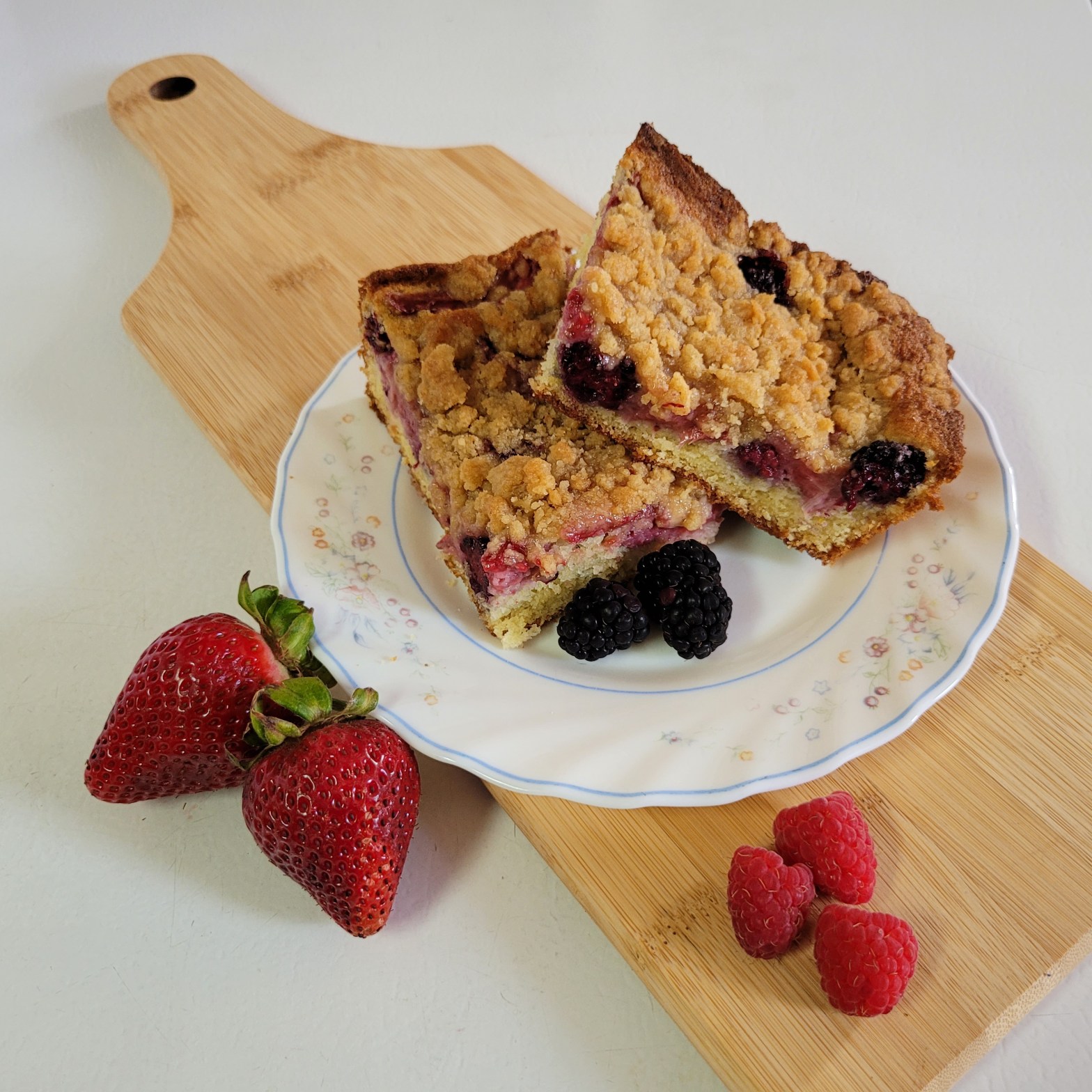
Carrying on with my theme of Canadian desserts, this berry-laden treat is equal parts fresh and buttery, with an old-fashioned feel.

Bumbleberry pie has long been a favourite of mine. It’s a Canadian mixed-berry pie that originates, as so many of our best recipes do, in the Maritimes. Typically the pie would be made with at least three kinds of berries (if you don’t already know, there is no such thing as a “bumbleberry”) and often also apple or rhubarb. It’s a fresh and summery combo that I thought would combine well with a buckle.

Well, now, what is a buckle? I don’t mean the one on your belt. A buckle in this context is a coffee cake loaded with berries, often blueberries, and topped with streusel. My first experience with blueberry buckle was from an ancient, spiral-bound, well-worn and weathered recipe book that my local public school had published back in the days that my parents were young.

This recipe was developed by combining the concepts of the two. It will have you feeling like summer and ready for strawberry season, which is fast approaching.


Bumbleberry Buckle

Ingredients:

  • Cake:
    • 113 g softened butter (1/2 cup)
    • 113 g sugar (1/2 cup + 1 tbsp)
    • 2 eggs
    • Zest of 1 lemon
    • 155 g flour (1 cup)
    • 2 tsp baking powder
    • Pinch of salt
    • 60 mL milk (1/4 cup)

  • 2 – 3 cups fresh mixed berries (I used strawberries, blackberries, and raspberries)

  • Streusel:
    • 50 g brown sugar (1/4 cup)
    • 50 g white sugar (1/4 cup)
    • 50 g flour (1/4 cup +)
    • 50 g cold butter (1/4 cup)

Method:

  1. Preheat oven to 350°F.
  2. Line a 9 x 9 cake pan with parchment.
  3. In a large bowl, cream together the butter and sugar. When light and fluffy, add the eggs one at a time. Stir in the lemon zest.  
  4. In a separate bowl, combine flour, baking powder, and salt. Add to sugar/butter mixture, alternating with milk. Stir until just combined. Spread in prepared pan.
  5. Toss mixed berries gently with 1 tablespoon of flour. Scatter on top of cake batter and gently press down into the batter. (Note: frozen berries can be used, but increase baking time accordingly.)
  6. Combine all streusel ingredients in a small bowl, pinching with your fingertips until crumbly. Sprinkle over cake and bake at 350°F for 30-35 minutes or until a toothpick comes out clean. Let cool at least 20 minutes before slicing.

Serves 9. Make with any combination of berries your heart desires. Would also be delicious with rhubarb.

Writing People with Depth

If you’re a plotter like me, you likely spend a lot of time figuring out what will happen in your story. Each event links into the next in a web of cause and effect that ties in subplots and twists painstakingly designed to take your reader on a journey. What happens, though, when you take this finely crafted plot and drop into it characters that are not fully formed?

Whether you are writing a piece of flash fiction, a short story, or a novel, strong characters are what drive the plot. Ultimately, stories are about people. How they react to the situations you throw at them will determine where your plot ends up. How they come across as living, breathing, and feeling people will determine whether your reader is invested in the story.

But how? How do you create actual people? This is a natural and favourite part of the writing process for some. For me, this is one of the more challenging aspects. I love to tackle the plot. I am a mystery writer, after all. I love figuring out clues and hints and which actions will result in what consequences. The people in my story take a lot more hard work. Some come to me fully formed, while others remain nebulous and frustratingly in the shadows. If only I could sit down with them and have a good long chat or watch them in their natural habitat.

In my efforts to improve my skills in creating believable, unique, living characters, I’ve come across some helpful advice. I’m far from an expert on the topic, but I’ve put in some of the work to curate this advice, and you may as well benefit from the results.


How to Write People with Depth:

“When writing a novel a writer should create living people; people not characters. A character is a caricature.”

Ernest Hemingway

Like real people, fictional characters have opinions, hobbies, and passions. Give your characters actual passions; let them get excited about something. Have their views and desires be at odds with the other characters. Think about what knowledge the character would have about specific topics and what skill sets they possess. Consider, too, what knowledge they lack that must be acquired throughout the story.

Characterization Exercise:

Write a scene where your character is speaking excitedly about something they are passionate about. Have another character shoot them down with an opposing opinion. What is the result? How do they feel, and how does that inform what they do next? Will they fight their case, or are they easily dissuaded?

✒️ Set a timer for 15 minutes and see where it takes you.

“Creating characters is like throwing together ingredients for a recipe. I take characteristics I like and dislike in real people I know, or know of, and use them to embellish and define characters.”

Cassandra Clare

Observe the people around you and note interesting mannerisms, speech patterns, verbal tics, qualities you admire, and flaws that repel you. Combine these in new ways to create new people. Don’t make your good characters too good or your bad characters too bad. Each character should have both redeeming qualities and flaws.

Characterization Exercise:

You’re in a coffee shop, waiting for your character to join you. Are they late or early? What do they first say in greeting? How do they sit? What do they order? Do they have a little subconscious habit that annoys you? How do they interact with the other patrons and the staff? How do they react if the barista gets their order wrong or an unruly child spills a drink on them? Write yourself in the scene and the conversation you would have with the character. Afterward, read their dialogue aloud and see if it sounds “like them.”

✒️ Set a timer for 15 minutes and explore the conversation.

“Respect your characters, even the minor ones. In art, as in life, everyone is the hero of their own particular story; it is worth thinking about what your minor characters’ stories are, even though they may intersect only slightly with your protagonist’s.”

sarah waters

Don’t neglect your secondary characters. They need to be fully formed people with opinions and motivations of their own. Every character in your story must want something, and all the better if what they all want is different. The conflict that arises from characters with opposing desires is key to a good story.

Characterization Exercise:

Write a scene from the perspective of one of your secondary characters. How do they experience the events differently? Where do they start the scene, and where do they end up? How are they affected by the actions of your protagonist? How do their actions affect the outcome for the protagonist?

✒️ Set a timer for 15 minutes and toy with the interplay between your main character and your secondaries.

“Like, in general I think people have very complicated reasons for wanting things, and we often have no idea whether we’re actually motivated by altruism or a desire to hook up or a search for answers or what. I always get annoyed when in books or movies characters want clear things for clear reasons, because my experience of humanness is that I always want messy things for messy reasons.”

John Green

Give all of your characters an underlying motivation. What drives their decisions? This motivation doesn’t have to be explicitly stated; the character doesn’t even need to be aware of it—it can be something in their past that pushes them in a particular direction throughout the story. Give them a strong central trait, but also give them a secondary attribute that runs counter to that, creating internal conflict for a more complex character.

Characterization Exercise:

Imagine your character revisiting a location from their past—maybe a childhood home, their old high school, or the place they went on their first date. What memories come flooding back for them? What feelings are stirred up? How is this place significant to the person they are now? How has the location changed, and how is it still the same?

✒️ Set a timer for 15 minutes and explore how your character has been shaped by this past location and the events that took place there.

Bonus exercise:

Throw your character up against a problem that is not in their wheelhouse. Maybe they are lost in a city they’ve never visited before. Perhaps they have started a new job for which they’re under-qualified. How do they handle it? Who would they ask for help, or how would they go about learning the required knowledge to solve the problem? Are they tenacious, or are they inclined to give up when they don’t know what to do? Do they “fake it ‘til they make it,” or are they honest about their shortcomings?


Above all else, the real key to writing people with depth is to persevere. Hone your craft by reading widely and becoming a keen observer of people. Write your people into scenes and scenarios you concoct, and let them reveal their character to you. It feels like a lot of work, but that’s what writing is, and you wouldn’t be here in this last paragraph if you didn’t have a story to tell that you are willing to put the work into. So what are you waiting for? Shouldn’t you be writing?

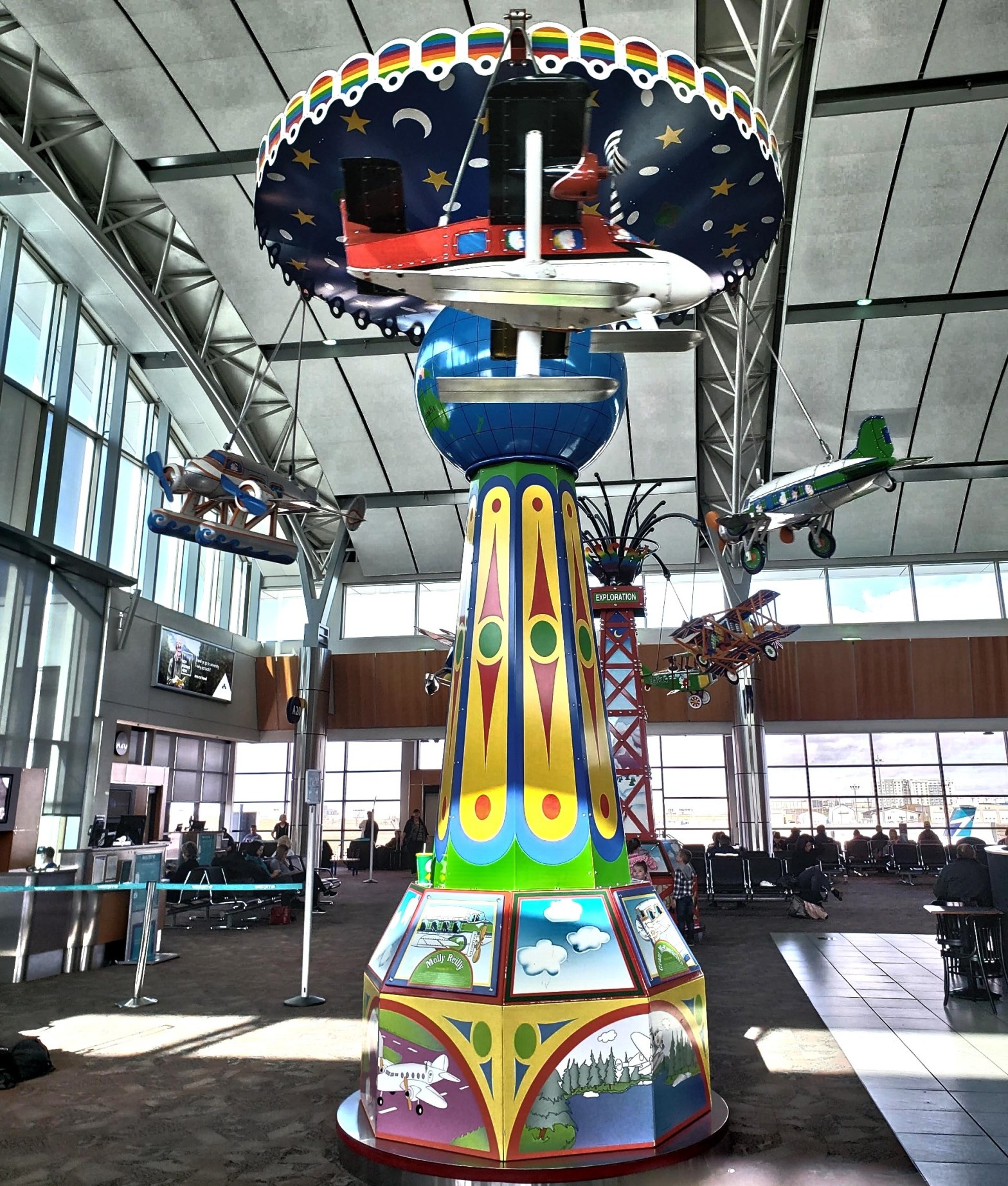
Sunshine, Lollipops and Airport Delays

‘Would you stop that infernal crunching?’ Laura looked up from her phone and scowled until Terrence froze in place, then her thumbs resumed their rapid tapping.

The crunching was a tootsie pop he’d bought from a vending machine with his last quarter. He knew it was annoying. He stood, mumbled something about the washroom, and wandered off, hands wedged down into his jeans pockets, the stick jutting out of his mouth. Terrence had never been one to just suck a lollipop. No sooner had he popped it in his mouth than his teeth were clamping down, chipping shards as sharp as glass. With the candy pulverized and gone, he’d hold the paper stick between his teeth, worrying the end until it was long past limp and sodden. Whatever. It was just another on an endless list of irritating things about him.

Laura probably thought he was childish to buy a lollipop from a vending machine, but who would want to pay $18 for a sandwich that managed to be stale and soggy at the same time? Airport prices—highway robbery, more like. Corral a bunch of people with vacation on the brain, waiting hours for their flight, then charge an arm and a leg for food that’s shocking in its mediocrity.

‘Passengers of flight C340 bound for Panama with stops in New York and Miami, the departure gate has been changed to 24B. There will be a slight delay due to inclement weather, but thank you for your patience and we hope to begin boarding as soon as the ground crew is able to de-ice the wings. It also looks like the flight is slightly overbooked, so we are offering a one-time payment of $350 to any passengers willing to take a later flight.’

What a joke. Who would want to wait for another flight? Terrence circled back to where he’d left Laura and their luggage, but the row of chairs was filled with the turmoil and detritus of a family of five. The baby waved his chubby fists, complete with strings of drool, in Terrence’s direction, while an older sibling crossed her eyes and stuck out her tongue. Who would want that headache?

Terrence’s shoulders hunched a little higher, his fists wedged a little deeper, and he squinted to see which way to gate 24B. Laura better not have volunteered to be bumped from their flight, $350 or not. She’d complained when he booked a cheaper flight with two stopovers, said he was a tightwad. Up ahead he spotted her, struggling to drag both suitcases through the crowd. Oh he’d hear about this for sure.

A few long strides caught him up, and Terrence took over hauling the bags without a word. Laura looked up with half a smile and pulled something from her jacket pocket. She twisted off the wrapper and held out another tootsie pop.

‘Thought you might want another, since the flight’s going to be delayed.’

Who would want to go to Panama with anyone else?

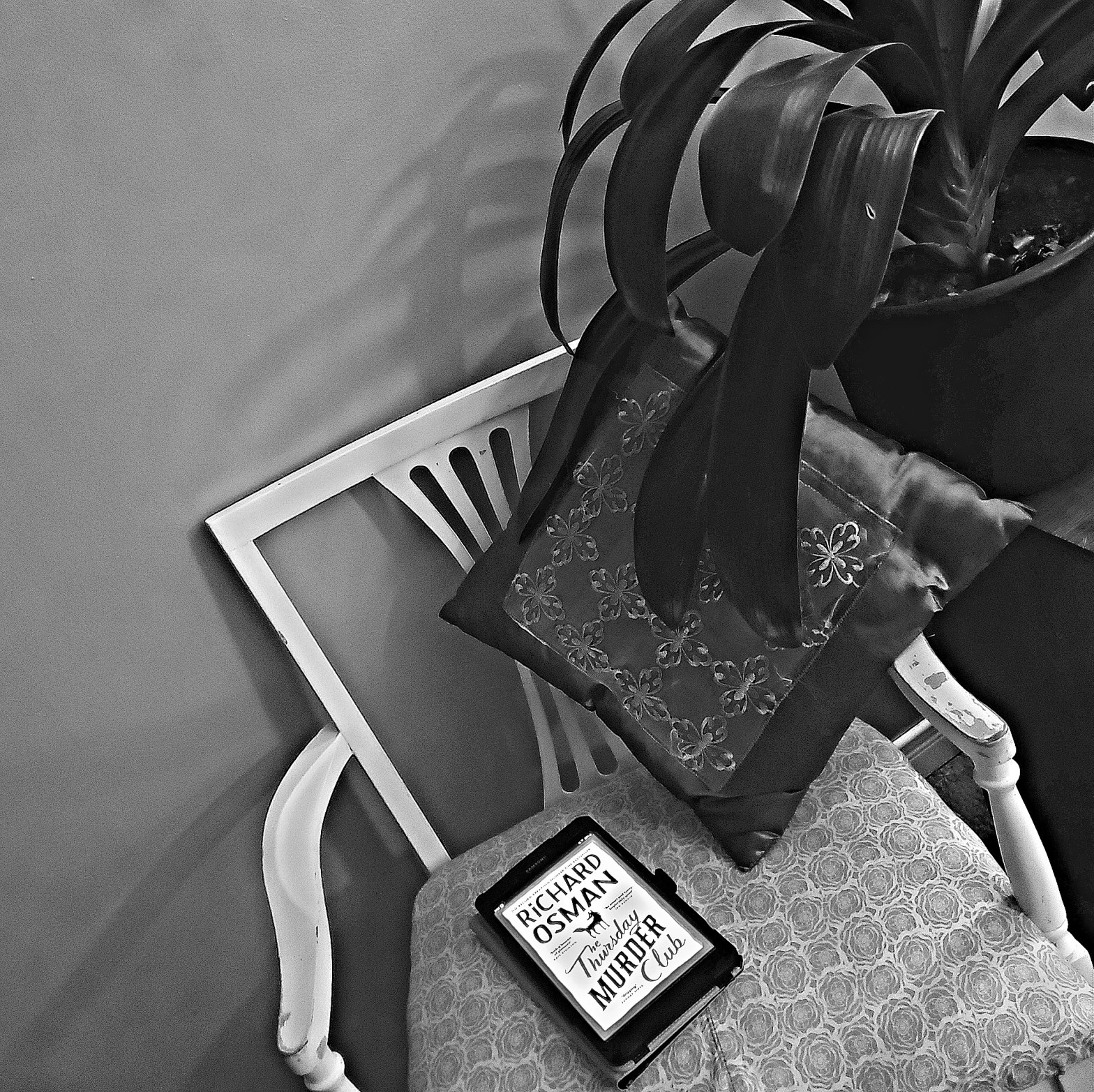
The Thursday Murder Club (Richard Osman)

Richard Osman’s debut novel is everything I love about the cozy mystery genre. Picture senior citizens solving murders set against the backdrop of an exclusive retirement village. The seniors of Cooper’s Chase, led by the indomitable ex-spy Elizabeth, make a hobby of investigating unsolved crimes—until a real murder case pops up in their own backyard.

“Killing someone is easy. Hiding the body, now, that’s usually the hard part. That’s how you get caught.”

The characters are lively and engaging, the cast including quiet nurse Joyce who notices everything, brash and impulsive Ron, and analytical retired psychiatrist Ibrahim. Joyce’s journal entries interspersed throughout the narrative are the highlight of the book. Osman’s writing is a masterclass in giving each character an individual and distinct voice; I would suggest reading it just to hone your craft even if amateur sleuths are not your thing.

“After a certain age, you can pretty much do whatever takes your fancy. No one tells you off, except for your doctors and your children.”

Detective Chief Inspector Chris Hudson, a lonely, middle-aged, overweight divorcé who is ostensibly in charge of the investigation, is a delight. The scenes that get inside his head are so delightfully honest and relatable.

“Chris finds himself jammed uncomfortably on a sofa . . . It is clearly a two-and-a-half-seater sofa, and when Chris had been shown to it, his assumption was that he would be sharing it with only one other person.”

“Chris cannot even attempt to sip his tea now, as lifting it to his lips would unbalance the cake, and lifting the cup off the saucer would tip the cake into the saucer’s center and make it impossible to put the cup back down. He feels sweat start to trickle down his back, reminding him of the time he interviewed a twenty-five-stone Hells Angels enforcer with I KILL COPPERS tattooed around his neck.”

Osman has a knack for putting the reader in the setting with witty, insightful, and relatable commentary. He switches viewpoints, following one character after another, in a skillful way that gives the reader a rounded view of the goings-on.

“For over a hundred years the convent was a hushed building, filled with the dry bustle of habits and the quiet certainty of prayers offered and answered. Tapping along its corridors you would have found some women comfortable in their serenity, some women frightened of a speeding world, some women hiding, some women proving a vague, long-forgotten point, and some women taking joy in serving a higher purpose.”

The story is light-hearted, but the plot is intelligent enough to fulfill all your mystery expectations. Clever, modern, and charming, it ticks all the boxes, but from the novel perspective of an older and wiser cast. I found I wanted the mystery to be solved, but I didn’t want the book to end. The Thursday Murder Club was a fast and engaging read, well worth the time.

“The daffodils will always come up by the lake, but you won’t always be there to see them. So it goes; enjoy them while you can.”

When Life

When devastating changes happen 
Unexpected
Unforeseen
Seize the happiness you have and hold it close
Have that second cup of coffee
Staring out the window at the rain
Bask in bed one moment longer
Be the last to let the hug go
Give a gift for no reason
And bake bread for just the smell

When you can flip the news on
Unsuspecting
Unaware
And have your whole world shatter
Cancelled plans and altered future
Everything you thought you knew
Turned into something strange and new and wrong
Find the smallest bit of sameness
Find a tiny piece of normal
Read your favourite book again

When life leaves madness at your doorstep
Uninvited
Undesired
When life takes things that it shouldn’t
When life ends before it ought
When life begins where it’s not wanted
When life drags on, and on, and on
When life kicks you when you’re down
When life breaks all the rules
Be kind. Be brave. Be you.

Learning Facts From Fiction

What is the point of telling stories, or, for that matter, reading them? Is it purely for entertainment? The avid readers among you, I’m sure, would agree that stories fill a purpose far more significant than simple entertainment. But I have friends and acquaintances within my circle who find little or no value in reading fiction. To each their own, of course, but I can’t help but feel a little sad for them.

You should never read just for “enjoyment.” Read to make yourself smarter! Less judgmental. More apt to understand your friends’ insane behavior, or better yet, your own. Pick “hard books.” Ones you have to concentrate on while reading. And for god’s sake, don’t let me ever hear you say, “I can’t read fiction. I only have time for the truth.” Fiction is the truth, fool!

John Waters

To say that reading broadens your horizons feels a bit cliché, but I believe it nonetheless. Can fiction really expand one’s range of interests and knowledge? Of course it can. The skeptics would counter that fiction is precisely that—untruth. Made-up stories about people that don’t exist doing things that never happened couldn’t possibly teach us about the real world.

Or could they? Our knowledge about the world comes from a wide variety of sources. We don’t just learn from textbooks; we learn how to be a whole person from absorbing and processing the world around us. Memorizing facts in school doesn’t lead to moral understanding, critical thinking, empathy, or social acuity. On the other hand, reading fiction can give us essential insights into how the world works and what makes people tick.

That’s what fiction is for. It’s for getting at the truth when the truth isn’t sufficient for the truth.

Tim O’Brien

The older I get and the more broadly I read, the more I lament the woeful deficiency of my public school education. The history I learned in school was limited and biased, and even if it had been more comprehensive, facts in textbooks simply do not capture the whole truth of major world events. Historical fiction can provide an enriched understanding of time periods and events, giving insight into the emotions and motivations of the people who lived through them.

I’ll never forget when I first learned about the Battle of Bataan in the Philippines during World War II. It was mentioned in passing in a novel I was reading, and I immediately started to look for more information. How could I be utterly ignorant of this devastating chapter of history? The gap in my knowledge felt unconscionable. My research eventually led me to Tears in the Darkness by Michael Norman, an exhaustively researched account that delves into the extent of the horrors of the Bataan Death March. Notably, it was a fiction novel that I’ve completely forgotten that was the catalyst that opened up this new knowledge to me.

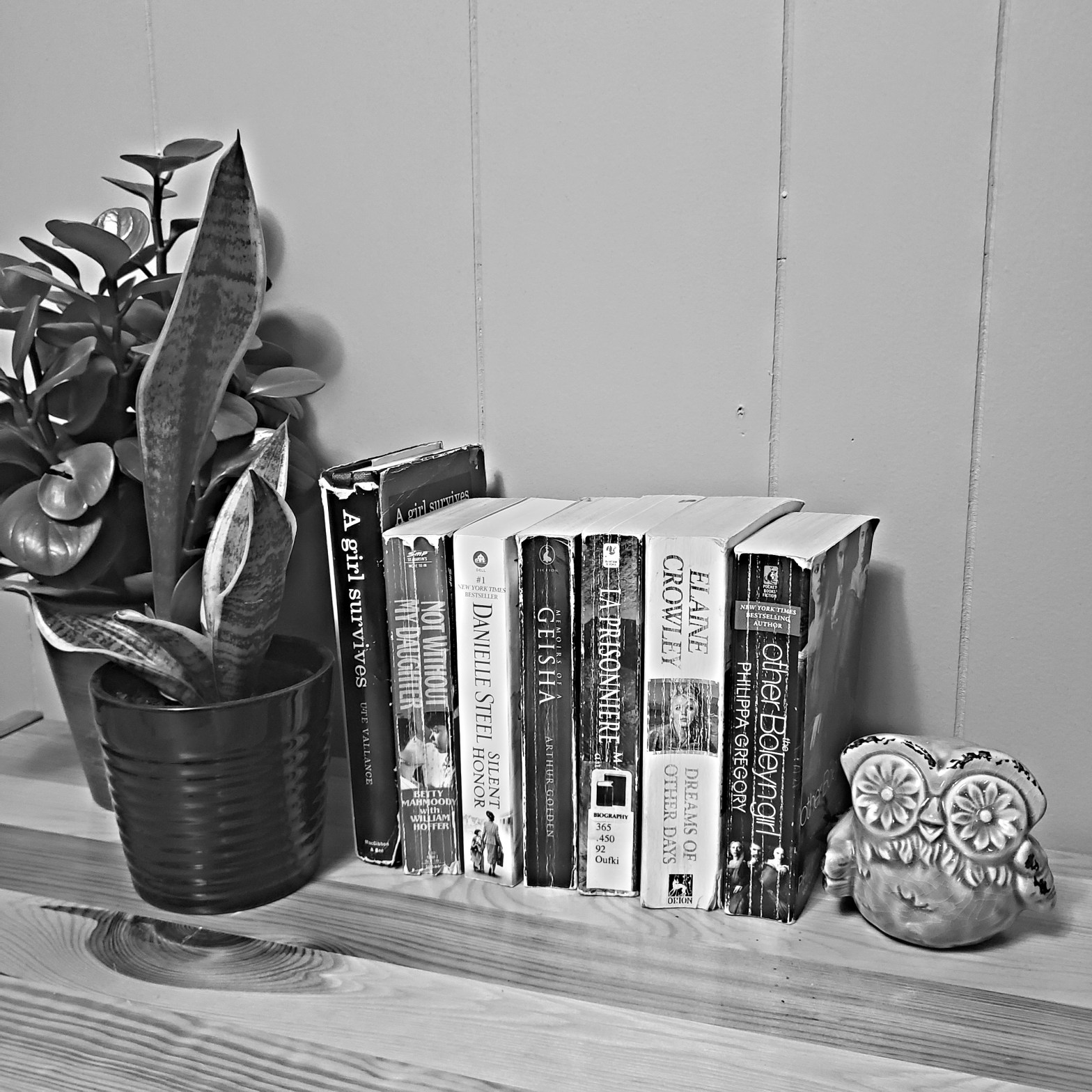
The Paris Architect by Charles Belfoure gave me a disturbing glimpse into the broad spectrum of human behaviour and the lengths to which people will go to survive. Ai Mi’s Under the Hawthorne Tree introduced me to China’s Cultural Revolution. The Nickel Boys by Colson Whitehead reminded me how deeply-ingrained systemic racism is not ancient history. The list goes on, and the novels pictured at the start of this article are but a handful of examples. Are these books biased? Absolutely—every book ever written reflects to some extent the bias of its author, but I always read with discernment and look for the other side of the story.

It is, admittedly, ironic to think of absorbing facts from works of fiction. But understanding human nature and our history without consuming the stories we tell would be impossible. So read books. Read difficult books. Read stories that make you uncomfortable, sad, uplifted, angry, triumphant, shocked, devastated, hopeful. Along the way, you’ll uncover things you never knew; research them. Ask questions and look for the answers. Be equal measures skeptical and trusting, discerning and objective. I can promise you: You’ll be a better person for it.  

Fiction is the lie through which we tell the truth.

Albert Camus