I Am the Deafening Silence

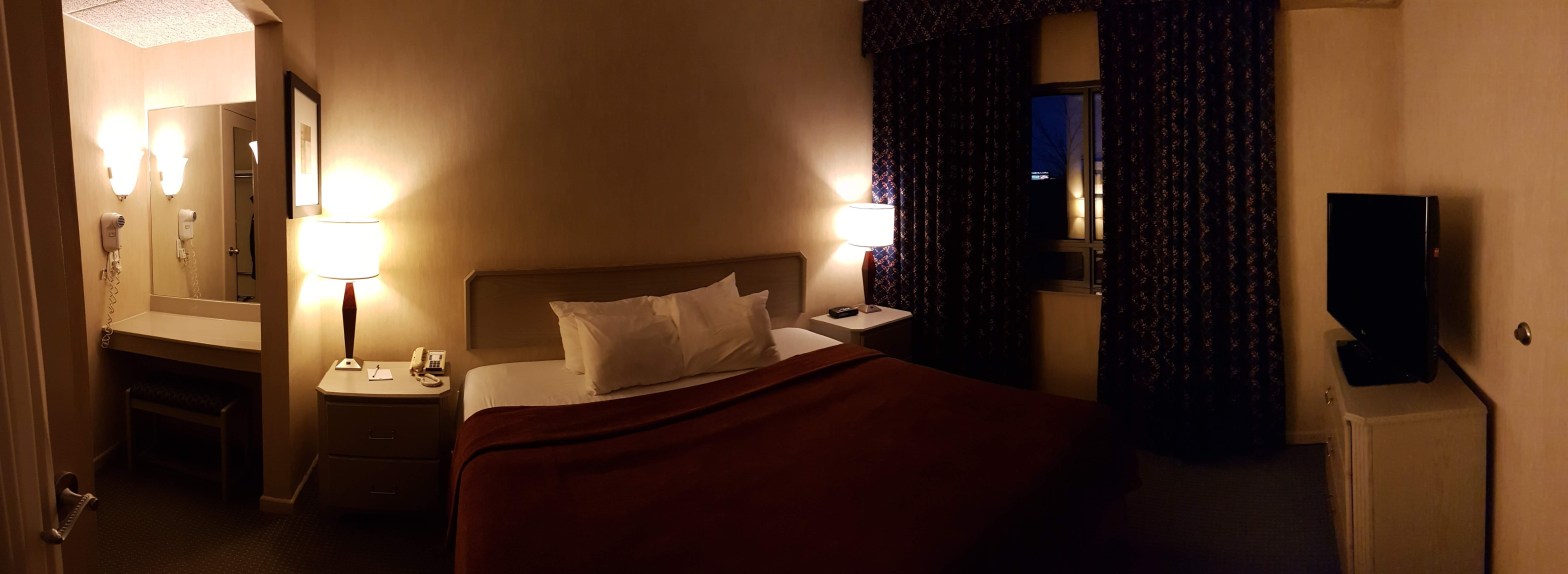
I am the abstract carpet with head-spinning lines off the elevator on the eighth floor. I am door after door that look the same, the first attempts replying to my key card with an obstinate red blink until one of them lets us in. I am the smell that wafts when the door opens. It’s not clean. It’s not dirty. It’s somewhere in between and it is me and it isn’t and it’s all the ones who came before me.

I am the clinking when the mini-fridge opens to the bottles and bottles that help to numb the—it used to be heartache, but it’s been numb so long that I’ve forgotten. I am the flimsy plastic cups that crush if you squeeze too tight and the liquor sloshing out to mingle with other substance stains on a sofa that exists but not for comfort.

I am the bed a thousand strangers have lain on that somehow feels less foreign than his fumbling drunken hands. I am the creaking of the headboard and the knocking on the wall and the involuntary neighbour who didn’t ask for this. I am the picture on the wall that looks like something and like nothing while it waits and I wait for him to finish.

I am the metallic click of the door snapping shut with a finality and a futility and the sound of heavy footsteps receding in the hall. I am the shards of ice clattering from a machine that can only make cold. I am the mouthful of cotton duvet that stifles my sobs as I choke on my shame.

I am the slow spurt of water, reluctant, always too hot and always too cold. I am three hairs stuck to the shower wall in different coloured shapes and lengths that are so far from home they’ll never be un-lost. I am the soap that doesn’t lather and the towel that doesn’t dry and all the other things that fail their purpose with an air of indifference.

I am heavy ugly curtains with a pull-chain that catches and snags, always partly open, or always not-quite-closed. I am the too-bright shaft of sunlight breaking through the gap, the head-throbbing of a morning full of regret. I am the deafening silence of an empty rented room with too many hours until checkout and still not enough hours and still too many.


This flash fiction was first published by Reckon Review in December, 2021.

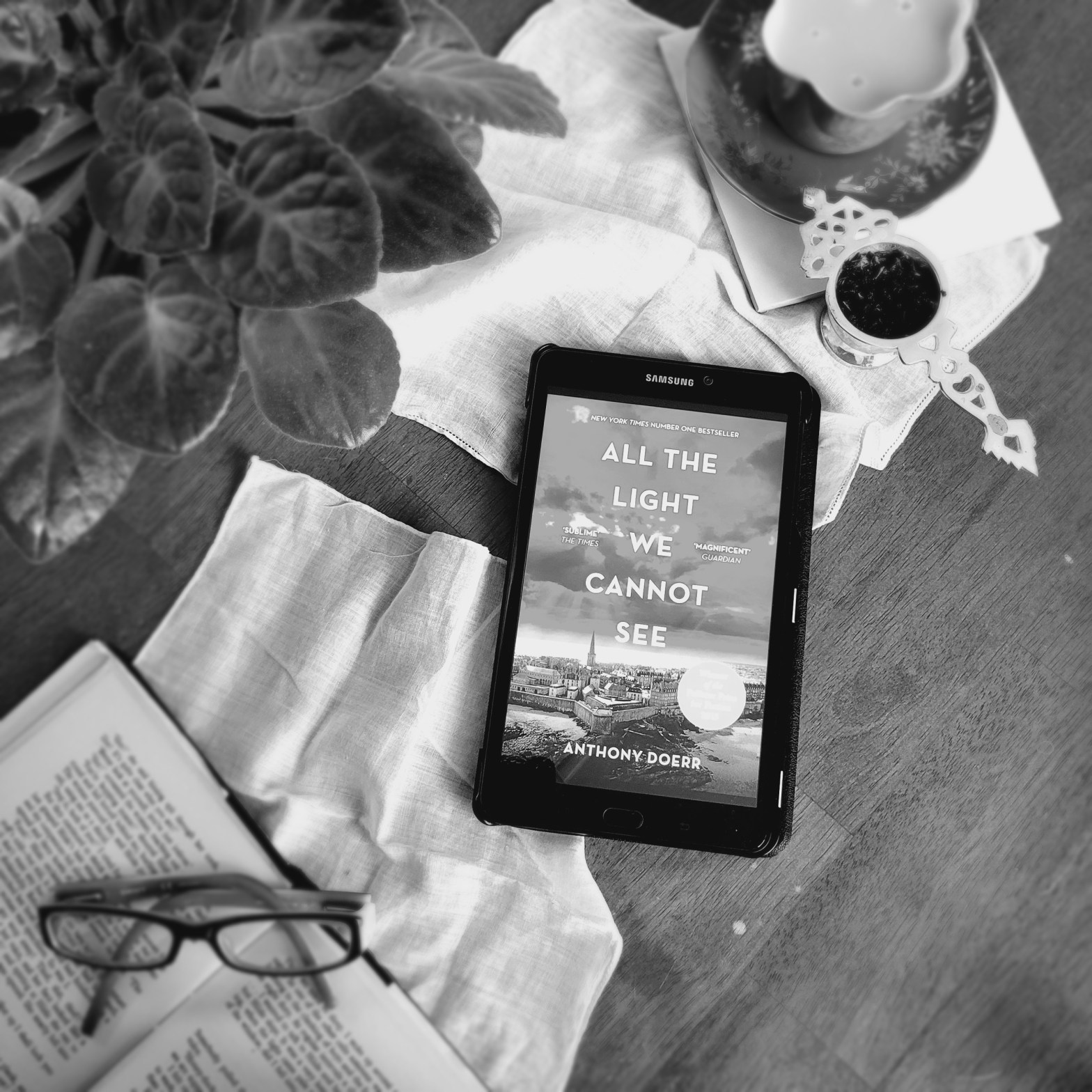
All the Light We Cannot See (Anthony Doerr)

Marie-Laure, blind since age six, lives in Paris with her father, the master of the locks at the Museum of Natural History. When the Germans occupy Paris in June 1940, the two flee to Saint-Malo to live with Marie-Laure’s eccentric great uncle, Etienne.

“When I lost my sight, Werner, people said I was brave. When my father left, people said I was brave. But it is not bravery; I have no choice. I wake up and live my life. Don’t you do the same?”

Worlds apart, in Germany, orphaned Werner uses his talent at building and fixing radios to escape a hopeless future in the mines. His path through an elite and brutal military academy to the Hitler Youth and beyond leads him finally to Saint-Malo, where his path converges with Marie-Laure’s.

“Don’t you want to be alive before you die?”

“Doerr’s gorgeous combination of soaring imagination with observation is electric. Deftly interweaving the lives of multiple characters, Doerr illuminates the ways, against all odds, people try to be good to one another.”

AnthonyDoerr.com

All the Light We Cannot See is full of both heartwarming and heartbreaking moments. Doerr’s crisscrossing storylines gradually unfold through stunningly beautiful prose that marches relentlessly toward what can only be a tragic end. The narration makes frequent jumps both in point of view and in time, creating a gradual build-up whereby the reader knows where we will end up long before we understand how we got there. I simply had to keep reading, always wanting to know what would happen next.

“Open your eyes and see what you can with them before they close forever.”

Some reviewers have decried the novel’s flowery language and length, the copious description and how slowly everything happens. Personally, I think the slow unfolding of the plot is part of what makes this story so compelling. You can feel the inexorable march toward something terrible, the inevitability of time moving forward and being swept along with it, the dread increasing with every turn.

“War is a bazaar where lives are traded like any other commodity: chocolate or bullets or parachute silk.”

I enjoy rich prose that is full of imagery, and Anthony Doerr’s masterful use of language did not disappoint. His words are poetic without being cumbersome. His descriptions pull the reader into the scene until you’re right there, feeling the salty air of Saint-Malo on your face, or holding your breath in terror in the attic with Marie-Laure, or shivering in the night with Werner, from cold or terror or both as he faces a battle between the pressure to conform and his own sense of right and wrong.

“To shut your eyes is to guess nothing of blindness. Beneath your world of skies and faces and buildings exists a rawer and older world, a place where surface planes disintegrate and sounds ribbon in shoals through the air.”

The imagery of light is threaded throughout this tale of two young characters caught up on different sides of the war, just trying to stay alive. It’s a perspective that has been used countless times before, revealing the terrors of war through the eyes of children robbed of their childhood. But there’s something utterly unique about Marie-Laure’s viewpoint and the sense of wonder the world holds for her. Both main characters are sympathetic and likeable, and the characters surrounding them are endearing and add much to the story.

“So how, children, does the brain, which lives without a spark of light, build for us a world full of light?”

Particularly wrenching are the chapters on Werner’s schooling. The language in these is sparser, with reason, touching on questions surrounding how ordinary people can become collaborators in such cruelty. Werner’s almost-friendship with Frederick gives disturbing insight into how easily the heart can be corrupted and become complicit in evil by simply not lifting a finger.

“Some people are weak in some ways, sir. Others in other ways.”

“How do you ever know for certain that you are doing the right thing?”

All the Light We Cannot See is meticulously researched and imaginatively written, a novel that is both thought-provoking and profound. Anthony Doerr manages to address the horrors of war while choosing to highlight the inherent goodness of his main characters. It’s well worth a read.

“You know the greatest lesson of history? It’s that history is whatever the victors say it is. That’s the lesson. Whoever wins, that’s who decides the history. We act in our own self-interest. Of course we do. Name me a person or a nation who does not. The trick is figuring out where your interests are.”

Folded Paper Must Begin to Fray

Disillusioned, dull and dreary— 
I’m afraid I’ve lost my shine.
Something in me’s crumpled on the floor.
It’s all-consuming, virulent, rife with
Lethargy
Lurching stomach, hollow motions
Unending parade of trite responsibilities.
Screams that never pass my throat
Insistent duties queueing up
Origami folds that crease me into shapes I
Never
Meant to be.
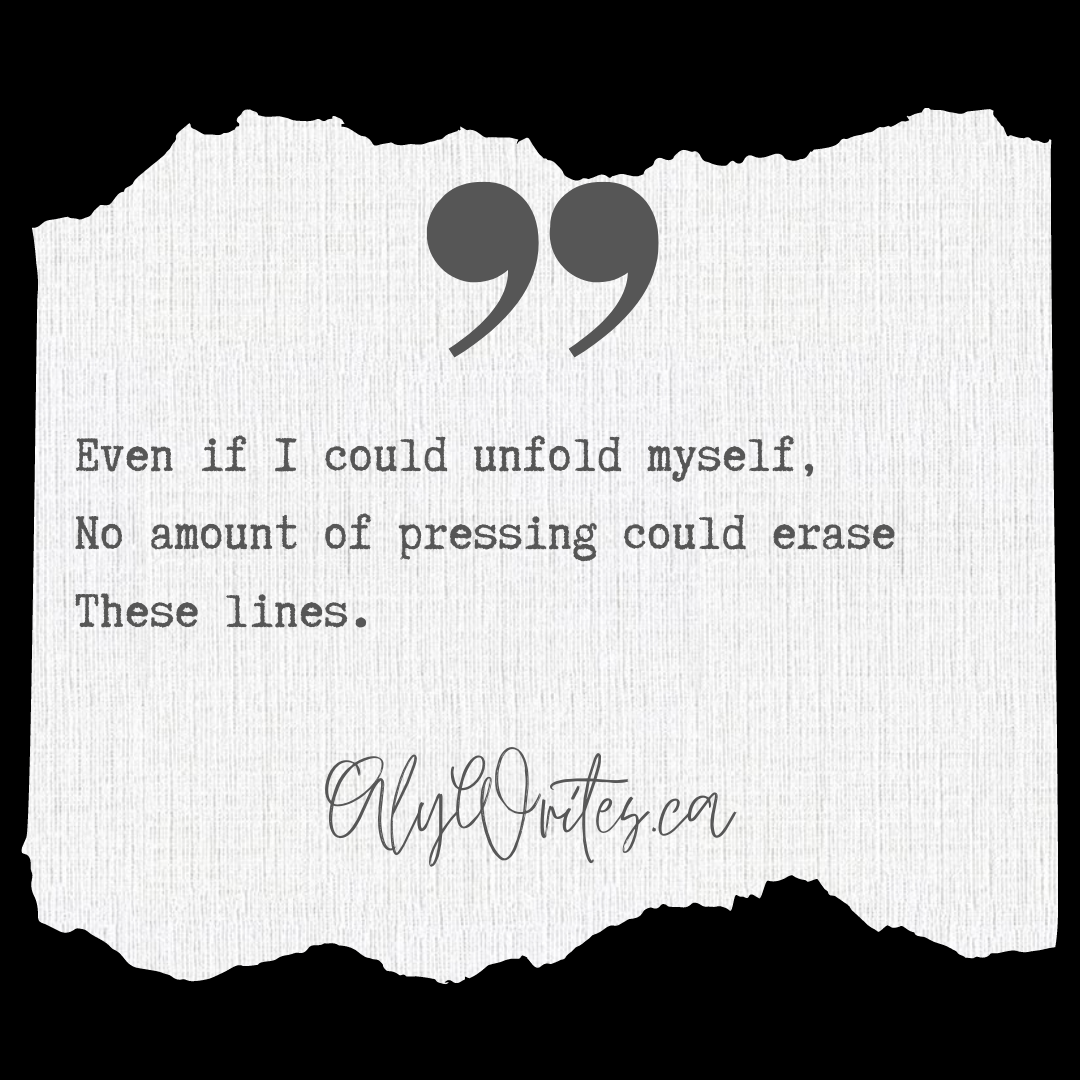
Even if I could unfold myself,
No amount of pressing could erase
These lines.

How to Respectfully Write a Critical Book Review

The first thing you might be thinking is: why write a negative book review at all? Why not just put the book down and let it go?

But wait. Do you read reviews before you buy a product? I am a massive fan of the review section. Does that travel mug leak like a sieve? Thanks for helping me save my money and my car’s upholstery. Is this Airbnb next to a train that runs on the hour all night, shaking the walls and everything inside them? My beauty sleep thanks you for the warning. Was that author’s latest book a slow-moving, description-heavy, plotless trudge with too many characters and a painfully obvious twist? I might read something else instead, or I might read it and form my own opinion, but I certainly appreciate the heads-up.

You may have noticed (if you’re one of my regular readers) that I only review books here at AlyWrites that I have loved. The book review section of my site is named Books I’ve Loved for a reason. I view these reviews as recommendations to my valued readers. I’m sharing something with you that I have enjoyed. This blog is not a forum for negative reviews. However, I do feel that it can be valuable to leave an honest review of a disappointing book—only if it is done respectfully.

What if you belong to a book club, and expressing your opinion, whether negative or positive, is what it’s all about? Or maybe you are an ARC reader and, as such, feel obligated to leave a review. That can be a challenging situation. You’ve been given a free advance copy of the book in exchange for your honest opinion. Of course, they’re never hoping that your opinion will be negative—that’s not going to help sell books. Or perhaps you want to explain what was disappointing in order to help other potential readers make an informed decision. Maybe you’re thinking of the author themselves and how some polite, constructive criticism might help them improve their craft. It could be that you’ve had a book recommended to you and then been asked what you thought of it.

I found myself agonizing over this subject recently, and I gave a lot of thought to how to leave a review that was both respectful and honest. What follows are some helpful suggestions if you find yourself in the same boat.

  1. Don’t attack the author. This shouldn’t have to be said, but you’re reviewing a piece of writing, not the human who poured their heart and soul into it. Focus on your experience, make your review fair and honest, but never make it personal or nasty.
  2. Be specific about what disappointed you. Explain what you expected and what let you down. Use concrete examples, rather than just flat-out saying things like: “The plot was no good.” or “The characters weren’t interesting.”
  3. Keep your review as free from spoilers as you can. Regardless of your opinion, others will still want to read the book. Let them enjoy it. That leads nicely to the next point.
  4. Remember that your opinion of the book is subjective. Just because you didn’t enjoy the book doesn’t mean other people won’t. Consider what readers might enjoy it.
  5. Mention the good things. There is always something positive to say. Keep your review balanced instead of going on a rant—if you can’t find anything positive to say, maybe don’t leave a review.
  6. Present your review as constructive criticism about what didn’t work for you as a reader. What could have made the reading experience better? Exploring the answer to that question adds value to your feedback.
  7. Be sure to explain the basis for your review. Don’t just leave a poor rating with no explanation why. Be specific about what made you give it a low rating.
  8. In writing your review, especially if you are a fellow author, remember that someday you will write and publish something, and someone will dislike it.

As a side issue, for writers, feedback is so important. It’s unhealthy to surround ourselves with nothing but fans and yes-men. We need honest people who will gently help us see the flaws in our work. False praise from friends and family who are too kind to give us the truth will never help us improve, keep developing, or get our work up to the standard we hope for. Do yourself a favour and find a couple of brutally honest beta readers you can trust. Take the criticism they hand you with a grain of salt, but do take it.

Now that might be a whole other post of its own.

Tell me: Do you leave a critical review when you’re disappointed by a book?

The Earth is Flat and Other Lies I Tell Myself

I’ll only have one, I tell myself, as I settle in the easy chair on a Friday night with a pack of Oreos and the TV flickering sitcoms. The laundry beckons and my notebook gathers dust instead of stories. I’ll do it tomorrow. It’s not that pressing. I’ll just watch one more episode.

Tomorrow never comes, as the saying goes.

The weekend drains away like lukewarm bath water into Monday. I’ll get up early and work out every day, I plan, as I pointedly place my shoes beside my bed.

Morning comes the way it always does, harsh and sudden and unwelcome. I’ll just hit snooze one more time. I won’t be late again.

The early bird gets the worm or something like that.

Accolades and manly shoulder slaps are passed around the old boys’ club, but I won’t let it get to me. I wasn’t passed over for promotion because I’m a woman. It’s not a dead-end job; I’ll break through that glass ceiling someday. I’ve got no other choice—I’ve been here so long it would be a shame to have to start from the ground up somewhere else.

Better the devil you know, after all.

I can afford takeout tonight. Just as a treat. I don’t do it that often. It’ll save me time so I can write.  

It’s not that bad of a neighbourhood, as I juggle keys and Styrofoam and ignore the angry shouting three doors down. Everyone’s got an extra deadbolt on their doors these days. You can’t be too careful. Besides, I’ll find somewhere more permanent, more settled soon. I can totally sleep through the sirens anyway.

Bloom where you’re planted, and all that.

Reflex makes my thumb swipe no when my mother’s face lights up my phone. I’ll call her back tomorrow. I’m too busy. I’m too tired. She’ll understand.

I’m not lonely. I enjoy my solitude. All I need is the company of a good book. Or a stack of good books. Or books I’m sure are going to be good. I’m going to make time to read them all.

I’m happy. I am happy.

I have everything I need. Besides, everyone goes through phases of feeling unfulfilled. It doesn’t mean anything. The grass always looks greener on the other side.

But there is no other side. The earth is flat, after all.

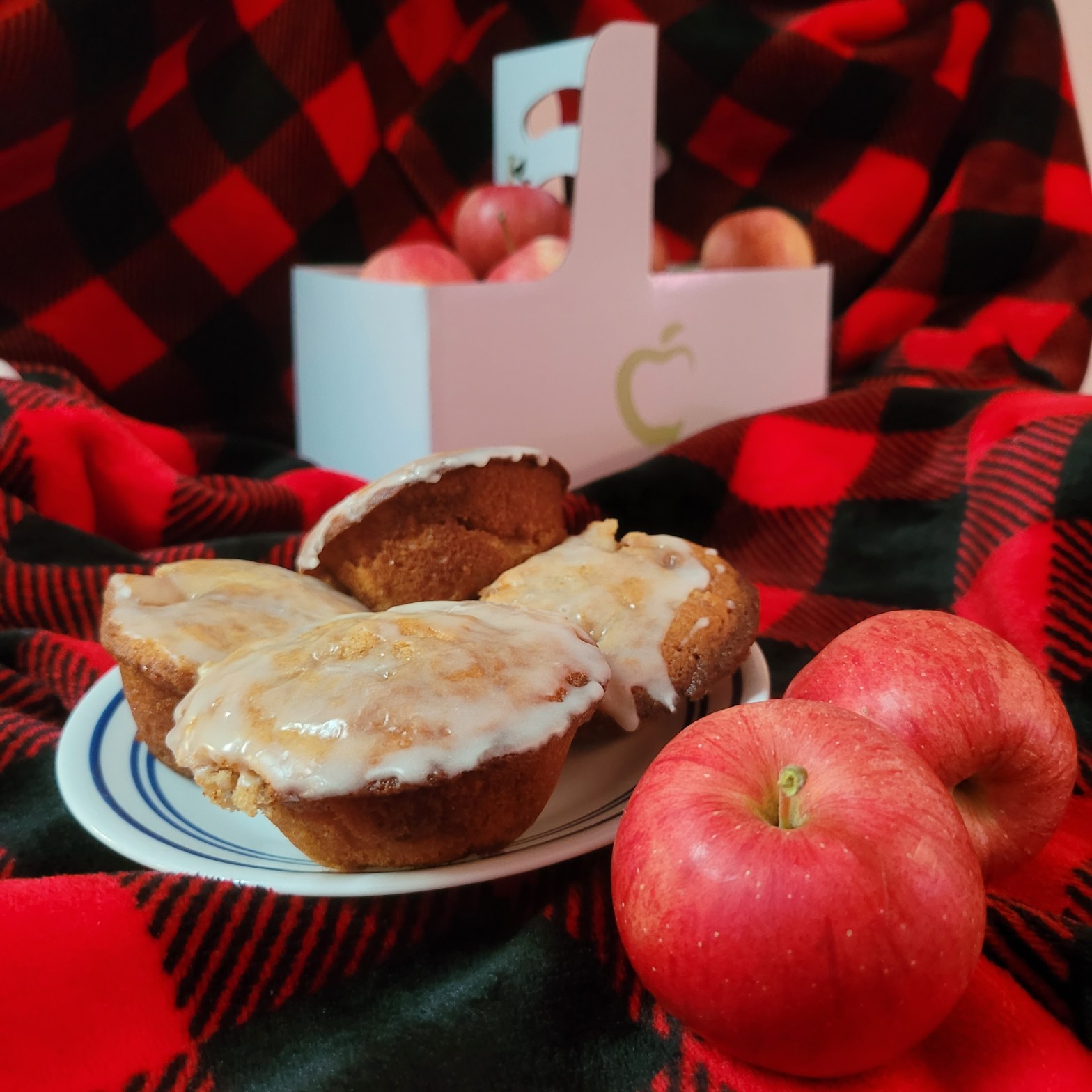
Apple Fritter Muffins

It’s sweater weather. Pumpkin spice season. Leaves are turning glorious shades of red and gold, and it’s time to pick apples, add warming spices like cinnamon and nutmeg to everything in sight, and wear nothing but the softest and coziest clothing. Many turn straight to the pumpkin for baking inspiration at this time of year. For me, it’s all about the apples.

There is nothing quite like biting into an apple that you just picked off the tree. Just the feeling of wandering up and down rows of apple-laden trees in the crisp fall air is, for me, the very definition of autumn. This time of year I like to bake apples into everything, but there is one apple treat that rises above them all.

Oh, the apple fritter. It’s a quintessential Canadian treat. Those pillowy hunks of fried dough, spiced with cinnamon and dotted with soft bites of apple, dipped in a honey glaze that crackles into flakes of sugar that melt instantly on the tongue. What a treat!

In Canadian culture, a coffee and donut from Tim’s is a perfectly acceptable breakfast. Well-balanced? I’ll leave that up to you. The caffeine/sugar combo will give you a little pep in your step on those too-early, still-dark mornings. That’s the idea behind these muffins. I’ve blended a cakey vanilla muffin batter that is just the right level of crumbly with swirls of brown sugar and cinnamon-laced apple pieces and packed it into something that might just be your new favourite fall treat. While delightful as a portable snack, this recipe will also make a fantastic coffee cake—just bake in a Bundt pan or cake pan instead.


Apple Fritter Muffins

Ingredients:

  • Batter:
    • 113 g softened butter (1/2 cup)
    •  113 g granulated sugar (1/2 cup)
    • 2 eggs
    • 1 tsp vanilla extract
    • 226 g flour (1 1/2 cups)
    • 2 tsp baking powder
    • Pinch of salt
    •  118 mL milk (1/2 cup)
  • Apple Mixture:
    •  56 g brown sugar (1/4 cup)
    • 3 apples, peeled and chopped
    • 2 tsp ground cinnamon
  • Honey Glaze:
    •  113 g powdered sugar (1/2 cup)
    • 1 tbsp honey
    • 1-2 tbsp milk

Method:

  1. Preheat oven to 180°C/350°F.
  2. Line muffin tin with paper liners.
  3. Cream together butter and white sugar until light and fluffy. Beat in eggs one at a time. Add vanilla.
  4. Sift together flour, baking powder, and salt. Add to wet mixture alternately with milk, folding until just combined.
  5. In a separate bowl, toss the chopped apples with brown sugar and cinnamon. Fold gently through the batter. Don’t mix this in thoroughly—you want to have delicious swirls of brown sugar and apple.
  6. Use an ice cream scoop to portion evenly into 12 muffin papers.
  7. Bake at 180°C/350°F for 20-25 minutes until a knife or toothpick comes out clean.
  8. Whisk together powdered sugar, honey, and 1 tablespoon of milk. Add more milk as needed to create a thick, smooth glaze. Spoon the glaze over the muffins while they are still hot.

Makes 12 muffins. Honey glaze is optional, but it does add to the apple fritter experience. And hey, let’s be real, these muffins are a treat, not a healthy snack.

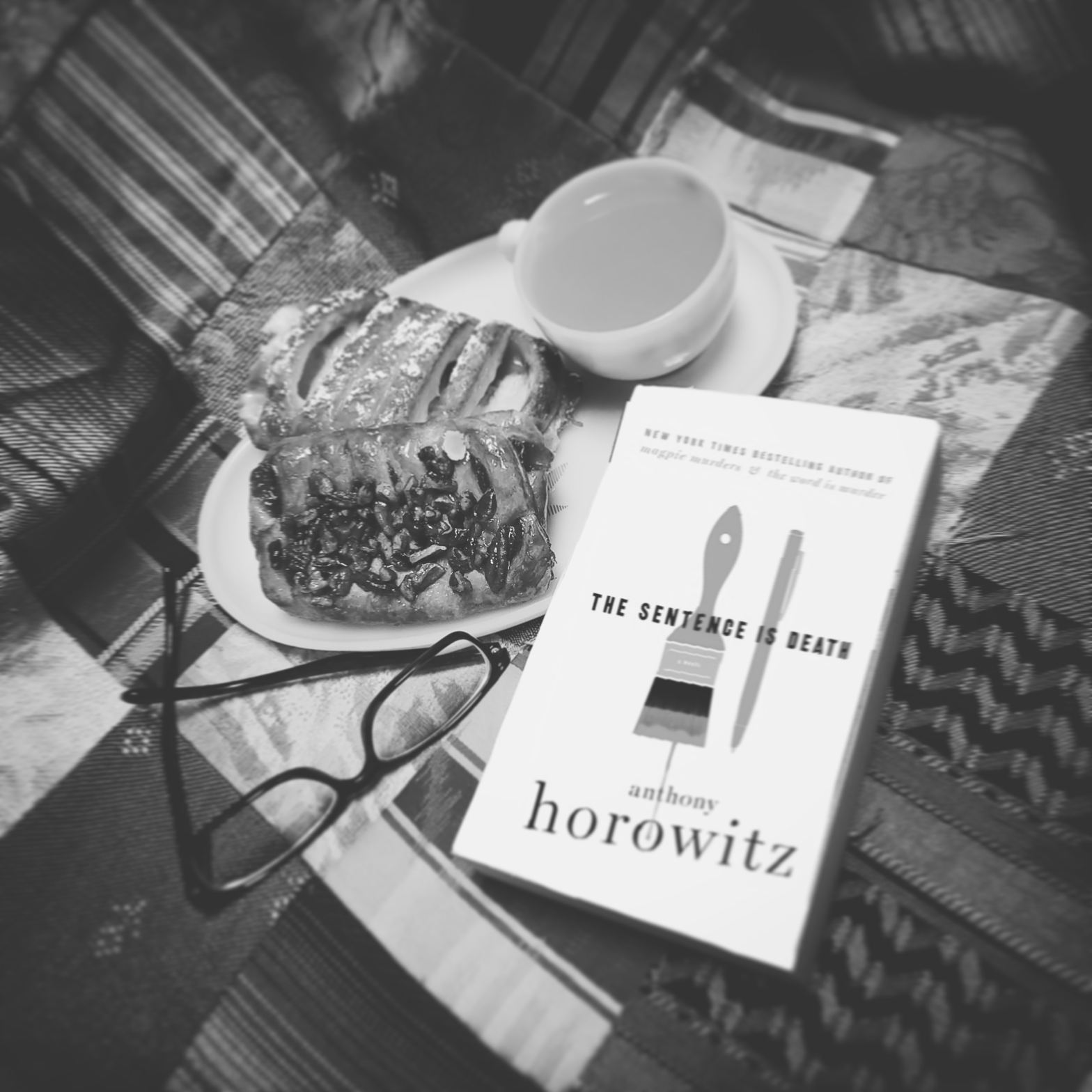
The Sentence Is Death ( Anthony Horowitz)

This is the second in Anthony Horowitz’s unique meta-fiction mystery series. In The Sentence is Death, uncouth ex-cop turned private investigator Hawthorne has been called in by the police to investigate the murder of a high-profile divorce attorney. Once again, Horowitz has written himself as the blundering Watson to Hawthorne’s sharp Sherlock.

“It’s a simple fact of life that a clever private detective needs a much less clever police officer in much the same way as a photograph needs both light and darkness. Otherwise, there’s no definition.”

The Sentence is Death is full of red herrings, factual references to Horowitz’s career, glimpses into his writing process, and a cast of suspects that will have you pointing the finger at each of them in turn. It’s an old-fashioned mystery with a tangled web of plot threads that Hawthorne satisfyingly weaves together into the final solution.

“I’d have thought it’s the same when you write a book. Isn’t that how you start . . . looking for the shape?”

“I was thrown by what Hawthorne had said because he was absolutely right. At the very start of the process, when I’m creating a story, I do think of it as having a particular, geometrical shape . . . A novel is a container for 80,000 to 90,000 words and you might see it as a jelly mould. You pour them all in and hope they’ll set.”

“When I next looked at my watch, a couple hours had passed and I was still no nearer the truth. There were notes and scribbles everywhere: it’s funny how the surface of my desk always reflects the state of my mind. Right now, it was a mess.”

In this book, the follow-up to The Word is Murder, Horowitz’s character becomes obsessed with solving the case before the detective does. This drive, and the introduction of a truly malignant woman Detective Inspector who is also determined to be the first to solve the case, through any unsavoury means, creates a sense of urgency that keeps the pace moving.

“Hawthorne would have solved the case anyway. Or maybe I would. I was still quite attracted to the idea that I would be the one who made sense of it all and that when the suspects were gathered together in one room in the final chapter, I’d be the one doing the talking.”

“It was a depressing question. I felt sure that the solution must be obvious by now. All along, it had been my hope that I would actually work it out before Hawthorne. And yet, I was still nowhere near. It really wasn’t fair. How could I even call myself an author if I had no connection to the last chapter—the whole point of the book?”

It’s an old-fashioned murder mystery with a brilliant detective and a clueless sidekick, but what I love about the style of Anthony Horowitz is that he gives the reader plenty of clues to sift through. As his character in the story, the author remains baffled as to which bits of information are important, so he includes them all. The reader, then, remains relatively in the dark as well—effective because all the clues are there, but nothing is given away. Horowitz even comes up with a couple of potential solutions that are incorrect.

“In seconds I had the answer I needed and at that moment everything came together in a rush and I suddenly saw with blinding clarity exactly who had killed Richard Pryce. It was something I had never thought I would experience. Agatha Christie never described it, nor did any other mystery writer I can think of: that moment when the detective works it out and the truth makes itself known. Why did Poirot never twirl his moustache? Why didn’t Lord Peter Wimsey dance in the air? I would have.”

Hawthorne, infuriatingly to both the author and the reader, keeps his theories about the murder to himself, leaving us to bumble along with the fictionalized Horowitz, trying to sift through the myriad clues to find what is actually relevant. The detective is still rude, still very much not politically correct, and still as sharp as ever. While throwing in some braggy bits about his career, the author doesn’t take himself too seriously. There are flashes of humour and an entertaining blurring of reality and fiction.

“He wasn’t being deliberately offensive. It was just that offensive was his default mode.”

“The thing about you, Tony, is you write stuff down without even realizing its significance. You’re a bit like a travel writer who doesn’t know quite where he is.”

The way that Anthony Horowitz describes his characters is an absolute masterclass. His descriptions are never boring and never too obvious.

  • “He was caught somewhere between the boy he had been and the man he might become, as if his body hadn’t quite made up its mind which way to go.”
  • “Hawthorne rang the doorbell and after what felt like a long wait it was opened by a woman who gave every impression of being in a constant battle with life without necessarily being on the winning side.”
  • “She had a face with skin the colour and texture of damp clay. Her hair was drab and lifeless. She was wearing a dress that was either too long or too short but looked just wrong, cut off at her calves, which were stout and beefy. She didn’t speak as Gallivan ushered us in but I could tell at once that she wished we weren’t there.”
  • “Darren had a way of ensuring his questions sounded aggressive and intimidating. He could have made you feel nervous just wishing you a good morning.”

It’s another good layered mystery with enough surprises to keep the reader guessing and a satisfying wrap-up at the end. I can’t wait to read the third and fourth books, and I wish I had jumped on this series sooner!

“Hawthorne took a step towards the door, then seemed to remember something. ‘One last thing.'”

One last thing: I love this technique of Hawthorne’s, to add one last question on, seemingly as an afterthought. It’s always the most crucial question, but he makes it appear inconsequential.

What is Your Definition of Success as a Writer?

“Success is not final; failure is not fatal. It is the courage to continue that counts.”

That quote is oft-attributed to Churchill, but like many things on the internet, that’s not entirely true. Nonetheless, the sentiment is valid—“success” is not the final destination.

As writers, we all have different ideas of what will make us feel successful. For many novelists, being traditionally published by one of the Big Five is the holy grail, the ultimate aspiration, the defining moment that they feel will validate their status as an Author. For some, being able to throw off the chains of a “day job” would be the mark of success.

It would be disingenuous of me to claim that those dreams hold no appeal. But are they my target, my final destination? Can I feel successful as a writer if I never achieve those milestones that are, admittedly, a product of capitalism and have nothing whatsoever to do with the actual value of my art?

I say Yes! It’s all about why you’re writing. I write because I want to tell stories that make people feel. Whenever someone reads my words, whether in an online lit mag, a local print magazine, here on my blog, on Instagram or Twitter, or in the wonderful writing community that is Writers’ HQ, that’s a small success. Every time a line in one of my stories resonates with someone, every time someone drops a kind word or a retweet or even just taps that like button, the small successes keep on piling up. They move me forward, they keep me writing, but they’re not the final destination.

And why not? Because there are always going to be those times when I feel like I’m sending my words out into the void. Days, weeks, and sometimes months can go by without any external validation, any indication that my stories are hitting home. If I accepted that as evidence that I am unsuccessful as a writer, I would have stopped writing long ago.

I started pondering this topic as part of a challenge on Instagram. It was fascinating to scroll through all the different #AuthorAugust22 posts from writers all explaining their personal definition of success. Several surprised me.

This was a unique hallmark of success that really spoke to me. To have someone love your work so much that it prompts them to be creative—what a feeling that would be!

Following through. That really fits with my idea of success. I’m a chronic procrastinator, and my novel often seems a project so daunting that I get overwhelmed and wonder if I will ever follow it through to its completion. Finishing it would feel like a huge success.

Having people connect with my story and constantly growing as a writer—what a success that would be! That meshes well with my own conclusion: For me, to really be successful as a writer means to continue. There are so many happy milestones that can be reached, but none of them mark the end of the journey.

So write for yourself. Write for the love of words and stories. Write to process your feelings, to entertain, to leave a legacy. Write for any reason but what capitalism calls success, and see if, as a by-product, something you can call success will find you along the way.

The Girl Who Screamed in the Night

She haunts my half-wakened thoughts. I heard her, sitting in my recliner watching strangers cook foods I’ll never eat in places I’ll never go, while the grease-soaked scent of dinner from a paper sack lingered on. I heard her and my heart froze and shattered. I heard her and craned my neck to look out the window, nothing to see but shadows made deeper by streetlights and sharp corners and impenetrable walls. I heard her and my hand reached for the phone, but what to say and who will answer and where do I send them and how long will they take to arrive?

I long to look her in the eye and confess my apathy, to apologize for my impotent concern that left as quickly as a commercial break and comes back as often to interrupt my train of thought. I long to beg for her forgiveness, her absolution, something to release me from this Schrödinger-like purgatory where she either is okay or she’s not—only there is no box I can open to have the answer. I fear for her and I fear her and I fear what kind of person I’ll become when screams in the night won’t lift me from my chair.

And if it were me down there, alone in the grime and the dark, quickening my pace against the dangers of the night, if it were me . . . If it were my scream carried off on the midsummer breeze to swirl with traffic fumes and distant sirens, unheeded into oblivion, would I forgive?

I’ll never know, I know. My mind weaves fever dreams of all the things that could have drawn that cry of terror from her lips. I swallow a gasp when I jolt awake sweating in the darkness not sure if it’s still today or already tomorrow. As the dampness crusts in the corner of my mouth and my pounding heart sends blood to fill out the pillow-lines left in my cheek, the spider that crept across my limp body as I slept casts another silken cord from the window sill to the pothos in the corner. I squint into the gloom and it all seems so normal and I wonder if this is Tuesday and if I’ve got anything in for breakfast and if I’m supposed to work today and if the world stopped going mad and if I could have helped her and if and if and if.

And for this moment, just this breath in time, with blinking eyes and foggy mind and a blanket of bittersweet disorientation, it could just be that all those things are gone.


This piece was originally published online by Ellipsis Zine in 2021.

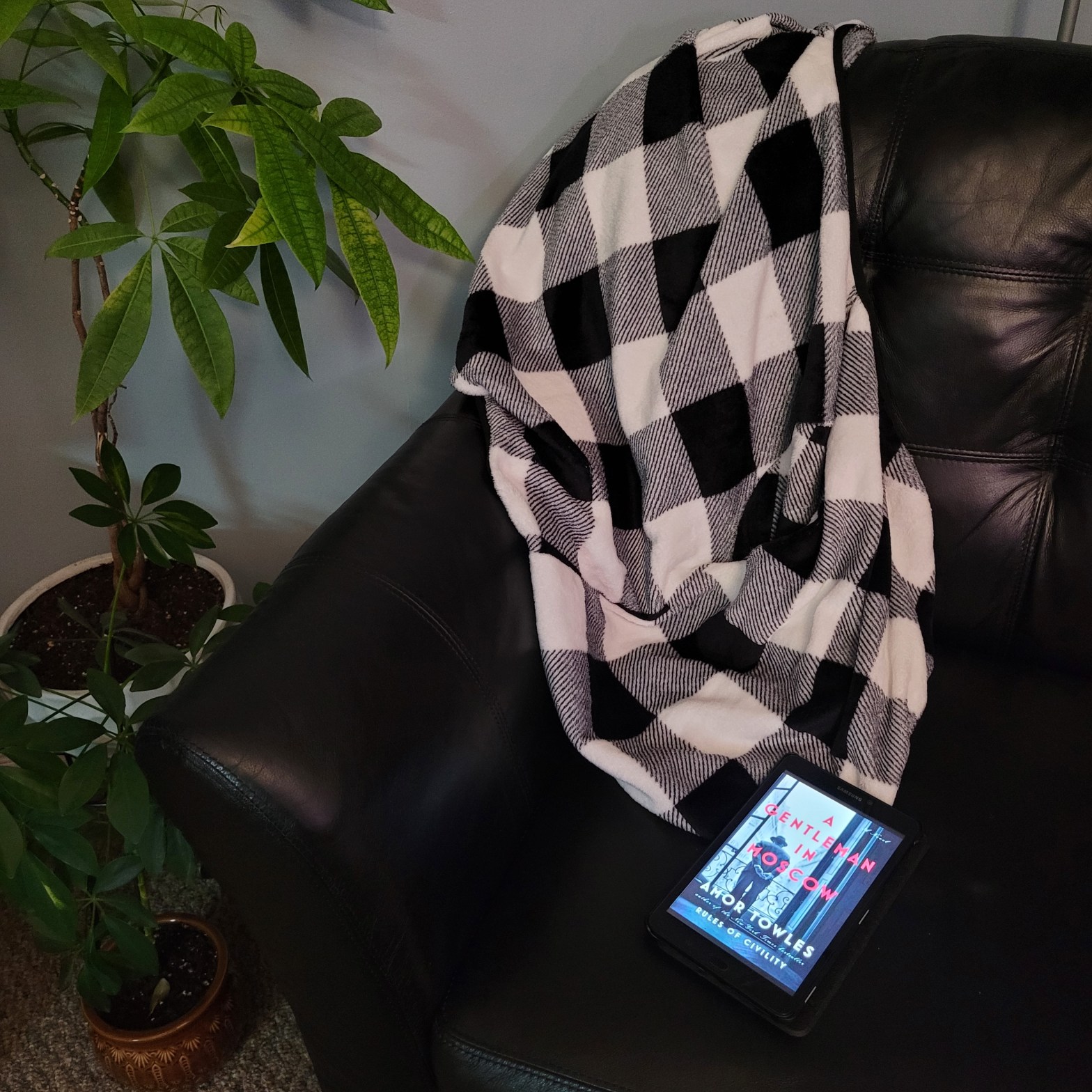
A Gentleman In Moscow (Amor Towles)

It’s 1922, and Count Alexander Rostov has just been sentenced to spend the remainder of his life under house arrest, confined to the Hotel Metropol across the street from the Kremlin. If he steps foot outside the doors of the hotel, he will be executed. He’s an unrepentant aristocrat, a Former Person, and in A Gentleman in Moscow, Amor Towles confines the reader right there with him.

“After all, what can a first impression tell us about someone we’ve just met for a minute in the lobby of a hotel? For that matter, what can a first impression tell us about anyone? Why, no more than a chord can tell us about Beethoven, or a brushstroke about Botticelli. By their very nature, human beings are so capricious, so complex, so delightfully contradictory, that they deserve not only our consideration, but our reconsideration—and our unwavering determination to withhold our opinion until we have engaged with them in every possible setting at every possible hour.”

The book follows the Count and his interactions with the varied and colourful cast of characters in the grand hotel. We experience thirty years of history precisely the way Count Rostov does—from the limited view behind the walls of the Metropol. The momentous events in Russia and on the world stage at the time are felt in ripples, glimpsed only through what staff and visitors to the hotel reveal. He discovers the hotel’s secrets through the eyes of a young girl, raises a daughter, explores what it means to have true purpose, makes unexpected friends, and touches the lives of so many.

“Like in a reel in which the dances form two rows, so that one of their number can come skipping brightly down the aisle, a concern of the Count’s would present itself for his consideration, bow with a flourish, and then take its place at the end of the line so that the next concern could come dancing to the fore.”

Towles’ language is beautiful, as rich and enchanting as the Metropol itself in its heyday. The Count often waxes philosophical while simultaneously bringing humour and levity to a solemn period in history. He rarely says things simply. If you are someone who enjoys erudite words and elegant prose, a reader who savours a book, unrushed, this is a novel for you.

“Alexander Rostov was neither scientist nor sage; but at the age of sixty-four he was wise enough to know that life does not proceed by leaps and bounds. It unfolds. At any given moment, it is the manifestation of a thousand transitions. Our faculties wax and wane, our experiences accumulate and our opinions evolve—if not glacially, then at least gradually. Such that the events of an average day are as likely to transform who we are as a pinch of pepper is to transform a stew.”

The novel reminded me of the adventure novels I was so fond of as a child, with the Count’s exploits not being hindered by the fact that he is bound by the four walls of the hotel. This is a type of story I have always loved, finding adventure in the mundane. Count Rostov is a man who knows how to savour small delights, who values details and the sharing of particular pleasures. An absolute highlight of the novel is the “Night of the Bouillabaisse,” a tale I will leave you to discover in your own reading.

“For his part, the Count had opted for the life of the purposefully unrushed. Not only was he disinclined to race toward some appointed hour—disdaining even to wear a watch—he took the greatest satisfaction when assuring a friend that a worldly matter could wait in favor of a leisurely lunch or stroll along the embankment. After all, did not wine improve with age? Was it not the passage of years that gave a piece of furniture its delightful patina? When all was said and done, the endeavours that most modern men saw as urgent (such as appointments with bankers and the catching of trains) probably could have waited, while those they deemed frivolous (such as cups of tea and friendly chats) had deserved their immediate attention.”

A Gentleman in Moscow is historical fiction, a masterpiece of nostalgia that has much to teach even as it entertains.  I never wanted this book to end, which is perhaps why, as I approached its final pages, I read slower and slower, eventually putting it down for weeks at a time before I finally devoured the ending all at once. I grew to love the vivid characters and the subtle complexity of their interactions and was sorry when my time with them was done.

“If one has been absent for decades from a place that one once held dear, the wise would generally counsel that one should never return there again . . . Perhaps for those returning after a long absence, the combination of heartfelt sentiments and the ruthless influence of time can only spawn disappointments.”

I will confess, though, that even more than the thrilling story of this novel, I fell in love with Amor Towles’ style of writing. I saw in his words a similarity to my own. Long sentences, an affinity for too many commas, and an overriding delight in lyrical descriptions of people and places—things that often are my downfall as I struggle to be more direct and concise—fill the pages of this novel artfully. Fair warning to the reader: This book is for a lover of words.

“Here, indeed, was a formidable sentence—one that was on intimate terms with a comma, and that held the period in healthy disregard.”