Quietly Important

She’s quietly important, but
She’s on the brink
I can feel her slipping away

She’s the constant presence
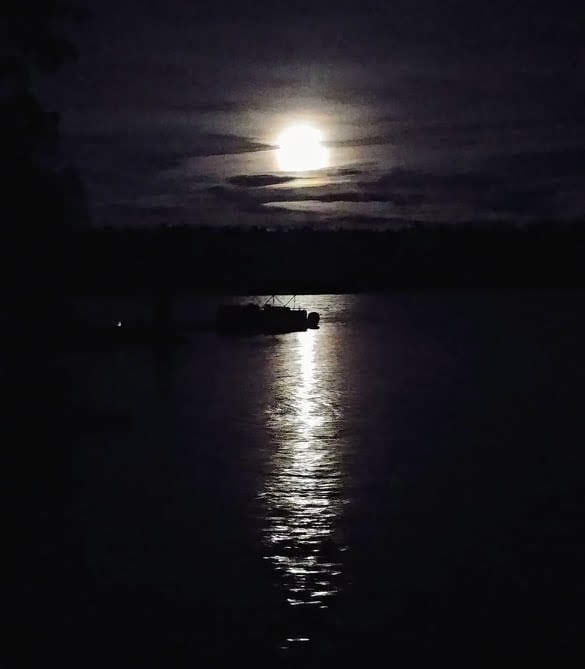
The steadying moon
The rhythm of the tidal sway

She’s fading fast, but
Don’t let go
Please, please just stay

She’s quietly important
Unobtrusively essential
In a simple, unassuming way

She’s that single thread
Don’t pluck it out
Or the whole thing starts to fray

She’s clinging to life
So close your eyes
Find the strength to pray

She’s quietly important, and
Without her presence
Without her
Without

It’s unbearable to say

Morning Glory (Math for Breakfast) Muffins

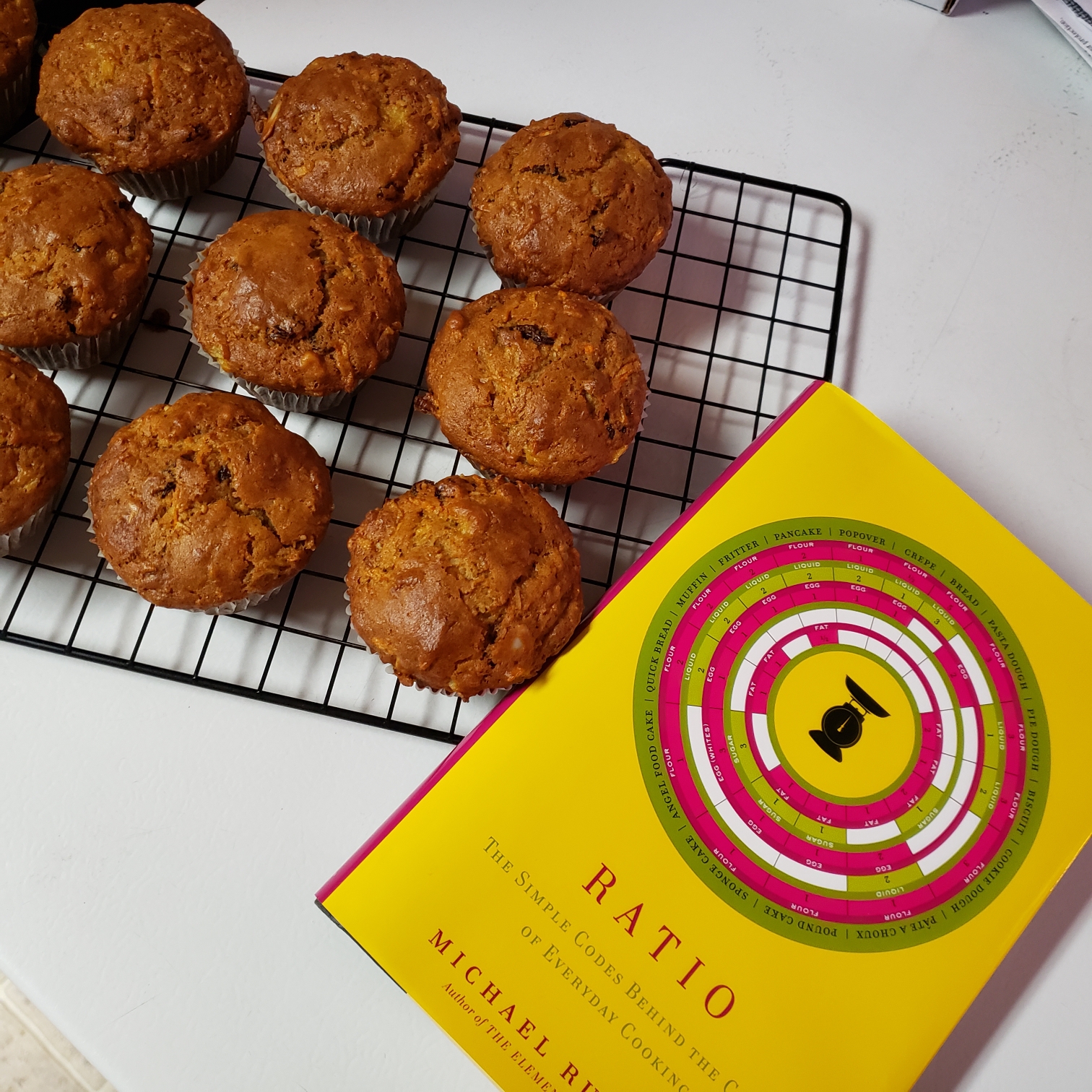
So y’all already know how I feel about baking snobbery. I’m not a purist when it comes to recipes, I just want them to be accessible to all, and I’m just as comfortable scaling ingredients as I am using a set of measuring cups. That being said, of late I’ve been enjoying tinkering with the mathematics of baking using Michael Ruhlman’s Ratio: The Simple Codes Behind the Craft of Everyday Cooking.

The book teaches the fundamental ratios of cooking that, once learned, promise to free you from being chained to recipe books. Not that there is anything wrong with cooking or baking from a recipe, but if you’re interested in the idea of creating your own recipes, this is useful stuff.

Much of the knowledge in the book I’ve already learned through years on the job as a baker, but it has been fascinating to learn the why behind many of the things that just come naturally to me now. I never went to culinary school, never got any technical training. I’ve learned from a series of mentors who often showed without explaining, leaving me in the position that I can immediately distinguish a good recipe from one that is lacking, and can often make tweaks without thinking that produce a better end result, but can’t always explain the process. My geeky side demands to know why, though, and for anyone interested in digging deeper into the science of cooking and baking, this book is a great resource.

One caveat is that Ratio is entirely in imperial measurements, so my very metric brain is constantly having to calculate the conversions. This book is not for the math haters.

As always, I’m going to cut to the recipe quickly, since that’s what you’re here for, not my life story. I give you a moist and delicious take on a classic, the Morning Glory Muffin. Filled with fruit and veggies, and customizable with any combination of nutty/fruity add-ins that your heart desires, this is the breakfast champion of all muffins.


The Muffin Ratio:

2 parts flour
2 parts liquid
1 part egg
1 part fat
1 part sugar


Morning Glory Muffins

Ingredients:

  • 230 g (1 1/2 cups) flour
  • 2 tsp baking powder
  • 1 tsp baking soda
  • 1/2 tsp salt
  • 1 tsp cinnamon
  • 1/4 tsp ground cloves
  • 230 g (1 cup) crushed pineapple with juices
  • 2 eggs
  • 125 mL (1/2 cup) vegetable oil
  • 115 g (1/2 cup) brown sugar
  • 2 medium carrots, grated
  • 57 g (1/2 cup) shredded coconut optional
  • 70 g (1/2 cup) raisins optional
  • 70 g (1/2 cup) chopped walnuts optional

Method:

  1. Combine flour, baking powder and soda, salt, cinnamon, and cloves in a large mixing bowl.
  2. In another mixing bowl, whisk eggs, sugar, and oil. Add crushed pineapple.
  3. Pour the wet mix into the dry mix and stir gently until fully combined, without overmixing.
  4. Add in grated carrots and coconut, raisins, and walnuts if desired.
  5. Fill lined muffin tins ¾ full. An ice cream scoop is super helpful to get all the muffins the same size.
  6. Bake at 350°F for 25 minutes. Check for doneness by gently pressing a finger on top, if the muffin springs back, they’re done. If it leaves a slight indent, bake for 2-4 more minutes.

Makes 12 hefty muffins.

Raisins can be substituted with dried cranberries or blueberries. Walnuts can be swapped out for sliced almonds or chopped pecans. If you don’t have carrot on hand, try grated zucchini instead.

How to Recharge Your Creativity

It is a tough time of year. It’s dark, it’s gray, it’s cold. Add on top of that the fact that Ontario is in a state of near-lockdown again and it’s a recipe for the blahs. I feel it. I don’t believe in writers’ block, but I certainly do recognize when the spark is lacking, when I’m not enjoying writing, when it feels more like a chore than a passion.

Every time I’ve sat down at my laptop recently to try to write, I’ve hit the backspace more than any other key. I’ve jotted down umpteen half-formed ideas and random bits without any desire to pursue any of them. I can’t seem to make progress on—let alone finish—anything. I don’t have any ideas that I want to write about. I feel drained, empty, running on fumes creatively. Been there? I’m sure you have.

So how do you refill those creative reserves? Explore a few suggestions with me as I enable my own procrastination by trolling the internet for ideas on how to recharge my creativity. Most of these, in some combination, have helped me through a similar slump in the past.

Change of scenery:

  • This can be a tough one in the current situation. I’d love to say go sit in your local cafe and people-watch while enjoying a latte. Sometimes even just the act of writing in a different space can help. Since indoor dining is a no-go again where I am, see the following…
  • Stare out someone else’s window. Window-Swap.com is a fascinating way to transport yourself to somewhere new. Have the site pick a window for you at random. Watch what’s going on. Enjoy the view. Maybe a spark of an idea will start to form.
  • Get outside. Fresh air. Physical activity. Put your headphones on and listen to some music or a podcast as you walk. Or don’t, and just enjoy the sounds of nature. Watch the birds. Take photos of random little bits of beauty.

Change of activity:

  • Do something decidedly non-creative. Wash the dishes. Scrub the floor. Alphabetize your spice rack. Clean out the junk drawer. Vacuum your car. Balance your budget. Sometimes the creative part of your brain just needs a rest.  Don’t force it. The mechanics of doing something entirely mundane might be just what you need.
  • Read something. Read anything. Read outside your comfort zone, outside your genre. Or read something you’ve read and loved before, just for the familiarity of it.
  • Draw or paint. Same creative part of the brain, different exercise for it. You don’t have to do it well to enjoy it. Even just breaking out the crayons and a colouring book can be so soothing.
  • Spend time with children. Their minds are brimming with imagination. Play. No, I mean really play. Pretend you’re not an adult. Let them set the rules. Follow their lead and lose yourself in the moment.
“The creative adult is the child who survived.”

Change of method:

  • Talk to someone about your writing. Describing your work in progress to someone else can unlock solutions you’ve been agonizing over, revive a passion that’s started to dim, remind you why you started it in the first place.
  • Write a list. Write a list of all the things you want to write. Or a list of things you find funny. A list of bits of dialogue you’ve overheard. A list of clues you’ve seen in murder mysteries on TV. A list of things you like or things you don’t like. A list of characters, regardless of whether you have an idea for a story for them. Just write point-form lists with no pressure to do anything with them, no pressure to form sentences or paragraphs.
  • If you write with pen and paper, try typing instead. If you write prose, try a poem or song lyrics. If you’re writing a novel, try your hand at flash fiction. If you write romance, write something scary or funny. If you usually write in the morning, try at noon or in the evening. Change it up, change it up, change it up. Even a short time spent on something different can rejuvenate those creative muscles. A change is as good as a rest, they say.
  • Look back at something you created in the past that you’re proud of. Think about where the idea started. Remember how it felt when you finished it.

The whole point is to remind yourself that you enjoy writing. If you’re feeling uninspired, don’t focus on churning out words. Focus on finding joy in the act of writing, and soon the words will flow. Let go of the self-imposed pressure and give yourself the time to recharge. Creativity is not something that can be forced.

And what if you’re just too tired? Then rest. Rest my dear writer friend, and take care of yourself. It’s a strange old world we’re living in, so don’t be too hard on yourself.

You can try again tomorrow.

That Georgian Bay Blue

Take me to a place where gnarled cedars force their roots through ancient glacier-pitted rocks, clinging to the face of an escarpment that is older than humanity. A place where wild and rugged spaces harbour tranquility and awe. A place where the water is so clear and so clean and so cold that it steals your breath. A place where the sky stretches endlessly to a horizon so distant and blue that sky and water blend into one.

Let me follow the white blazes leading me through woods so quiet I can hear my heartbeat calming. Clamber over tangled roots below a canopy of whispering birch leaves and fragrant pines. Their fallen rust-coloured needles blanket stretches of the path, cushioning into silence any footsteps. The serenity is tangible, radiating from moss-covered boulders and sun-dappled forest floor. The trail meanders onward, winding, weaving, wandering until the trees give way to Georgian Bay.

Give me nothing but that moment. That breakthrough when cool and shaded forest ends abruptly, the rocky ground plunges—the place where horizontal becomes vertical and high up there on top of the world a chance gap in the tree line reveals a panorama like no other.

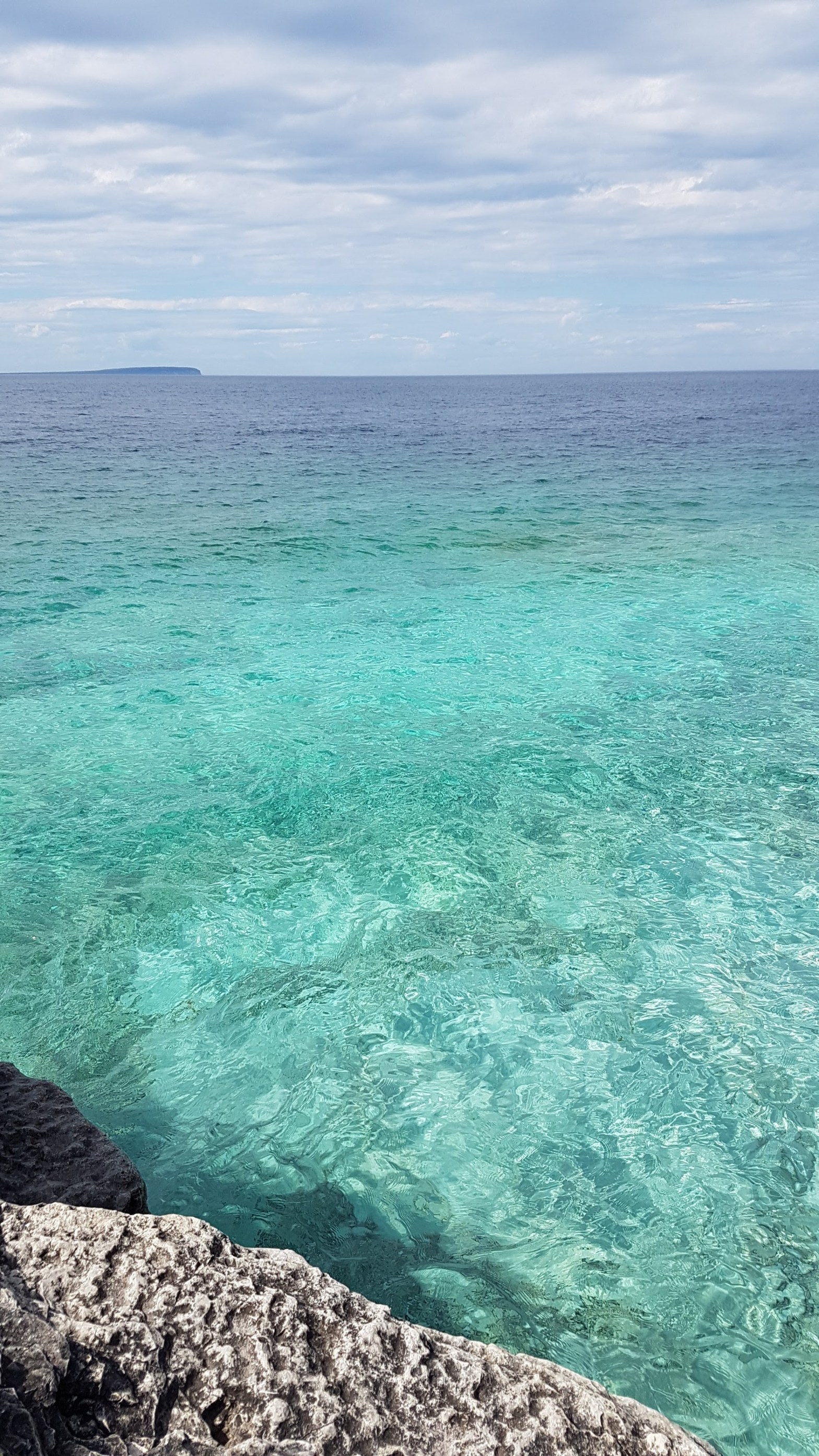
There is no colour that could compare to that Georgian Bay blue, no sight that could ever outshine a hundred different shades of cerulean and turquoise that meld in a gradient from the bottomless depths to the shallowing rock ledges that step up to the shore. The depth draws with irresistible force, an invitation.

Send me climbing down switchback pathways over boulders to the water’s edge. I’ll plunge. Down and down and down into the deep and cleansing cold until I burst again up through the surface reborn. Flat on my back, weightless, silent, I will float in complete peace, all tethers severed, all burdens and restraints completely shed. This is the place where I am home. This is the place where I am me.


This piece was first published in print as an Honourable Mention by Wingless Dreamer in the Travelogue The Wanderlust Within

All-Fruit Mincemeat

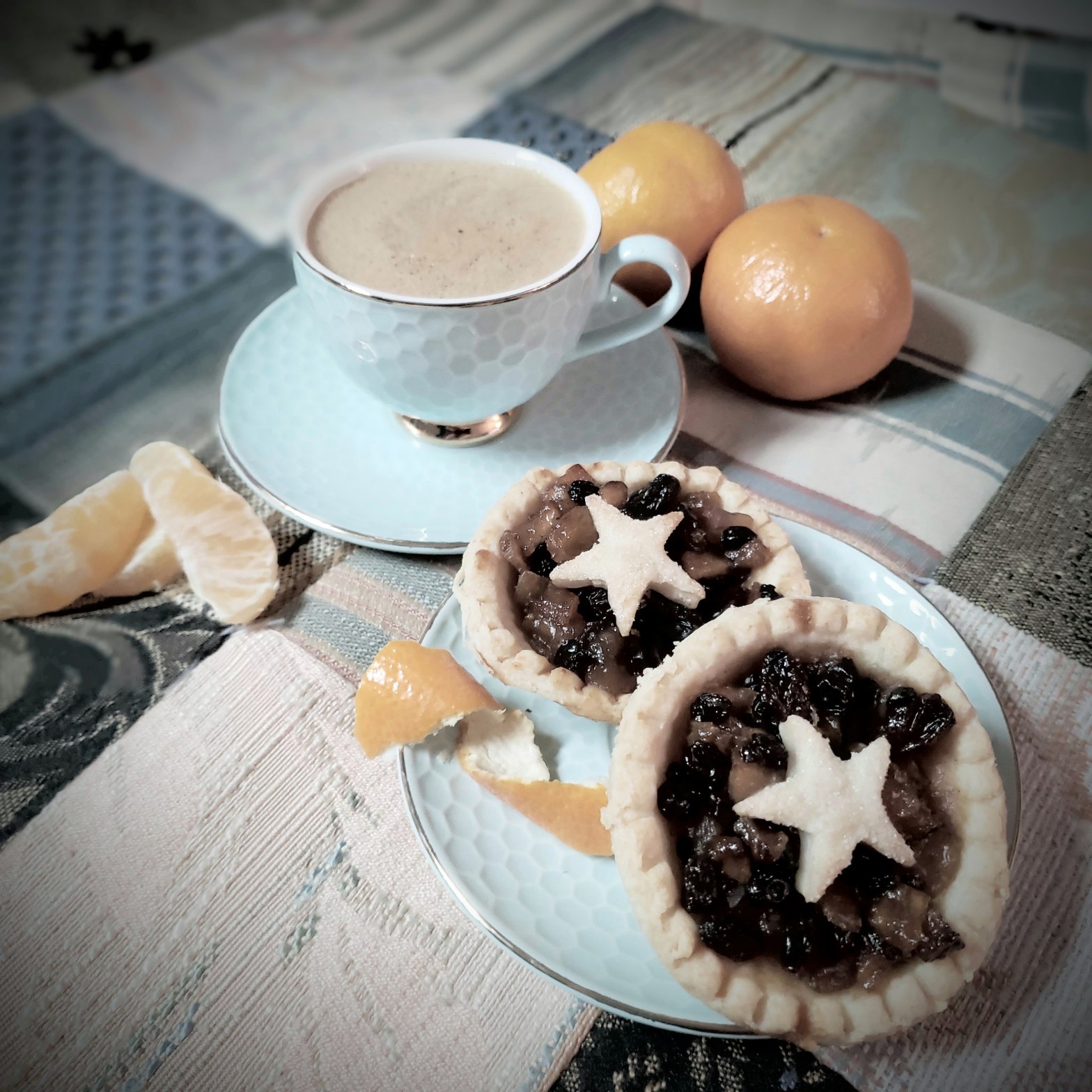
This recipe for homemade all-fruit mincemeat filling will make your kitchen smell absolutely sublime.

Ingredients:

  • 2 apples, finely chopped
  • 2 pears, finely chopped
  • Grated zest and juice of 1 lemon
  • Grated zest and juice of 1 orange
  • 1 cup raisins, Sultana or Thompson
  • ½ cup golden raisins
  • ½ cup dried apricots, finely chopped
  • 1 cup currants
  • ½ cup candied peel or orange marmalade
  • 1 ½ cups dark brown sugar
  • ¼ cup butter
  • 2 cinnamon sticks
  • 1 tsp pumpkin pie spice (or ½ tsp ea cinnamon, nutmeg, allspice)
  • 1 tsp finely grated ginger
  • ½ cup dark rum or brandy
  • Optional to add any or all of the following:
    • ½ cup chopped walnuts or pecans
    • ¼ cup dried cranberries
    • ½ cup dried cherries
  • Note: This recipe is vegetarian, and if you’re vegan you can absolutely forgo the butter altogether or sub in a solid vegetable shortening like Crisco.

Method:

  1. In a large saucepan, combine all of the ingredients except the alcohol and the nuts (if you’re using them).
  2. Bring to a simmer and cook over low heat, stirring often, for 40 minutes until the dried fruit is plump and the liquid is dark golden and syrupy.
  3. Remove from heat and stir in the alcohol and optional nuts. Store in an air-tight container in the fridge. This definitely tastes better with age, but honestly it’s hard to wait.
  4. Spoon into premade tart shells (or make your own pastry if you really want to go all the way), top with a pastry cut-out, and bake at 350⁰F for 15-20 minutes until the pastry is golden. I like to dip the top of the pastry cut-out in coarse sugar for an extra special glittery crunch.

You’ll notice I’m a recipe up-front kind of person. I absolutely loathe sites that make you scroll past four childhood anecdotes, eighteen full-screen photos of the process, a family tree, twenty video ads that will auto-play at full volume, and an undergraduate dissertation before you find the recipe buried at the bottom—if you can see it at all behind the banner ads and the pop-up newsletter offer that has no X in the corner. So annoying.

Enjoy the recipe. Read something delightful (like this poem or this flash fiction) whilst you feast on mincemeat tarts. You’re welcome.

It’s Been a Dull Day at 305 Barton Lane

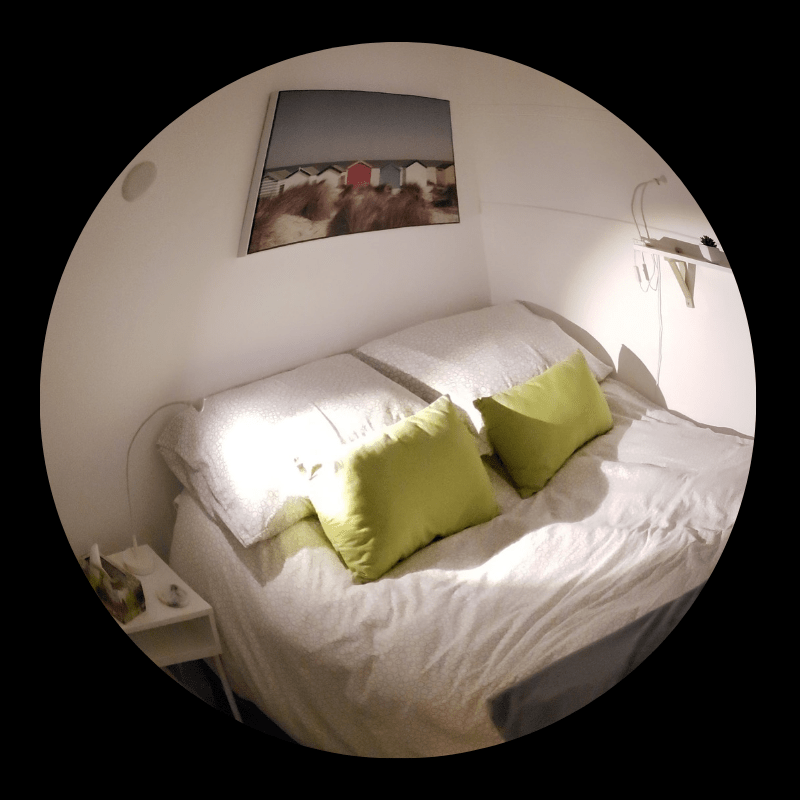
The girl has spent the afternoon on the lumpy bed in the white bedroom. She lay there picking last week’s nail polish off chip by chip with her phone wedged between her shoulder and her cheek: Uh huh … uh huh … he did NOT … then what did she say … he’s got some nerve … For nearly two hours chewing gum the whole time staring off into space or at the neoclassic abstract art nouveau or whatever painting in the wonky frame with a tiny hole in the corner, murmuring platitudes or exclaiming outrage at the right intervals in the tragic teenage drama.

Mom’s still in the upstairs bathroom using a mini-trimmer with a built-in light to mow the pesky hairs that sprout rebelliously from above her lip and below her chin. She’s relentless with the tiny whirring blades, the little light illuminating each doomed intruder in turn and glinting iridescent when it catches the clock face behind her. She’s got a battalion of creams and serums lined up on the vanity at attention, ready to wage war on wrinkles, lines and creases, shadows, spots or any sign of age.

The sullen son slammed out the front door moments after he’d gulped down lunch. He scooped up his father’s car keys without so much as an if-you-don’t-mind and slung his leather jacket over one shoulder under the twin smoke detectors in the foyer. Not much of a family vacation when 25% is missing most of the day and night, but that’s young people these days all independence and doing their own thing and you wouldn’t understand and GAWD mom you’re embarrassing me!

Dad gives no signs of noticing, pecking away at his laptop on the well-worn sofa in the family room that’s been more solitary room this week. Once he had found a live plug, not like that boxy outlet on the wall that doesn’t work, he was wired in for the long haul. No vacation for the man who brings home the bacon remotely—he’s too busy chewing the fat with CEOs, greasing the palms of all the right executives, always getting to the meat of the matter.

It’s been a dull day at 305 Barton Lane, 2 bedroom 1 bath, parking for 2 cars, just a short 10 minute drive to the beach, fast WiFi, no parties, 3.89 star rating.

Last weekend’s guest was a balding man with a white stripe on the third finger of his left hand and a belly that almost covered his silver-plated belt buckle. He was soon joined by a tall ginger with a volatile temper and a penchant for clothing that showed just how many freckles she had.

Far more interesting to watch.

Can “Write What You Know” Be Taken Too Far?

Is it lazy for a writer to make the protagonist of their story a writer?

That is an interesting debate that came up a while back on a writers’ forum I belong to, and I devoured the differing viewpoints while internally disagreeing with most of them. Admittedly, I have a bias.

The protagonist of my current novel-in-progress is an aspiring writer/amateur sleuth (cozy mysteries FTW!). I believe there is an audience for this type of story; in fact, I strongly believe that as long as the character has depth and is relatable without being too perfect, it doesn’t matter one iota what their occupation is.

If you are a writer yourself, at some point you will have come across the advice: “Write what you know.” When we’re fledgling writers we tend to take that advice far too literally. The characters in our stories become poorly disguised fantasy versions of ourselves. I read an acquaintance’s self-published debut novel last year and could identify them in the protagonist instantly. It was an enjoyable enough story, but it felt like a romantic fantasy memoir and left me feeling rather like I had read their diary.

There is nothing so cringe-worthy as a story about the idealized version of the author themselves. Isn’t it true that we all have a slightly skewed view of our own traits and motivations? Our own personality is far too close to home to ever write about candidly, mercilessly, intuitively. We tend to polish ourselves up, put on a façade in one way or another, hiding our blemishes and flaws. It’s only when we set our ego aside that we can write in a way that other people will actually want to read.

That’s the whole point, isn’t it? That’s why we’re all in this? To write something that someone, somewhere will actually want to read. If you don’t write a protagonist that your readers will actually care about, be curious about, want to follow on their adventures, it won’t matter if you’re writing about an author or a bull-rider or a three-legged prostitute from the planet Q’Blahrg who sings Russian opera on the weekends and poisoned her entire family just for kicks.

If you’re going to make your main character an author, create a character that will hold your readers’ attention even if your readers aren’t writers. Writing what you know doesn’t mean making your characters do what you do. It means tapping into your insight, your feelings, the way your life experiences have shaped you, your eccentricities and how they combine to form the stories only you can tell, in a way only you can tell them. That is what makes your story engaging, what makes your reader stop in their tracks and say, “I didn’t know anyone else felt this way.”

Avoid writing characters that are too much like yourself. Avoid writing characters that are so niche and one-dimensional that only a writer will find anything in them to relate to. Avoid writing characters that are so perfect they have no room to grow and change. But don’t be scared to write what you want to write—there is an audience for you!

I’m going to call out just two books that I read recently that had writer protagonists:

John Grisham’s Camino Island, while certainly not his best novel, is a quick, immersive, entertaining read. He masterfully combines a cozy world of dysfunctional authors and old-fashioned bookstores with a tasty, twisty plot about some stolen priceless manuscripts. Admittedly, the writer protagonist is not the best part of this book; Grisham’s multilayered cat and mouse plot and extremely likeable “baddie” far outshine Mercer and her angst about what to write. It’s not overly deep or complex, but it’s an enjoyable read.

“I’ve never understood people who grind through a book they don’t really like, determined to finish it for some unknown reason.”

John Grisham, Camino Island

The Word is Murder by Anthony Horowitz, starring himself as himself, could be considered a little self-indulgent, but is redeemed by his dry wit and the way he interweaves fact and fiction until you’re no longer sure how much you can believe. The mystery itself is well-plotted, with enough red herrings thrown in that the twist is far from predictable. The book is meta in a good way, pulling you into the story so that you’re experiencing events with the protag who is writing the book that you’re presumably reading. In this case, Horowitz took “Write what you know” very literally, making himself the main character, and pulled it off. He’s a talented guy.

“But in just a couple of weeks, everything had changed. I had allowed myself to become a silent partner, a minor character in my own book! Worse than that, I had somehow persuaded myself that I couldn’t work out a single clue without asking him what was going on. Surely I was cleverer than that.”

Anthony Horowitz, The Word Is Murder

To sum up, if you’ve been reading my blog for any length of time you’ll know already that I’m not a fan of hard and fast rules. If you want to write about a fantasy version of yourself and you can do it in an engaging way, you do you! If you want to create a main character who is a writer that solves murders and juggles flaming knives in their spare time, bring it on! What matters is good writing, an engaging plot, and interesting, well-developed characters—how you fill in the blanks in that formula is up to you.

Is it lazy to make your protagonist a writer? You won’t find any better an answer than this:

“It’s not my job to populate my books with particular types of characters that I imagine other people might find relatable. It’s my job to write about whatever comes into my head, to the best of my ability. If as a reader you want to exercise control over the kinds of things that are depicted in novels, try writing one. That’s what I did and it worked for me. If, on the other hand, you just don’t want to read novels about writers, or women, or Irish people, whatever, that’s OK. Don’t read my novels. I won’t mind.”

Sally Rooney, interviewed in The Guardian

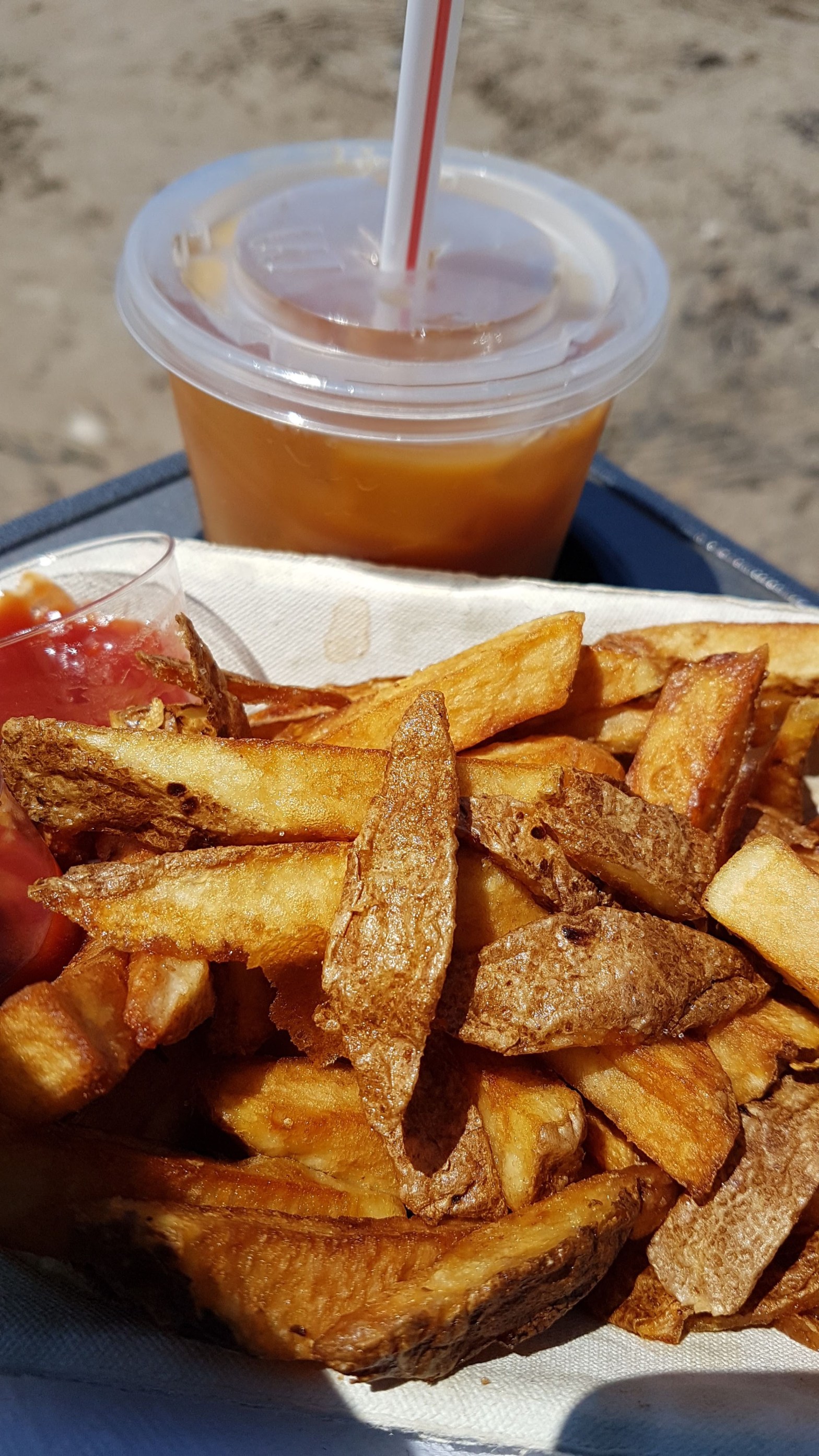
Two Cold Fish Let the Chips Fall Where They May

“Sheesh, Suzette’s been strutting around with a chip on her shoulder today!”

“You’re telling me! Acting like a big fish in a small pond lately.”

“It’s ever since she got promoted to senior associate. Thinks she’s all that and a bag of chips.”

“Yeah well, if you ask me, something about that promotion seems fishy.”

“Hey if you know something I don’t know, chip in, mate!”

“You didn’t hear it from me, but McLellan, the partner who put her up for promotion, he’s crooked as a barrel of fish hooks.”

“Are you telling me she had some sort of special bargaining chip?”

“I shouldn’t have said anything. You’re fishing in troubled waters now.”

“Gosh you’re a chip off the old block. Cagy as hell when you’ve got some juicy gossip, just like your old man!”

“Fine, but you’ve got to keep this quiet. Rumour has it Suzette’s husband drinks like a fish and she’s been feeling dissatisfied lately if you know what I mean.”

“Oh go on. Everyone knows that he’s had his chips and that marriage is as good as over. What’s that got to do with her promotion?”

“Well there’s other fish in the sea, and I’ve heard whispers that she found herself one here in the firm, one who’s a little more influential if you catch my drift.”

“Lordy I sure hope she’s not bet all her chips on old McLellan!”

“Why not? It seems to have net her that promotion she wanted. It’d be like shooting fish in a barrel seducing him—he’s always got his eye on the shortest skirts in the office.”

“Yeah but when the chips are down he’s only going to look out for number one. I heard that this quarter’s numbers aren’t looking the way they should and they’re going to have to lay off at least one of the associates.”

“Surely they’ve got bigger fish to fry than Suzette!”

“Who knows who it’ll be? All I know is Rothman likes to cash in his chips and if anyone else’s salary is going to cut into his fat bonus, he’ll show them the door.”

“And he needs more money like a fish needs a bicycle.”

“You’re not wrong. But if they’re letting someone go, it certainly won’t be one of us clerks—we’re cheap as chips.”

“Good grief, she’s got herself into a fine kettle of fish, hasn’t she?”

Insomnia Inspires

In haze between tomorrow and today
When midnight’s passed but morning not quite here
Strange thoughts arrive to find me in the dark
Drifting dreams and imaginings unclear

I lie restless, crowded by the notions
Ideas dancing round like fireflies
In half-awakened stupor I reach out
But fleeting sparks elude my grasping tries

A tangled web of firing synapses
Crafts fractured concepts into something new
A story weaves itself to life unbidden
All while I lay supine, without ado

I but hope that morning will remember
The magnum opus of my sleepless slumber